
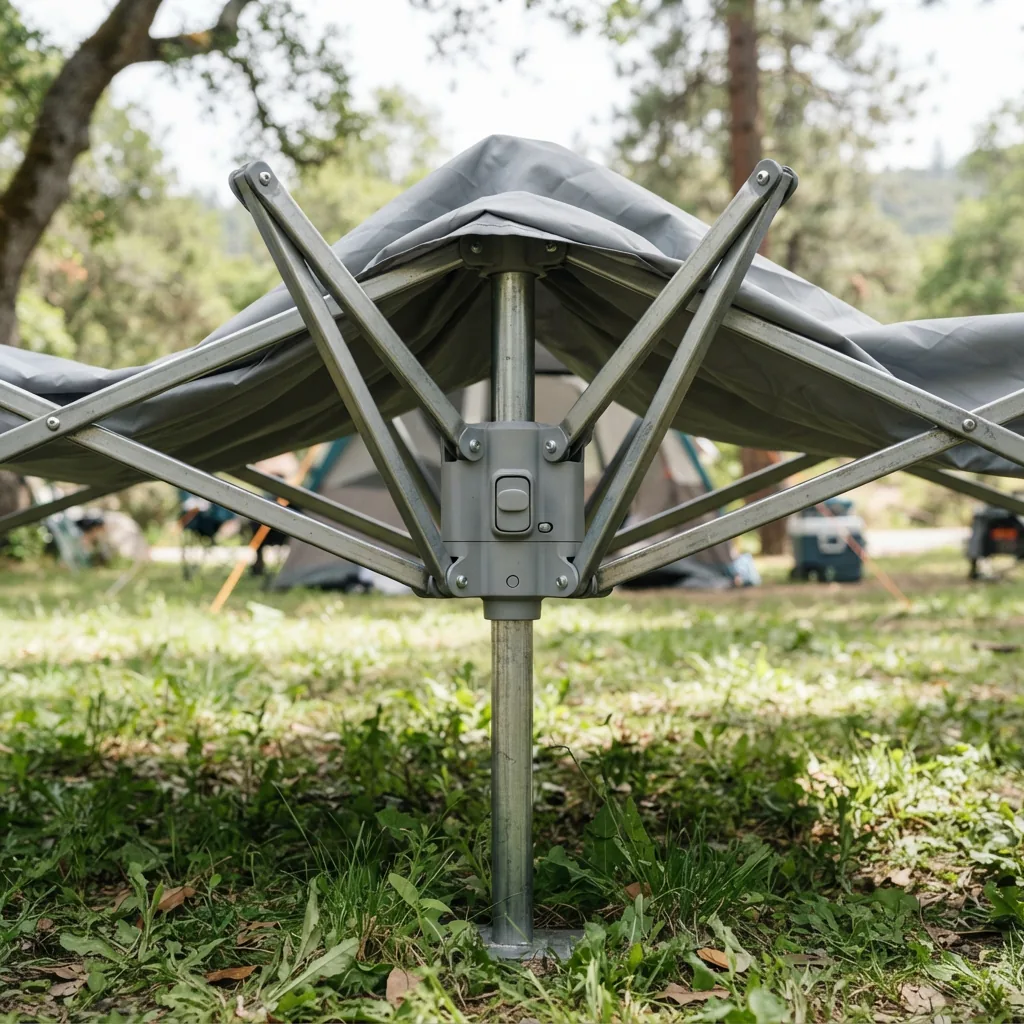





Ozark Trail Tents Replacement Parts

Compare Ozark Trail tent replacement parts side by side, from ground pegs and frame legs to trusses, hubs and universal poles. See which piece fits your shelter and when a repair makes more sense than a new tent.

Four parts that keep common repairs simple

Ozark Trail Tent Essentials Kit with Core Campsite Components for Weekend Setups

The essentials kit gathers the small components Ozark Trail tent owners usually need at camp, so a loose part does not end the trip early. It suits weekend outings and first setups where one purchase covers the basics. Pack it once and keep it with your gear for quick fixes.

Ozark Trail Tent Pegs 4 Pack Green, Made in USA New Sealed, Durable Ground Stakes for Camp

Four green tent pegs for staking down an Ozark Trail tent on grass, dirt or gravel pitches. They arrive new and sealed, and the green finish keeps them easy to spot against the ground. A spare set helps when a peg bends or gets left behind, which is a common reason camps sag.

Ozark Trail 2-Pack Side Truss Replacement Parts FGA99Sl2 Slant Canopy for Easy Frame Repairs

These side truss parts replace the worn or missing members on an FGA99SL2 slant canopy. Replacing one side restores the frame’s shape so the fabric sits tight and wind loads spread more evenly. Sold as a two-pack, they suit shelters where both sides have aged the same way.

Ozark Trail 2-Pack Legs Replacement Parts FGA99SL2 Slant Canopy for Reliable Frame Repairs

A two-pack of replacement legs for the FGA99SL2 slant canopy, for shelters where a leg has bent or a joint no longer holds. Fresh legs return the canopy to full height and keep the structure steady on uneven ground, and buying the pair lets the whole frame age at a similar rate.

Ozark Trail Roof Truss Replacement Parts for FGA99SL2 Slant Canopy Frame Stability

Roof truss parts for the FGA99SL2 slant canopy, the piece that holds the top of the frame square. When a roof member bends or a connector fails, water pools in the fabric and the canopy loses height. Replacing it restores the peak and helps the shelter stand straight again.
What shoppers check next

Popular fixes for canopies, poles and shelters

Canopy Center Hub Replacement Compatible with Ozark Trail Pop Up Tent for Roof Frame Repair Joints

A center hub for pop-up canopies built to work with Ozark Trail pop up tents. This is the joint where the frame ribs meet, and it is the part most often cracked in a hard gust. Fitting a new hub returns the roof frame to working order for backyard, beach or outdoor event use.

Yaocom Fiberglass Tent Poles Replacement Universal, Pre Assembled Black Camping Rods

Universal fiberglass tent poles, pre-assembled in black, for hikers and campers replacing a broken section. Fiberglass keeps the weight down, so a repaired tent still carries easily on a backpack. Check your tent’s pole length and ferrule fit before ordering, since these are not brand specific.

Ozark Trail 10 ft x 10 ft Screen House with Replacement Parts Guidance for Camps

The 10 ft x 10 ft screen house gives shade and insect protection over a picnic table or camp kitchen. When parts wear out, finding the right replacement keeps a useful shelter in service. Owners looking for exact pieces will find the specific components listed with this model.
Who these parts suit

Repairs for campers, families and weekend setups

These parts serve anyone keeping a value-priced shelter in service: families patching a tent before a weekend trip, backpackers fixing a bent pole, and hosts refreshing a backyard canopy. Weigh how much use the shelter has left.

Family camping before a weekend trip

A spare set of pegs and a repaired leg can save a Friday night setup. Check the shelter the week before, replace what is bent, and the family arrives to a tent that goes up on the first try.

Backpackers counting pack weight

Replacing a single broken pole section keeps a light tent on the trail instead of in the bin. Fiberglass stays light, so the repaired shelter still carries easily across a long day of hiking.

Backyard and event canopy upkeep

A pop up canopy earns its keep at beaches, markets and backyard dinners. Swapping a cracked hub or a worn leg restores the folding action, so the shelter keeps setting up quickly for the next outing.

Fit, material and pack size decide whether a repair holds. Compare the model number, the part’s length or diameter, and how many pieces come in the set, then weigh the repair cost against the price of a new shelter.

What to check before you order a part

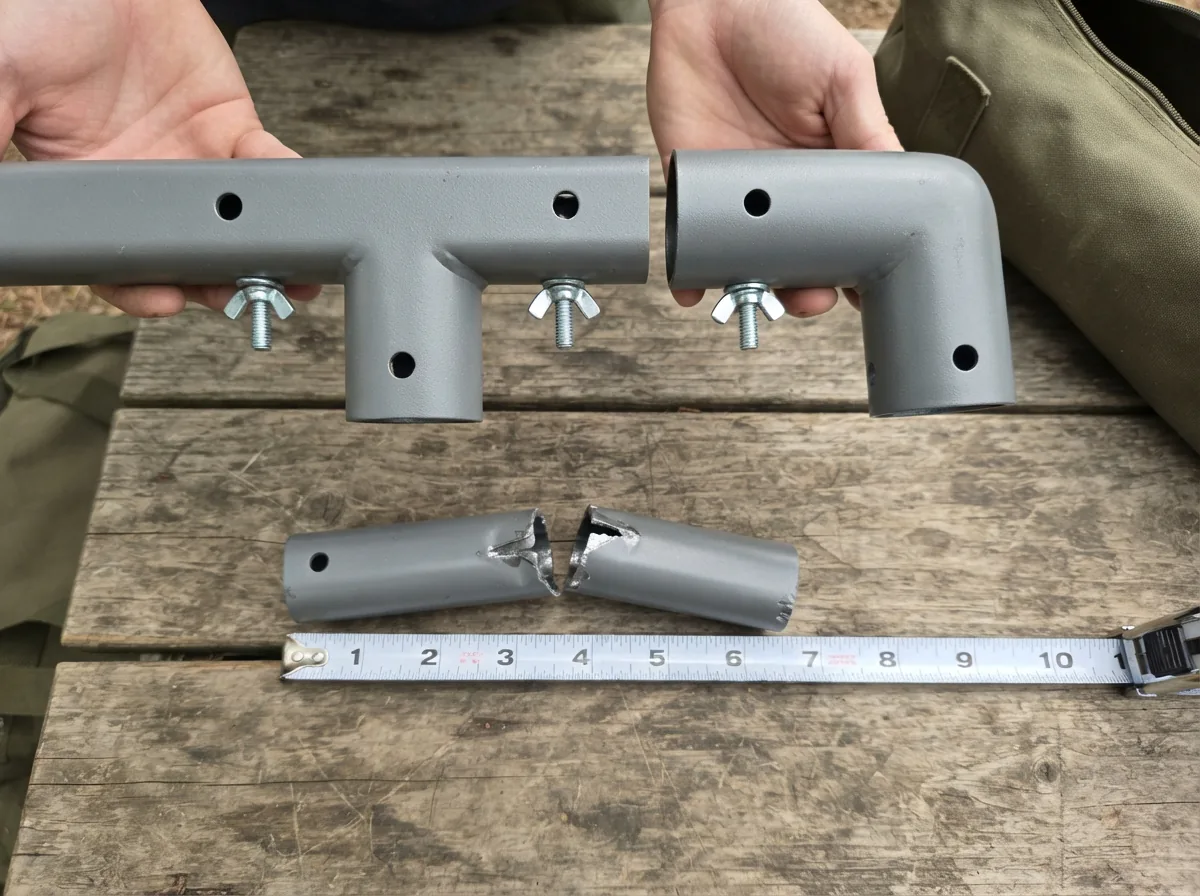
Two replacement canopy frame parts held side by side above a camp table with a tape measure and a broken part.
Match the model number first

Printed tags carry the model code, such as FGA99SL2 for the slant canopy. A part that looks right but skips this step often arrives the wrong length, which turns a quick fix into a second order.

Check length, diameter and shape

Poles and trusses are measured, not guessed. Compare your broken piece end to end and note the ferrule size, because a joint that sits loose will flex in wind and wear the fabric around it.

Count what arrives in the set

Some parts sell as single units, others in two-packs. Buying both sides of a frame at once keeps wear even, while a single piece suits the one-off failure where the rest of the frame still looks straight.

Repair cost against replacement price

Ozark Trail shelters are priced to be affordable, so a small hub or peg set is easy to justify, but a frame with several failed joints may cost more to rebuild than to simply replace.

Four ways to shop parts

Match the part to your shelter type

Tent parts split by what they hold together: ground stakes, side and roof trusses, frame legs and pop-up hubs. Identify the part that failed, then check the model tag, since similar shelters rarely share exact dimensions.
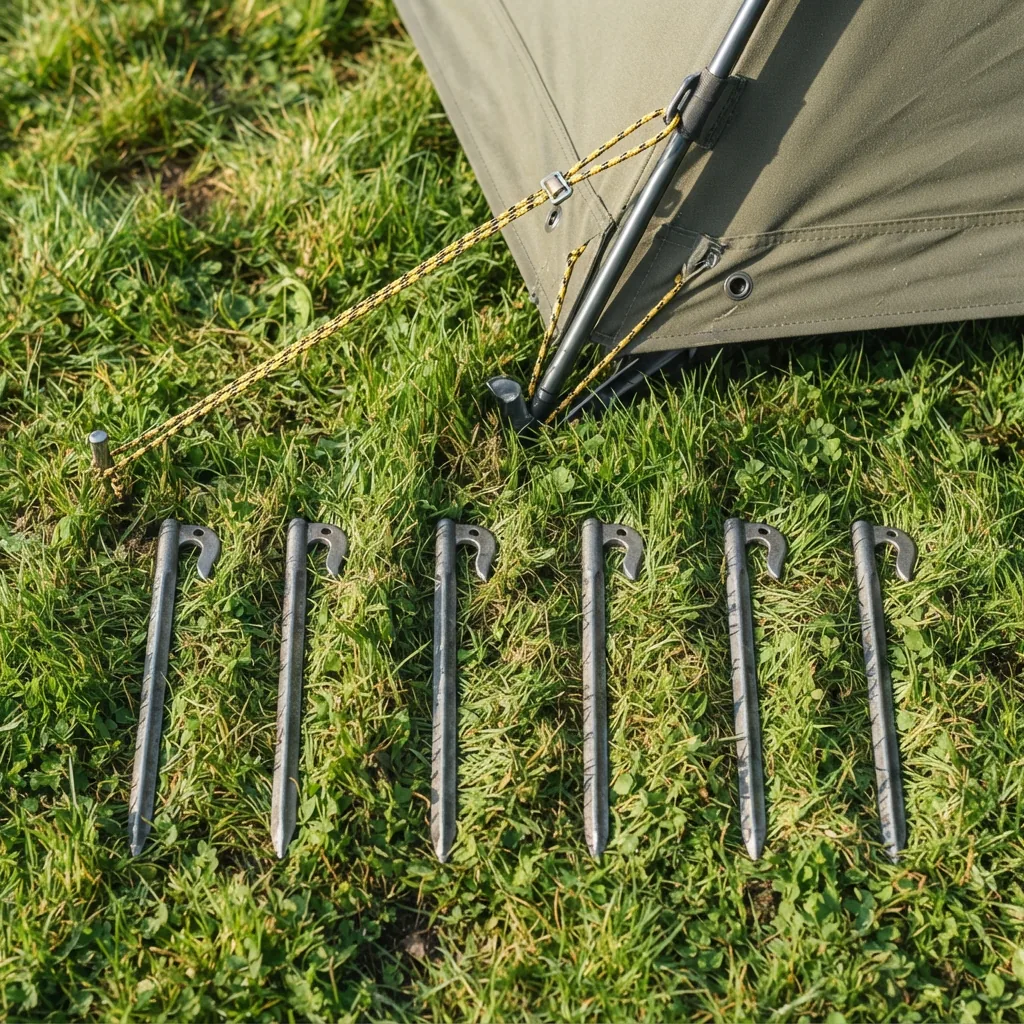
Row of steel tent pegs laid out on grass next to a tent corner with guy lines attached.

Ground stakes and pegs

Pegs anchor the tent's corners and guy lines to the ground. Choose them when your shelter holds its shape but lifts or shifts in wind, and check that the shaft diameter matches your existing grommets.

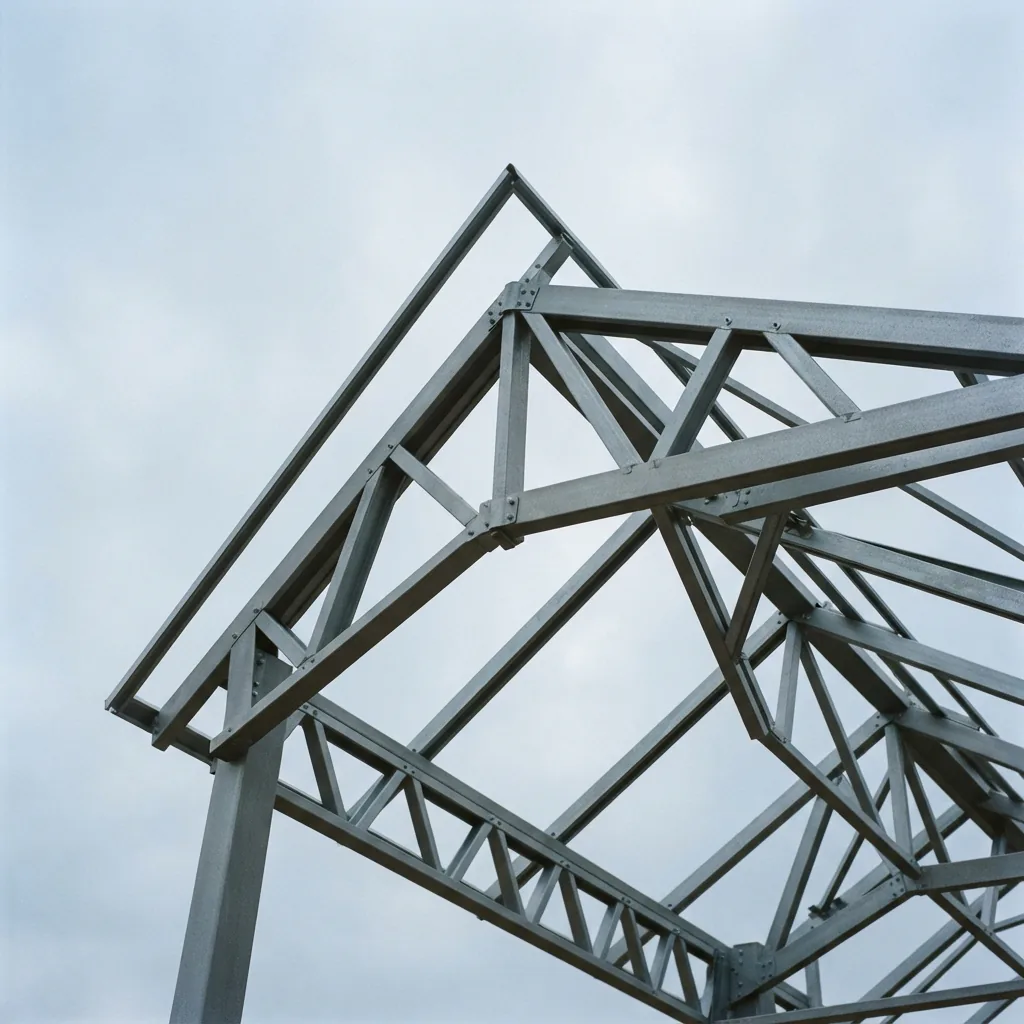
Slant canopy roof frame showing side and roof truss members meeting at the peak.

Side and roof trusses

Trusses form the sloped roof structure of a slant canopy. They suit shelters that sag at the top or no longer stand square, and the difference between side and roof parts is where the failure sits.

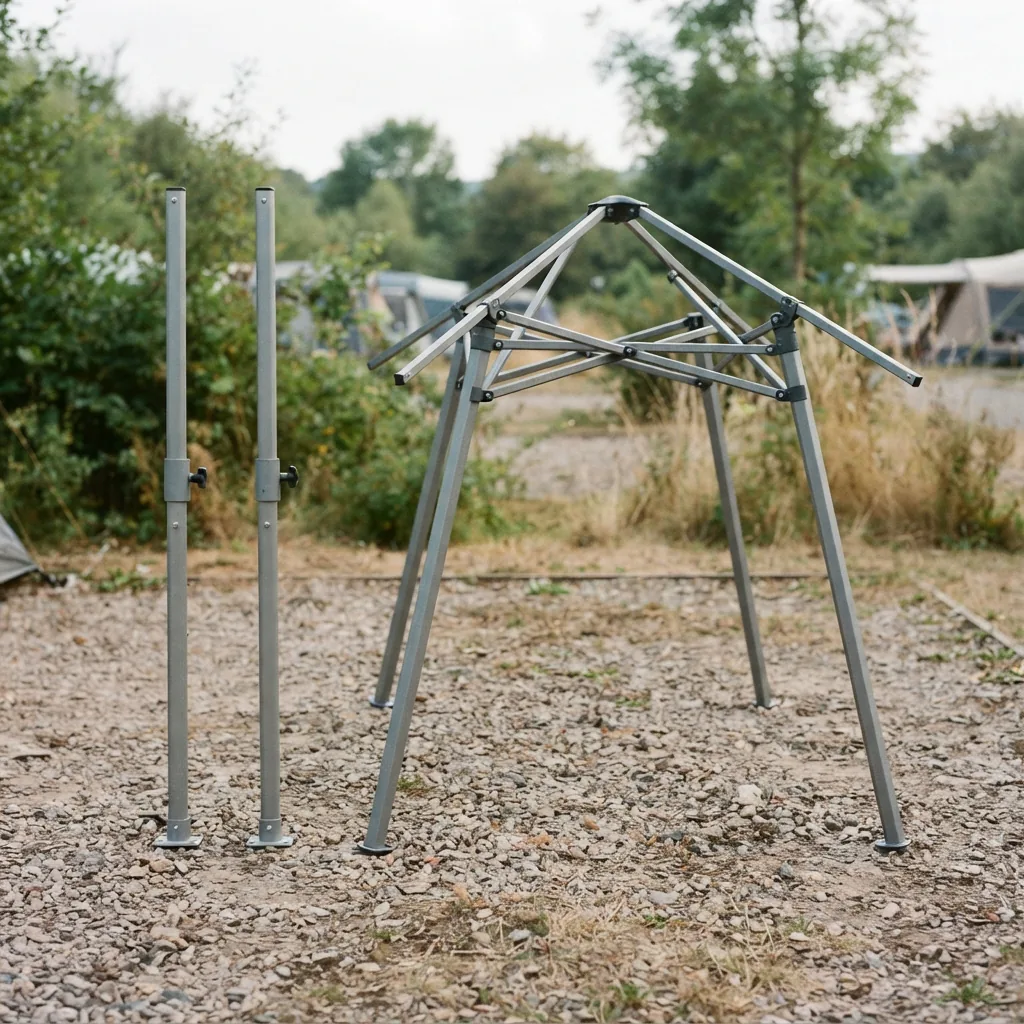
Two straight canopy frame legs standing beside a partially assembled slant canopy on gravel.

Frame legs for slant canopies

Legs carry the shelter's height and weight. Pick them when a pole has bent at the base or a joint no longer locks, and match the pair so both sides flex and weather together over time.

Close view of a pop up canopy hub with folding ribs half open on a campsite lawn.

Pop-up hubs and connectors

The hub is where a pop-up canopy's ribs meet at the top. It is the first part to crack in a hard gust, so replacing it restores the folding action without buying a whole new canopy.

What owners report

Firsthand notes from repair projects

Shoppers describe small wins: a peg set arriving sealed, a hub bringing a canopy back to folding, a pole repair saving a weekend. Expect honest trade-offs too, since budget shelters still wear out faster than premium ones.
We reached the campsite and realised two of our pegs had bent on the last trip. A fresh four-pack had us staked down in about ten minutes, and the tent stayed put through a windy night. I felt far better knowing the corners were actually holding.
Decorative customer review avatar icon 1
Dana R.
Staked out a windy campsite without a redo
The top joint on our pop up canopy cracked after a rough gust and the whole frame sagged. Replacing that one hub took longer to track down than to install, and the canopy folded flat again the same afternoon. A handy fix for something we use at every cookout.
Decorative customer review avatar icon 2
Marcus T.
A hub swap saved the whole canopy
A pole snapped on a short backpacking trip and I assumed the tent was finished. Matching the diameter and swapping in a replacement section brought it back, and it still packs down light. It is not a permanent repair, but it has outlasted two full seasons.
Decorative customer review avatar icon 3
Priya S.
Fixed a bent pole instead of replacing the tent
Our slant canopy had started leaning because the side parts had worn through. Swapping both sides at once kept the frame even, and the fabric sits tight again instead of pooling water. A small cost, and the shelter looks ready for another summer.
Decorative customer review avatar icon 4
Kevin L.
Slant canopy frame back to square
Questions before you buy

Straight answers on fit, durability and repairs

Start with the model number on the tag sewn into your tent or canopy. Ozark Trail makes many shelters that look alike, so shape alone is not enough; length and joint size are what matter. When the tag is gone, measure the broken piece end to end and compare it to the listing.
Some items here carry the Ozark Trail name, while others are universal parts from independent makers that fit Ozark Trail shelters. Universal options can be a good value, but check the listed dimensions carefully, since they are designed to fit a range of tents rather than one exact model.
A fresh truss, leg or hub does restore rigidity where the old part had bent or cracked. It will not make a light slant canopy storm-proof, so still guy it down and take it down in strong wind. The repair mostly brings back the shape the frame was designed to hold.
The center hub at the top is the common failure point, because it takes the load when the frame folds and unfolds. Bent legs and worn pegs come next. Replacing just the hub is often enough to keep a canopy in service for backyard, beach or event use.
For a bent pole, a missing peg or a cracked joint, repair is usually the cheaper and faster route. Once several frame parts have failed or the fabric is torn along a seam, the cost of a full rebuild can approach the price of a new shelter, and replacing starts to make more sense.
Universal fiberglass poles work well when the diameter and ferrule size match your tent. Measure the broken section before ordering and check whether the poles ship pre-assembled. Fiberglass keeps weight low, which helps for backpacking, though it will not flex as far as aluminum in heavy wind.
Keep exploring

More outdoor gear worth a look before you buy

Hard-sided and soft-sided Ozark Trail coolers arranged on a wooden picnic table at a wooded campsite
Admin
Ozark Trail Cooler

Compare Ozark Trail coolers by size, shape and how you carry them, from hard-sided chests that hold ice for a weekend to soft totes and backpack coolers for a day out. Each option below shows capacity, format and the trip it fits best.


A group of Ozark Trail mountain bikes with front suspension parked on a dirt trailhead, a rider comparing frame sizes beside them
Admin
Ozark Trail Bike

Ozark Trail mountain bikes span hardtails and full suspension builds, sized from young riders to tall adults. Compare fit, suspension, wheels and gears to match your trails and your budget.

Assorted Ozark Trail folding and fixed blade knives arranged on a rustic wooden camp table
Admin
Ozark Trail Knife

This page lines up Ozark Trail knives so you can compare folding and fixed blades, locks, handles and carry options at a glance. Each pick notes what it handles best, from camp prep to a pocket blade you carry daily.

A row of Ozark Trail camping tents of several sizes pitched on a grassy campground with a family walking between them.
Admin
Ozark Trail Tents

Compare Ozark Trail tents by capacity, setup style, weather coverage and packed weight, from solo backpacking shelters to twelve-person family cabins built for drive-up weekend campsites.
