



Ozark Trail Slippers

Compare low puffer slippers, pull-on boots and water-repellent camp scuffs side by side, then match cut, coverage and sole to the trips you take. Short outings, cabin stays and first setups each point to a different pick.

Four New Picks, Each With a Different Job

Ozark Trail Men's Puffer Low Slipper — Low-Profile Warmth for Camp and Cabin

These low-profile puffer slippers keep feet covered without adding height, so they slip on easily at the tent door and pack down small in a daypack. Four sizes help you match fit before a short trip. A solid pick for camp evenings and cabin breaks where warmth matters more than heavy insulation.

Ozark Trail Men's Pull On Slipper Boots, Warm Slip-On Style in Several Colors

Pull them on and you are ready to step outside, which matters when you need to check the fire on a cold morning. The boot-style shaft adds coverage above the ankle, and several colors let you match a pair to the rest of your gear. Best for quick errands and relaxed camp mornings.

Ozark Trail Men's Puffer Desert Slippers, Four Sizes for Dry Campsite Comfort

Four sizes make it easier to get a right fit, and the desert-ready shape leaves room for a light sock on cooler nights. Think of these as the slipper you leave at the tent vestibule: quick to pull on, comfortable underfoot, and simple enough to move between tent and picnic table without fuss.

Ozark Trail Camo Rugged Slip-on Camp Scuff Slippers, Water-Repellent Men's Size 10

The water-repellent upper shrugs off morning dew and the occasional splash, so these earn their place as a rugged camp scuff rather than a house slipper. Shown here in camo, men’s size 10. The open-heel cut makes them quick to step into between tent and fire ring, with a sole built for outdoor ground.

Ozark Trail Camp Scuff Bungee Slipper in Evergreen, Water-Repellent Indoor and Outdoor Wear

Bungee lacing gives these a snug hold without tying, which is handy when you are balancing on one foot at the tent door. The water-repellent finish handles damp grass and cabin floors, and the evergreen color keeps dirt from showing. Wear them indoors for lounging or outside for short walks around camp.
Worth a Closer Look

More Ways to Narrow the Right Pair

Ozark Trail Men's Puffer Slippers in Olive Green with Memory Foam, Size 10

Memory foam underfoot is the headline here, cushioning tired feet after a long day on the trail or in the yard. The olive green shade hides trail dust, and the listed size 10 gives you a concrete fit to compare against your usual size. A comfortable choice for lounging in a tent or at home.

Ozark Trail Men's Boot Slippers Size 11 in Black, Water-Repellent Indoor/Outdoor

Size 11 in black with a water-repellent finish and an indoor/outdoor sole, these boot slippers cover more of the foot than a scuff does. That makes them a sensible choice for cold cabin floors and quick trips out to the car. Check the stated size carefully, since listings can be specific to one pair.

Ozark Trail Camp Puffer Boots with Ripstop for Hiking Trips, Men's Size 7

A puffer boot built with ripstop material, these aim at the hiker who wants warmth between segments. Listed in men’s size 7, they stay compact enough to tuck into a pack. If you want coverage above the ankle for camp chores after a hike, this is the direction worth exploring first.
Where They Earn Their Place

Trips and Tasks This Category Covers

These slippers suit shoppers outfitting a first camp setup, families splitting gear between tent and cabin, and hikers who want a light break for tired feet. Weigh warmth against pack space before you pick.

Campsite Evenings After Dark

Slipping these on at the tent door keeps dirt out of your sleeping area and warms cold feet fast. A water-repellent pair handles wet grass better than a soft indoor slipper ever will.

Cold Mornings Around the Cabin

Boot-style coverage helps when the floor is cold and you are up before the heat has caught up. Pull-on designs save time on trips to the porch, the car or a shared bathhouse.

Short Hikes and Pack-In Trips

For value-minded backpackers, a lighter slipper keeps pack weight down while still giving feet a proper break. Bring a pair you are willing to replace after a few seasons of hard use.

Three factors move the decision: shaft height, water resistance and cushioning. A low cut packs smaller while a boot shaft warms more of the foot, and water repellent handles dew. Match these to your trip length.

How Fit, Coverage and Sole Change Your Pick

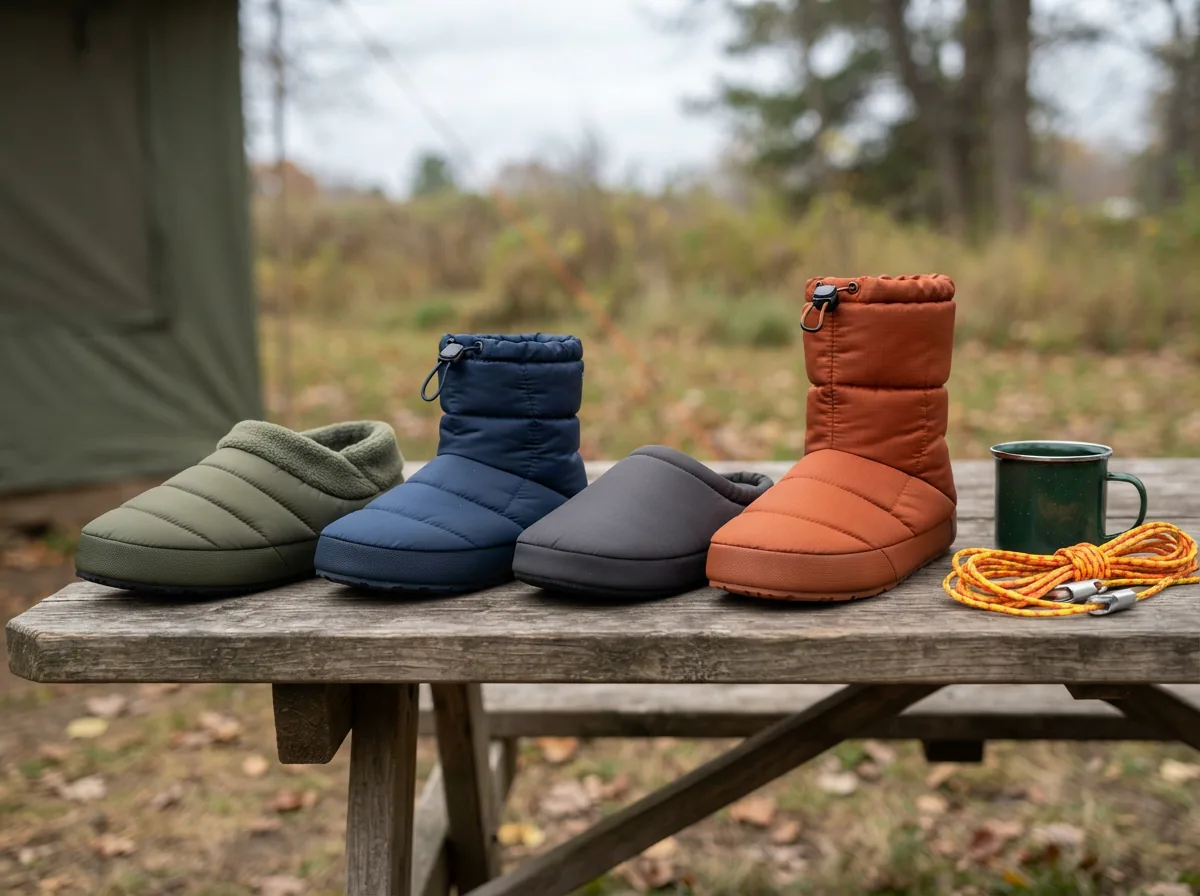
Four slipper styles lined up in a row on a wooden camp table beside a camp mug and coiled guylines, seen straight on at eye level.
Low Puffer Cuts for Packable Warmth

The lowest cut in the group covers the top of the foot and leaves the ankle free. They pack small and warm quickly, so pick them when comfort inside the tent matters more than weather coverage.

Boot-Height Shafts for Cold Mornings

A higher shaft wraps more of the ankle, which helps on cold mornings when you step outside before the tent has warmed up. They take a moment longer to get on, and that coverage is the trade.

Water-Repellent Uppers for Damp Ground

These trade insulation for a water-repellent upper and a firmer outdoor sole. They suit grass, dew and cabin floors where a soft house slipper would soak through after one walk outside.

Ripstop Builds for Trail Days

Built with ripstop material and a boot shape, this direction suits hikers who want warm feet during breaks. They are less packable, so expect to wear them rather than stuff them in a bag.

Four Ways In

Find Your Direction in the Slipper Range

The category splits four ways: lowest cut for warm nights, boot-height shafts for cold mornings, water-repellent uppers for wet ground, and ripstop builds for trail use. Decide by where your feet will be, not by which pair looks most cushioned.
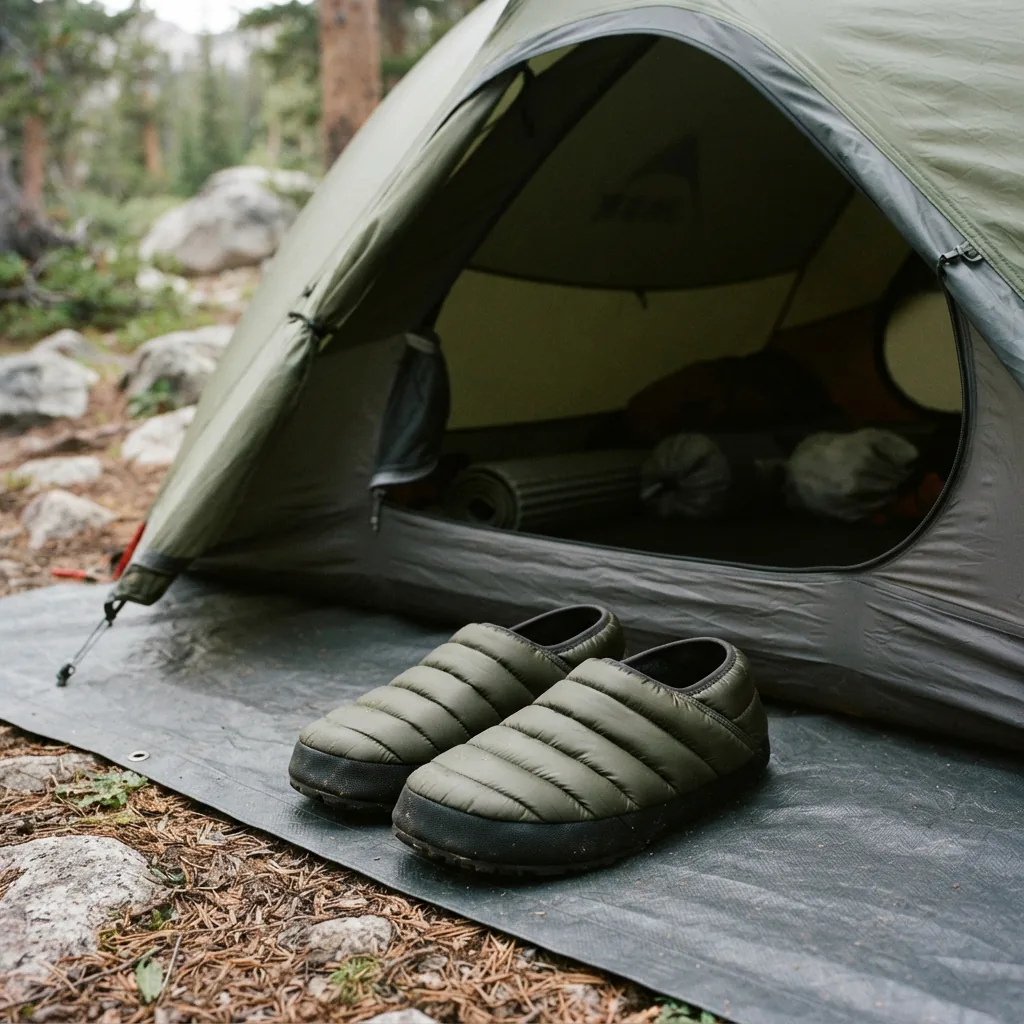
One pair of low quilted puffer slippers sitting at the edge of a tent vestibule on a groundsheet in front of an open tent door.

Low Puffer Slippers for Warm Nights

The lowest cut in the group covers the top of the foot and leaves the ankle free. They pack small and warm quickly, so pick them when comfort inside the tent matters more than weather coverage.

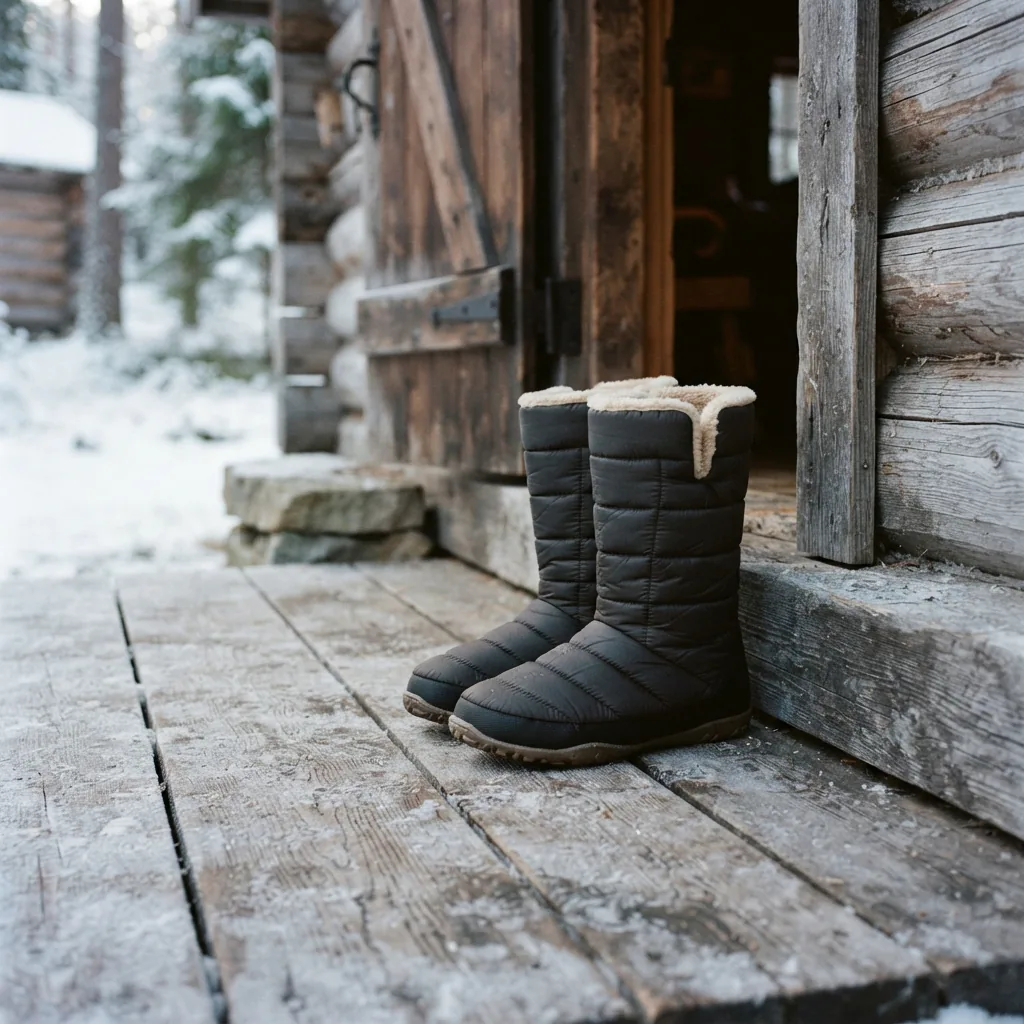
A single pair of tall padded pull-on slippers standing beside a cabin threshold, shafts reaching above the ankle.

Pull-On Boot Slippers for Coverage

A higher shaft wraps more of the ankle, which helps on cold mornings when you step outside bare-legged. They take a moment longer to get on, and that extra coverage is the trade you make.

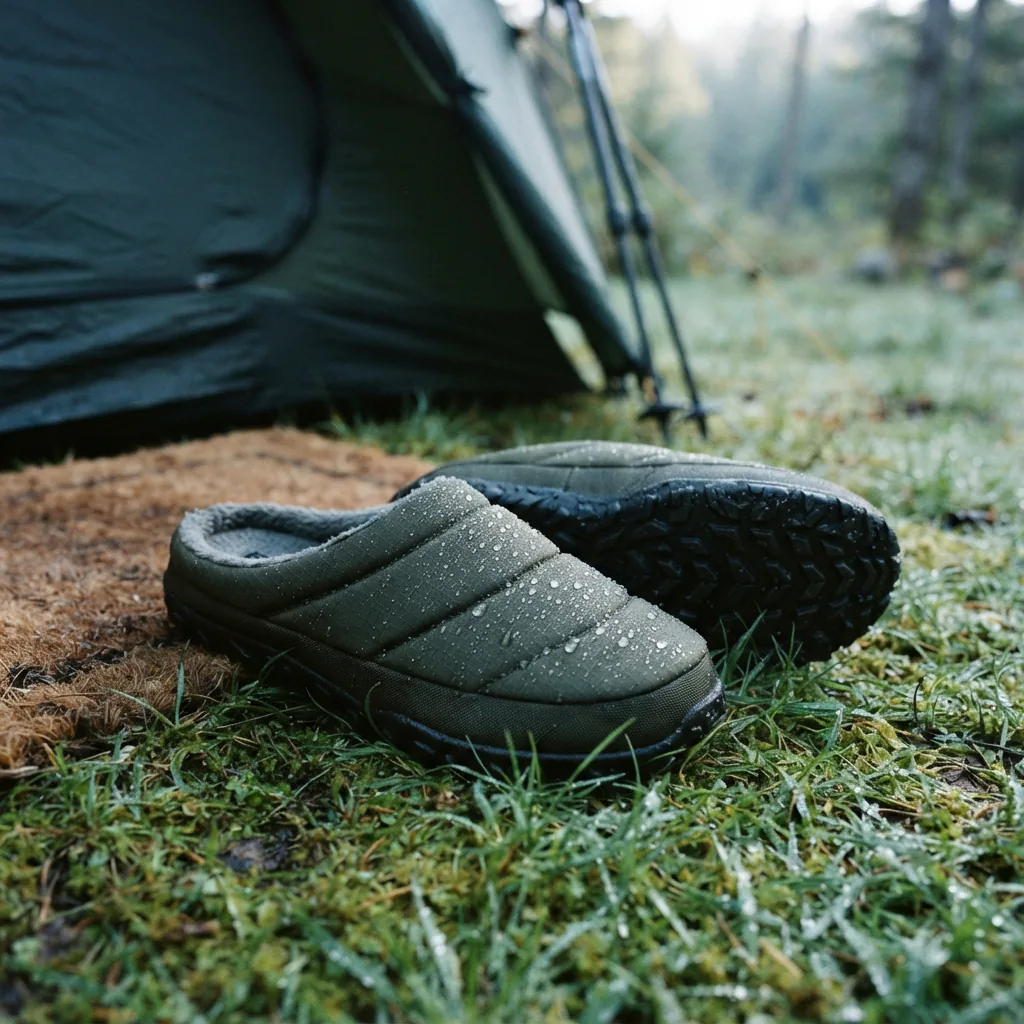
One pair of open-heel camp scuff slippers resting on dew-covered grass beside a tent door mat, with droplets beading on the uppers.

Water-Repellent Camp Scuffs for Damp Ground

These trade insulation for a water-repellent upper and a firmer outdoor sole. They suit grass, dew and cabin floors where a soft house slipper would soak through after a single walk outside.

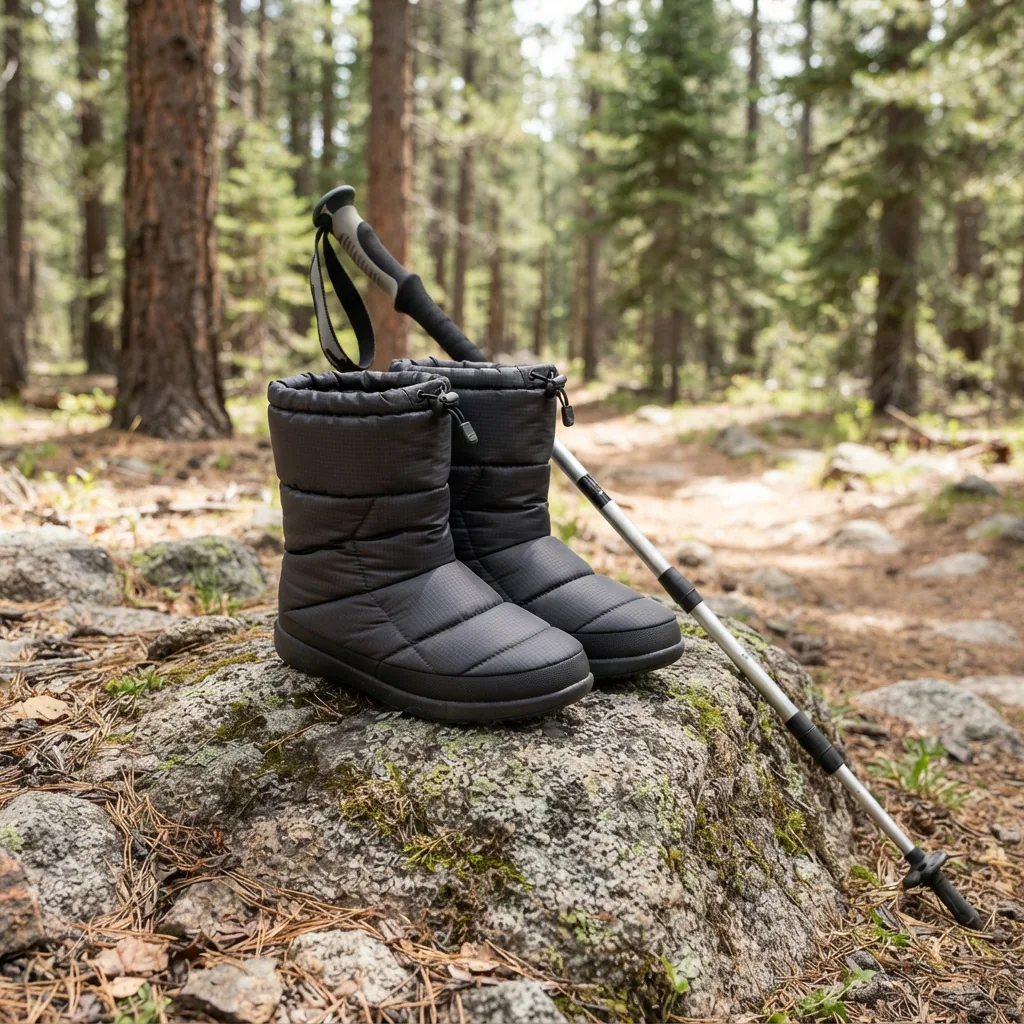
A single pair of insulated slipper boots in dark ripstop fabric placed on a trail rock beside a walking pole in a pine forest.

Ripstop Puffer Boots for Trail Days

Built with ripstop material and a boot shape, this direction suits hikers who want warm feet during breaks. They are less packable, so plan to wear them rather than stuff them into a full bag.

From Real Camp Trips

What Shoppers Say About the Category

Shoppers buying camp slippers often mention the same three moments: cold tent floors, wet grass at sunrise, and aching feet after a long walk. These notes stay at category level, since fit and durability vary by size and how hard a pair gets used.
The first thing I noticed was stepping out of my sleeping bag onto a cold floor and not regretting it. I slipped these on, walked out to the fire, and came back with warm toes. They are not heavy boots, and that is exactly why they have lived in my tent from spring through fall.
Decorative customer review avatar icon 1
Dana R.
Warm feet on cold tent floors, finally
Mornings here come with heavy dew, and my old house slippers would be soaked in one walk to the car. A water-repellent pair shed enough of it to stay comfortable. I still treat them as camp shoes and leave them outside the tent, which has kept the inside dry and the smell down.
Decorative customer review avatar icon 2
Marcus T.
Handles wet grass without soaking through
I wanted something to change into after hiking, not another heavy shoe. These weighed almost nothing in my pack and my feet felt noticeably better after a long day. After two weekends the sole showed real wear, which I expected at this price, so I am fine replacing them next season.
Decorative customer review avatar icon 3
Priya S.
Light enough to pack, honest about wear
I bought a pair as a test before spending more, and they held up over a rainy weekend of car camping. Getting ready was simple, they slipped on fast, and nobody at camp asked what brand they were. The fit ran a little generous, so I would size down next time for a snugger feel.
Decorative customer review avatar icon 4
Ellis W.
A budget pair that quietly did its job
Practical Questions

Answers to the Questions Buyers Ask Most

Height is the main difference. A boot-style shaft covers more of the ankle and holds warmth in when you step outside before the tent has warmed up. Low puffer cuts weigh less and pack smaller, so they suit lounging inside. Pick the higher cut if cold mornings are the problem.
Repellent uppers shed dew and light splash rather than soaking it up, which keeps the inside of the slipper drier on wet grass. They are not waterproof boots, so standing water will get through. Expect them to handle short walks across a damp campsite, not puddles or river edges.
An indoor sole is softer and quieter on rugs, but it wears quickly on gravel and concrete. An indoor/outdoor sole is firmer and better for trips to the car or the fire ring, at the cost of a slightly stiffer step. Choose based on how often you plan to walk outside.
They work for short, slow walks around a campsite, since the uppers are lighter than a hiking shoe. Treat them as camp footwear rather than trail footwear: the sole and stitching are not built for distance, and a value-priced pair will show wear sooner than a hiking shoe.
Fit is the biggest variable here, since some pairs list four sizes and others show one specific size. Compare the stated size against a slipper you already own, and allow a little room if you plan to wear a sock. When only one size is listed, assume that listing is fixed.
Expect a season or two of regular weekend use rather than years of daily wear. Independent reviews of this brand’s outdoor gear make the same trade-off: the price is low and the lifespan is shorter than premium options. Buy with replacement in mind and the value holds up.
Keep Exploring

Continue Into Related Outdoor Gear

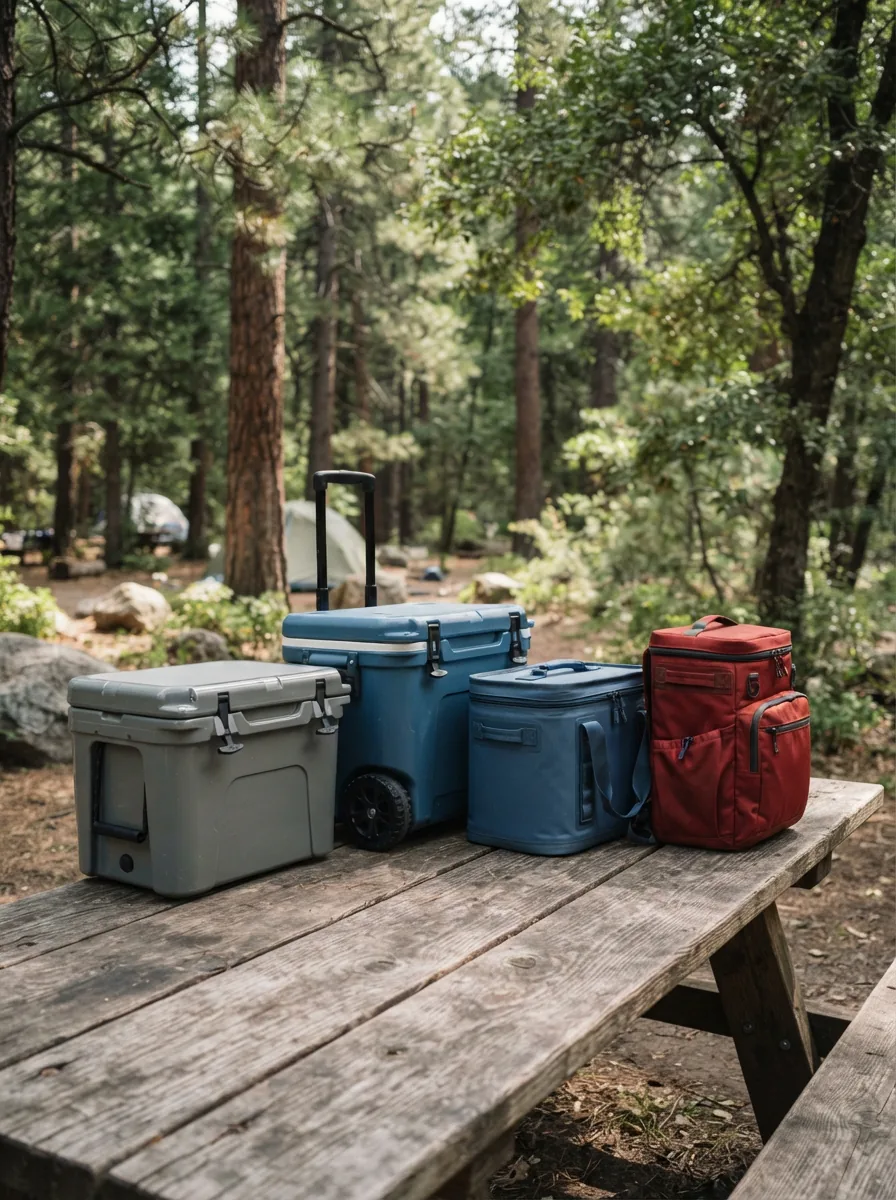
Hard-sided and soft-sided Ozark Trail coolers arranged on a wooden picnic table at a wooded campsite
Admin
Ozark Trail Cooler

Compare Ozark Trail coolers by size, shape and how you carry them, from hard-sided chests that hold ice for a weekend to soft totes and backpack coolers for a day out. Each option below shows capacity, format and the trip it fits best.
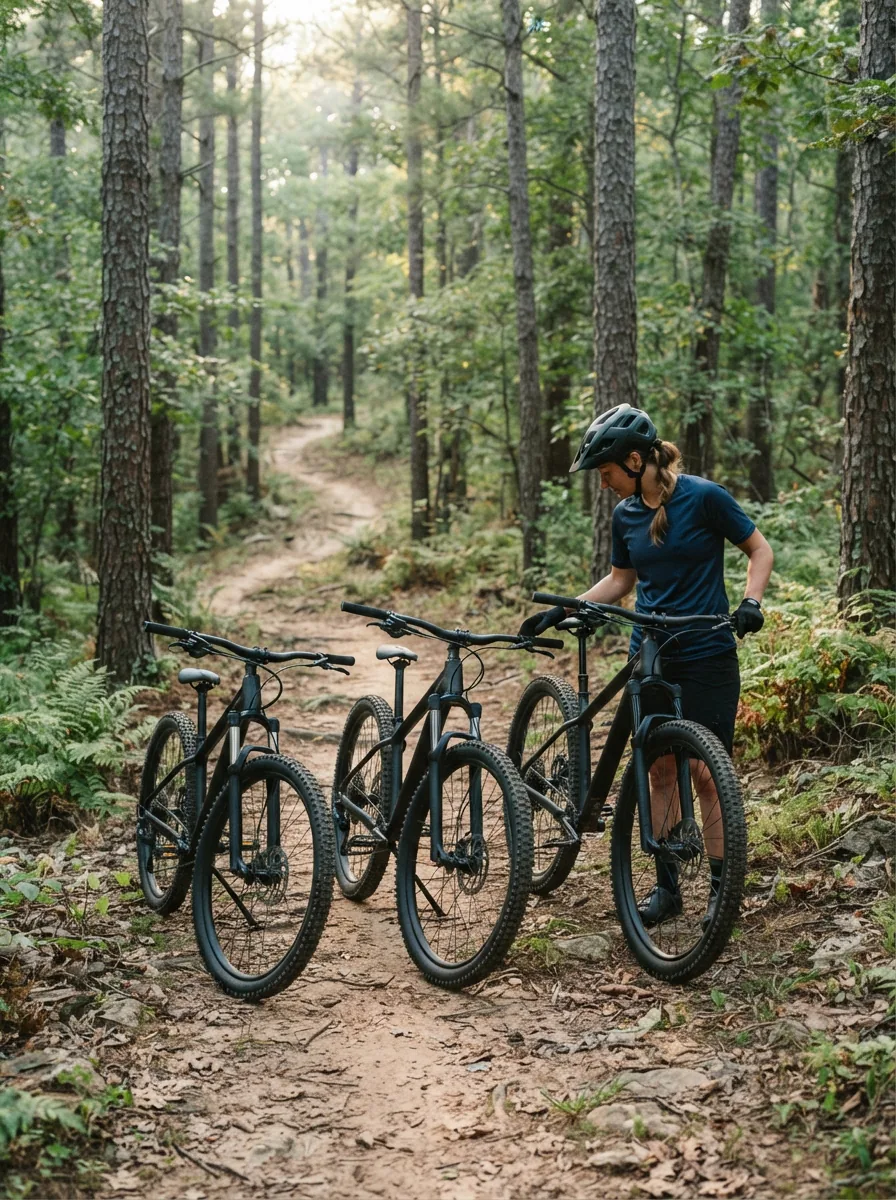
A group of Ozark Trail mountain bikes with front suspension parked on a dirt trailhead, a rider comparing frame sizes beside them
Admin
Ozark Trail Bike

Ozark Trail mountain bikes span hardtails and full suspension builds, sized from young riders to tall adults. Compare fit, suspension, wheels and gears to match your trails and your budget.

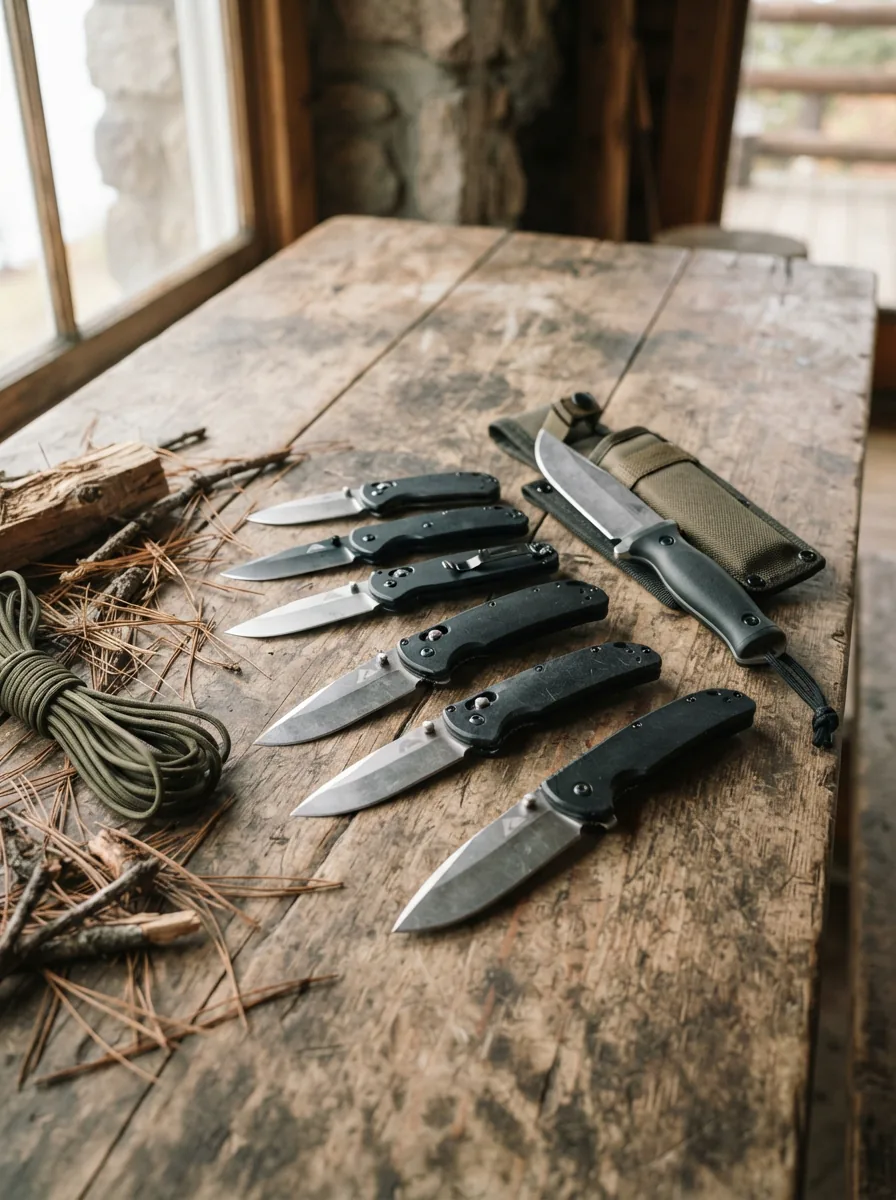
Assorted Ozark Trail folding and fixed blade knives arranged on a rustic wooden camp table
Admin
Ozark Trail Knife

This page lines up Ozark Trail knives so you can compare folding and fixed blades, locks, handles and carry options at a glance. Each pick notes what it handles best, from camp prep to a pocket blade you carry daily.

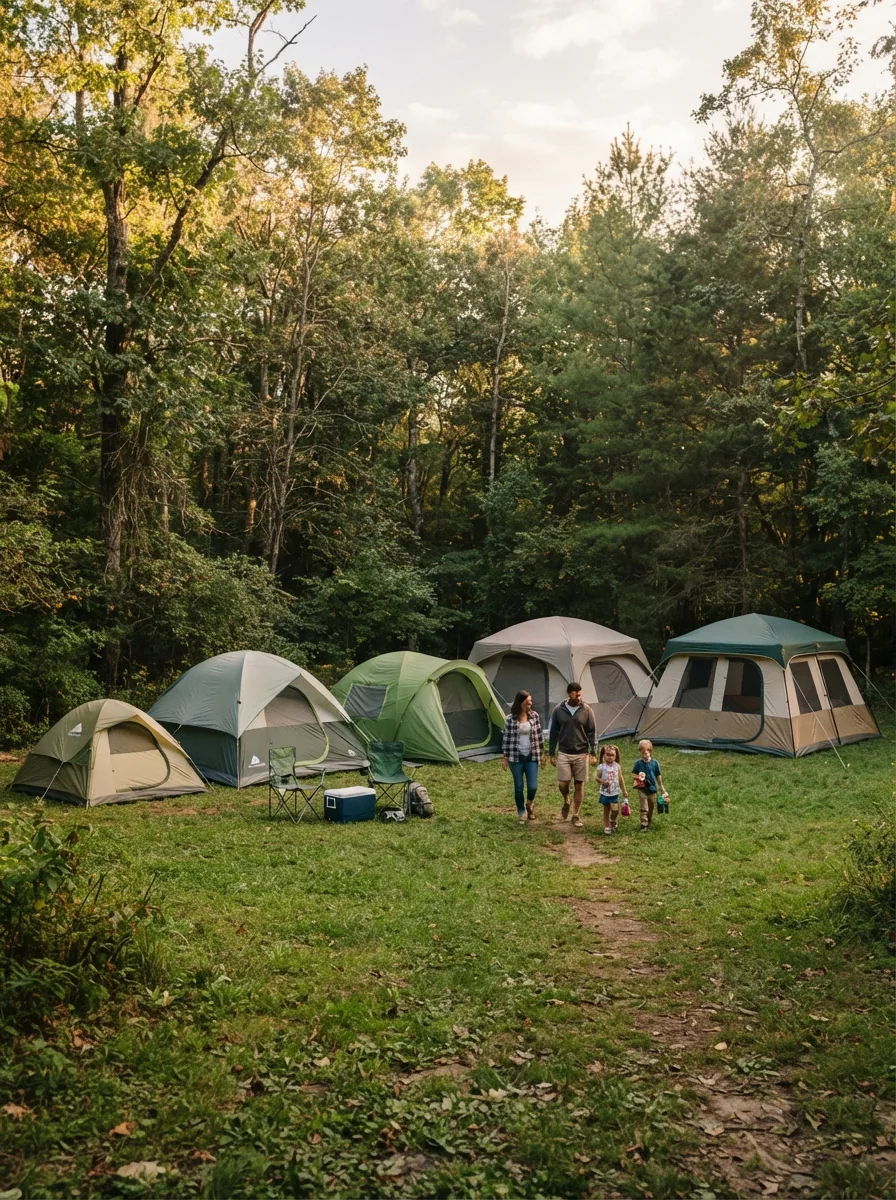
A row of Ozark Trail camping tents of several sizes pitched on a grassy campground with a family walking between them.
Admin
Ozark Trail Tents

Compare Ozark Trail tents by capacity, setup style, weather coverage and packed weight, from solo backpacking shelters to twelve-person family cabins built for drive-up weekend campsites.