
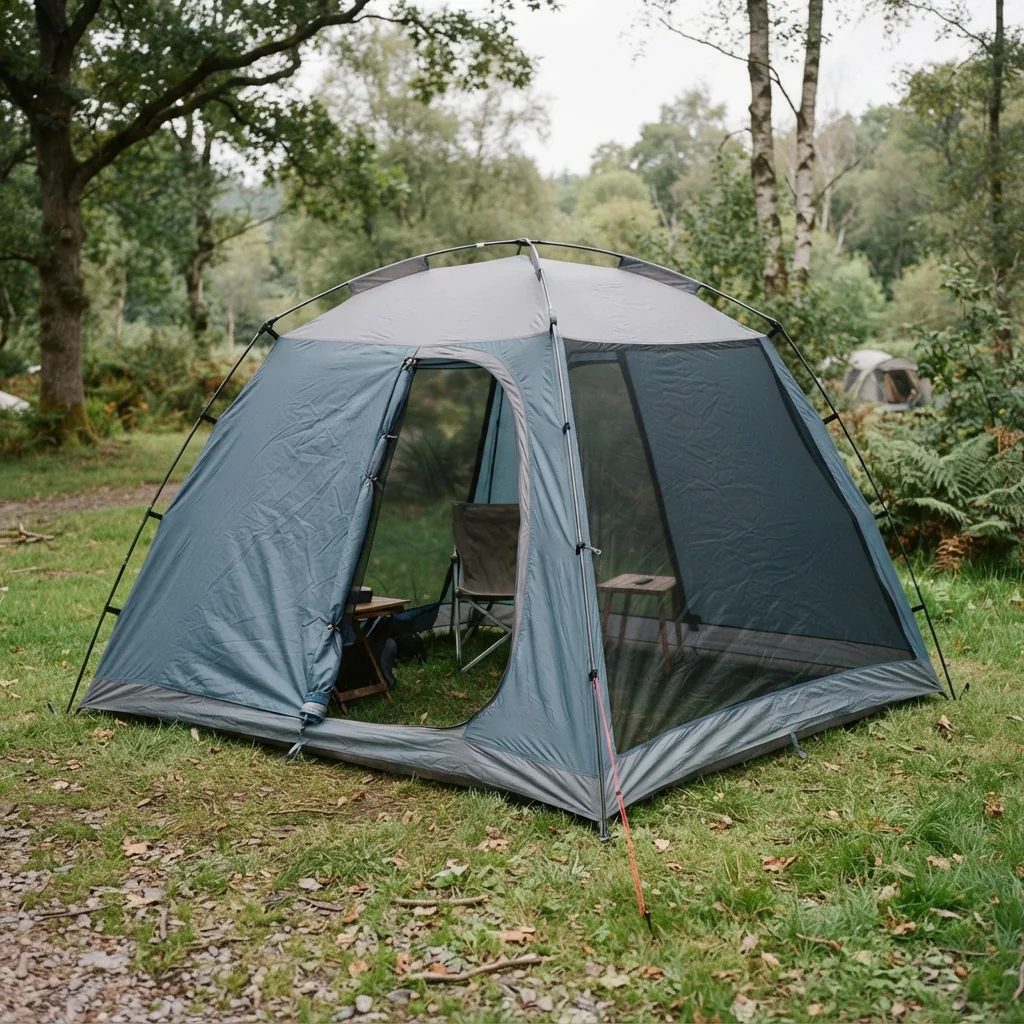





Ozark Trail Screen House

Compare Ozark Trail screen houses by size, setup style and weather coverage. This category gathers mesh shelters, instant frames and models with sidewalls, so you can match one to your campsite, patio or weekend trip.

Four screen houses with different sizes and setups

Ozark Trail 7-Person Screen House Connect Tent with Two Doors for Easy Campsite Entry

Two doors are the standout detail here. Campers can enter and leave from either side, which matters when the shelter sits between a tent and a cooking area. The seven-person room size gives families space to eat and relax away from insects on short trips and weekend outings.

Ozark Trail 10ft x 10ft Screen House Shelter with Mesh Screen and Wind Protection

Wind can ruin a meal outdoors faster than insects can. This 10ft x 10ft shelter pairs full mesh screening with a shape that helps block gusts, so the table stays comfortable on breezy afternoons. The square footprint is easy to fit beside a tent on a campsite or on a backyard patio.

Ozark Trail 10x10 Instant Screen House Canopy with UPF 50+ Mesh, Easy Steel Frame

Setup is the selling point here. The frame unfolds and locks into place, so shade goes up in minutes without sorting a bag of poles. Mesh keeps insects out while the canopy adds UPF 50+ cover, which helps on exposed lots and open fields where shade is scarce on hot afternoons.

Ozark Trail Blue Screen House Tent, 13 ft x 9 ft x 84 In, Spacious Camping Shelter

At 13 ft x 9 ft with an 84-inch ceiling, this blue screen house tent is one of the roomier options in the category. Tall walls mean adults can stand and move around, and the build holds up to repeated weekend use. Pick it when a crowd needs insect protection and real floor space.

Ozark Trail 13 x 9 Foot Large Roof Screen House with Ample Insect Protection for Camping

The large roof is what separates this model from smaller square shelters. A 13 x 9 foot footprint gives a family room to set up a table, camp chairs and a cooler while mesh overhead keeps insects off the food. It suits group camping and longer stays where the screen house works as the main daytime living area. Expect a longer setup than an instant frame, and budget time for staking it down on open ground.
More ways to choose

Three more shelters for specific needs

Ozark Trail 9 ft x 9 ft Backyard Screen House with Zippered Doors for Patios and Campsites

Size is the trade-off to weigh here. Nine feet square is compact enough for a patio or a small campsite, yet roomy enough for a small table and two chairs. Tall mesh walls keep airflow open, and the wide zippered door lets you walk through holding a full plate. Two people can handle setup with color-coded poles, and it packs into a carry bag for the trunk.

Ozark Trail Screen House with Sidewalls and Rainfly Panel for Changing Weather on Longer Trips

Weather flexibility is what sets this one apart. Solid sidewalls zip on for wind and light rain, then come off when you want open mesh again, so one shelter covers both an afternoon of screening and a cooler evening. Setup takes a few more minutes than a canopy-only model, but the trade pays off on trips where gear has to do more than one job.

Ozark Trail Instant Screen House with Carry Bag and Ground Stakes for Quick Setup

For families that already own a tent, this adds a separate bug-free hangout without much fuss. The frame unfolds and pushes into place, so it is up before anyone argues about poles. Ground stakes and guy lines hold it steady when a campground breeze picks up, and the shaded area fits a folding table and chairs.
Where these shelters fit

Three situations a screen house handles well

A screen house is a second shelter, not a replacement for a tent. It works best as a shared daytime space for meals, gear and downtime, whether at a campground, a backyard gathering or a base for a longer trip.

Family meals at the campsite

A screened dining area keeps food and people comfortable while insects stay out. Set it near the cooking zone and everyone has a shaded place to sit between activities.

Backyard and patio gatherings

Screen houses work off the campsite too. On a patio or lawn they give a shaded, bug-free spot for meals and games, and they pack away once the season ends.

Extra hangout near the tent

Families with a tent can add a separate screened room so kids and adults have space to spread out. Stakes and guy lines keep it steady when wind crosses the campground.

Size, setup style, coverage and packed weight all change which screen house suits you. Larger shelters hold more people but ask for more space and hands, while UPF canopies and zip-on sidewalls each solve a different weather problem at a different price.

What to weigh before you pick a screen house

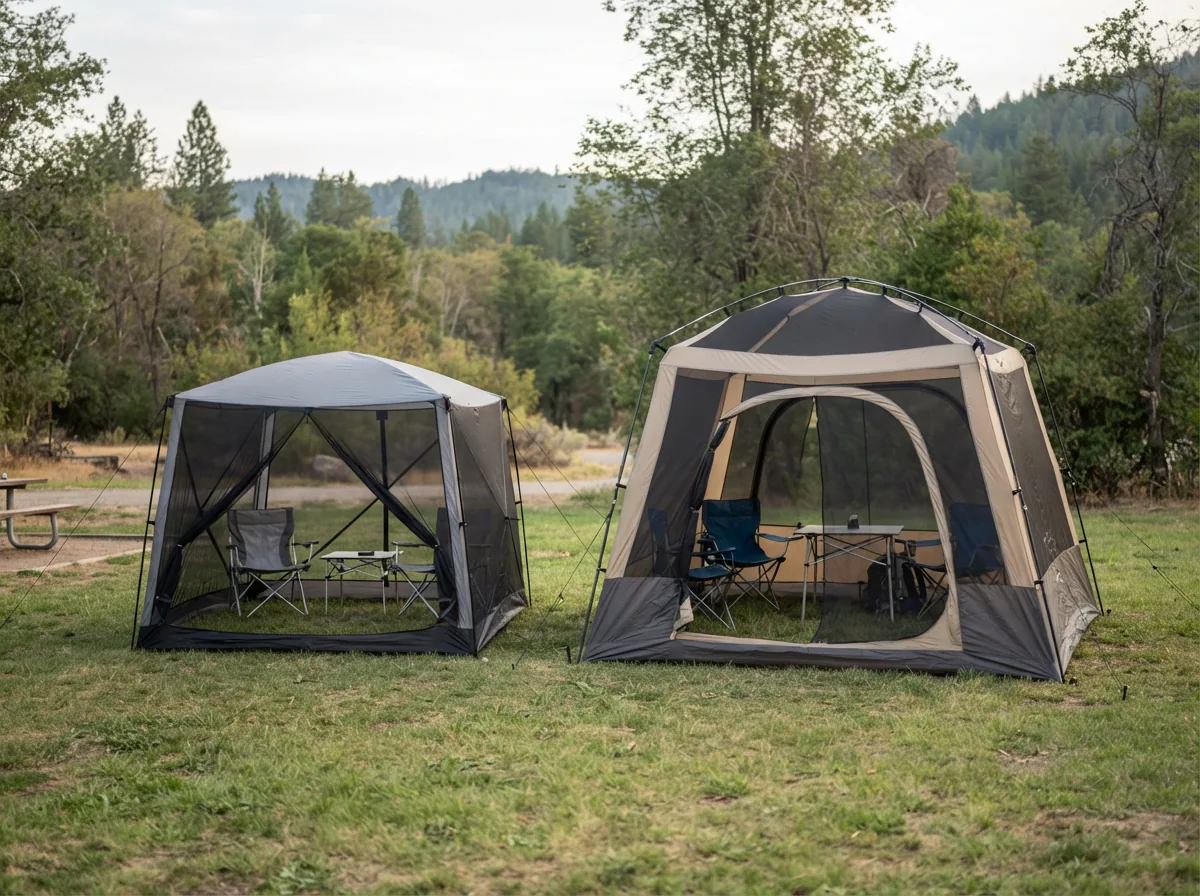
Compact and large mesh screen houses side by side on a campsite lawn for comparison
Match footprint to group size

Count the people and the gear that will sit inside. A nine-foot square suits a couple or a small table, while a 13 x 9 foot shelter gives families room to stand and spread out.

Setup time and pole handling

Instant frames trade a little weight for speed, which matters after a long drive. Traditional poles pack lighter and usually cost less, but they ask for a second person and extra minutes.

Coverage beyond mesh walls

Mesh alone handles insects and airflow. Add a UPF canopy for sun, or zip-on sidewalls for wind and light rain, and the shelter covers more of the day instead of one condition.

Storage, weight and transport

Check the packed size against your trunk and how far you will carry it. Larger shelters need more space and hands, while compact models reward campers who move sites often.

Kinds of screen houses

Four ways to sort screen houses by need

Screen houses split by three things: how big the shelter is, how fast it goes up, and what extra coverage it offers. Match the footprint to your group, the setup to your patience, and the coverage to the weather you expect.
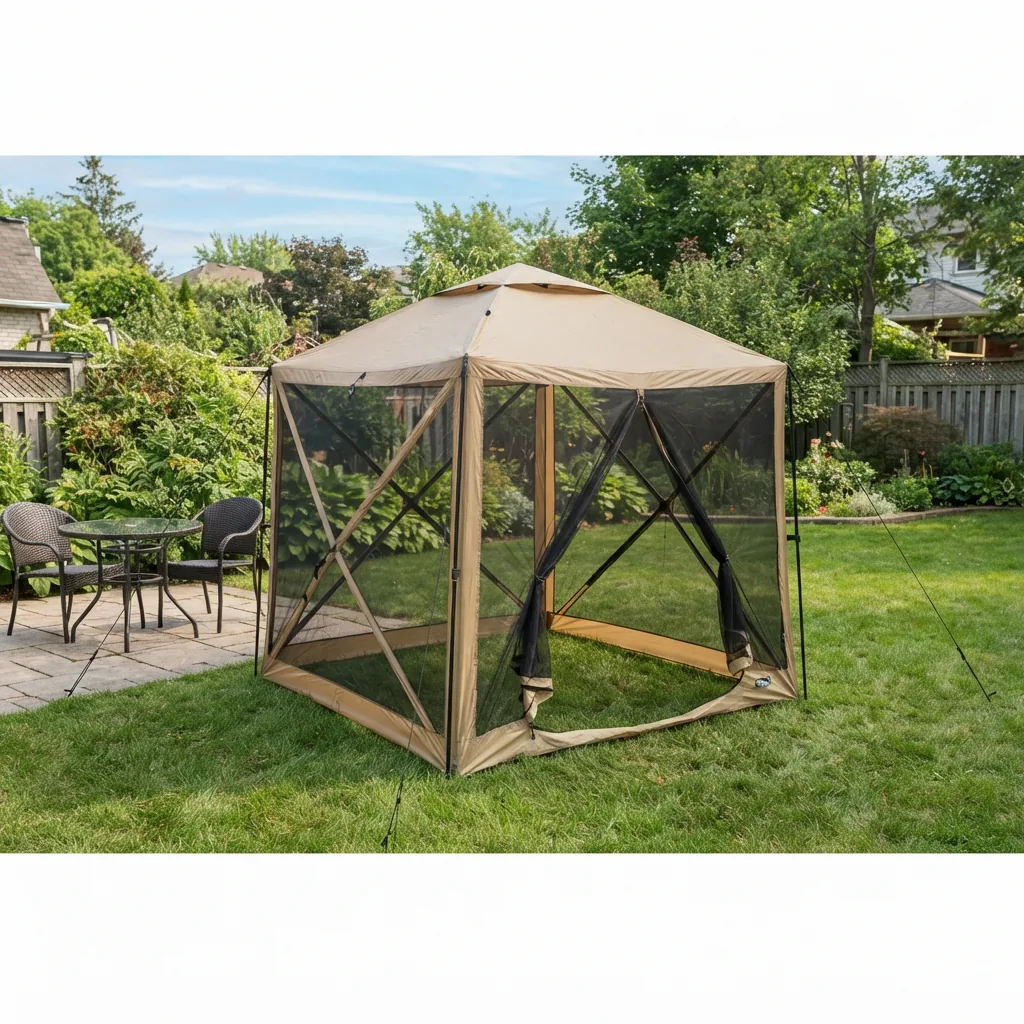
Compact nine-foot square mesh screen house on a backyard lawn beside a patio table

Small 9-foot shelters

Nine-foot square models suit patios, tailgates and pairs who want a compact screened spot. They pack smaller and take less room in the car, so they fit short outings better than full-family camps.

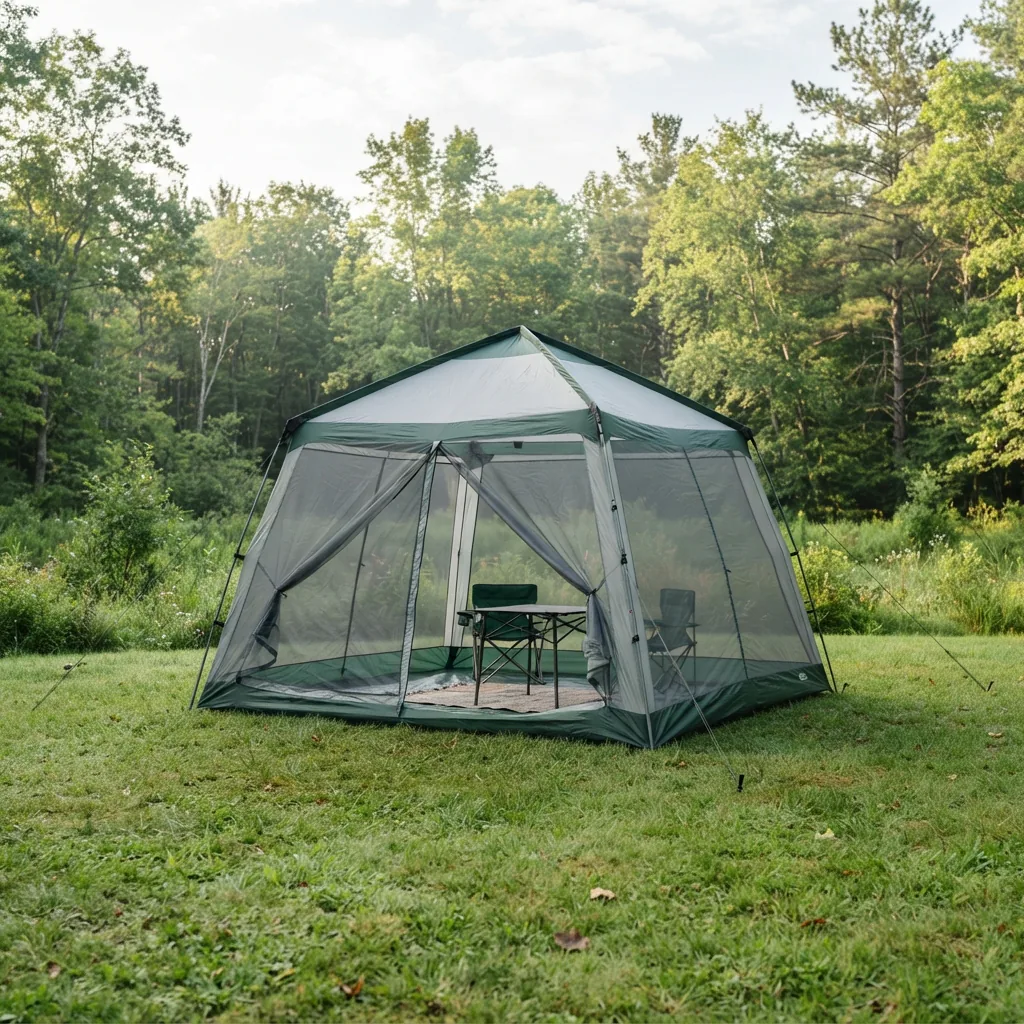
Large thirteen-by-nine-foot mesh screen house with a tall roof on a wide campsite

Roomy 13 x 9 foot options

Larger footprints with tall ceilings let adults stand and fit a full table plus chairs. They suit group camping and longer stays, at the cost of a heavier pack and more ground to stake out.

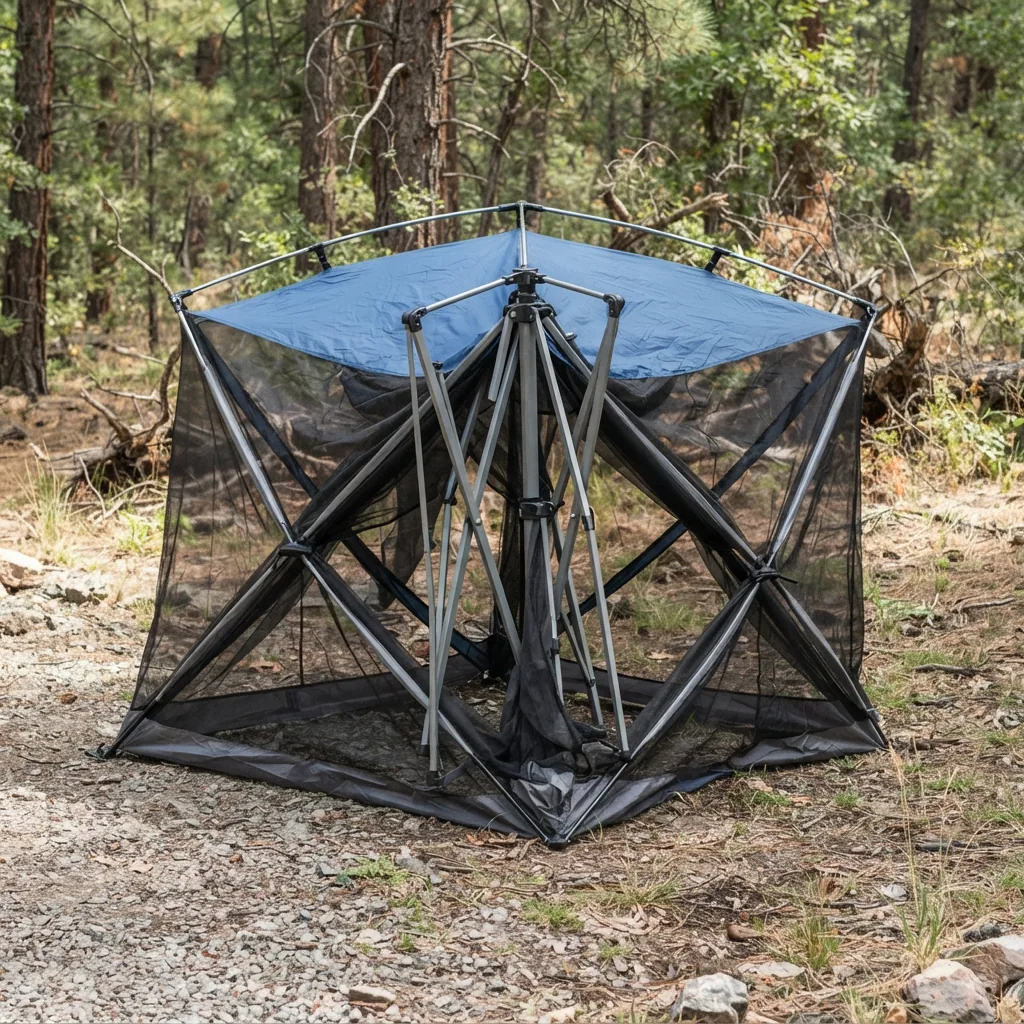
Mesh screen house with a hinged instant frame partly unfolded on gravel campsite ground

Instant frames for fast setup

Hinged frames unfold and lock, so shade goes up in minutes with little pole sorting. They suit late arrivals or small crews, though you may trade away some adjustability in the process.

Mesh screen house with solid zippered sidewalls half attached at a grassy campsite

Sidewall models for weather cover

Zip-on solid walls add wind and light-rain cover that mesh-only shelters cannot. They weigh a bit more and add setup time, but handle trips where one shelter has to change roles.

From real outings

What campers notice after a few trips

Owners tend to describe the same pattern: quick setup, decent insect protection and honest limits in bad weather. Read for what holds up on weekend trips, and weigh that against the price you paid.
We used ours for two weekends in a row. Setup took about fifteen minutes the first time and half that once we knew which pole went where. It kept mosquitoes off the kids at dinner, and the mesh walls still let the evening breeze move through the whole shelter.
Decorative customer review avatar icon 1
Dana M.
Weekend camper, family of four
I compared this against a premium brand and decided the savings were worth the extra setup effort. It is not as quick to raise and the carry bag is a tight fit, but it has held up fine so far on short weekend trips with no complaints.
Decorative customer review avatar icon 2
Priya R.
First-time buyer comparing value
Rain was the real test. With the corners staked and guy lines out it handled a light overnight shower, though we still moved the cooler inside when the wind picked up. For the price I consider that a fair trade rather than a flaw.
Decorative customer review avatar icon 3
Tom H.
Car camper, two-night trips
We take it camping and also leave it on the patio through summer. It is light enough for me to carry from the car on my own, and the shaded area works for meals or just sitting with a book when the flies are bad outside.
Decorative customer review avatar icon 4
Jordan L.
Backyard and campsite user
Common questions

Answers before you choose a screen house

A screen house is not a sleeping tent. It has no full floor or weatherproof body, so it works as a shaded, insect-free area for eating and sitting. Bring a tent for sleeping and use the screen house as the shared daytime space nearby.
Instant frames go up in minutes and can be handled alone if you are patient. Traditional pole models take longer and are easier with two people, especially the first time. Practice once at home before a trip so nothing is new at the campsite.
Mesh shelters are not built for storms. Staking the corners and running guy lines helps in a steady breeze, and models with solid sidewalls give more cover from wind and light rain. Plan to bring gear inside if heavier weather is forecast.
Many campers leave one up through a trip if it is staked and the forecast stays calm. Wind and overnight dew are the main concerns, so check the forecast, tighten guy lines and empty anything you do not want damp before turning in.
Measure the footprint plus a couple of feet on each side for staking and door swing. Also confirm your campground allows a second shelter, since some sites cap the number or total size of units allowed per reservation.
A 13 x 9 foot model gives a family room to stand and fit a table with chairs, while a 9 x 9 foot shelter suits a couple or lighter use. Think about how much gear sits inside and how often you will use it before deciding.
Keep exploring

More outdoor gear stories to read next

Hard-sided and soft-sided Ozark Trail coolers arranged on a wooden picnic table at a wooded campsite
Admin
Ozark Trail Cooler

Compare Ozark Trail coolers by size, shape and how you carry them, from hard-sided chests that hold ice for a weekend to soft totes and backpack coolers for a day out. Each option below shows capacity, format and the trip it fits best.


A group of Ozark Trail mountain bikes with front suspension parked on a dirt trailhead, a rider comparing frame sizes beside them
Admin
Ozark Trail Bike

Ozark Trail mountain bikes span hardtails and full suspension builds, sized from young riders to tall adults. Compare fit, suspension, wheels and gears to match your trails and your budget.

Assorted Ozark Trail folding and fixed blade knives arranged on a rustic wooden camp table
Admin
Ozark Trail Knife

This page lines up Ozark Trail knives so you can compare folding and fixed blades, locks, handles and carry options at a glance. Each pick notes what it handles best, from camp prep to a pocket blade you carry daily.

A row of Ozark Trail camping tents of several sizes pitched on a grassy campground with a family walking between them.
Admin
Ozark Trail Tents

Compare Ozark Trail tents by capacity, setup style, weather coverage and packed weight, from solo backpacking shelters to twelve-person family cabins built for drive-up weekend campsites.
