





Ozark Trail Light

Compare Ozark Trail tent lights, area lights, lanterns and water-safe options by brightness, power source and how much ground they cover, so you can match one light to a short trip, a family site or a long weekend away.

Four lights for common camping needs

Ozark Trail Deluxe LED Camping Tent Light, 100 Lumens, 3 AA Battery Power for Weekend Camping

Clip this 100-lumen light inside your tent and you get a bright, even glow for reading, packing up or finding gear without draining your phone battery. It runs on three AA batteries, so a spare set in the car keeps it going on longer weekends and at first-time setups.

Ozark Trail 1500L Rechargeable Campsite Area Light with 3 Modes for Base Camp Nights

Set it on the picnic table and the 1500-lumen output covers a whole campsite loop, not just the spot beside you. Three modes let you dial from full brightness down to a soft glow, and rechargeable power means you top it up at home instead of buying cells after every trip.

Ozark Trail Camping Hanging 4 Light Set with Remote and 20-Foot Range, 100 Lumens

Four hanging lights with one remote cover a canopy, a tent row or a gear area, so you are not walking between dark corners at night. The 20-foot range means the remote still works from your chair, and 100 lumens per light is enough for tasks without glare.

Ozark Trail Camping Lantern with Adjustable Fan, 145 Lumens for Warm Night Airflow

Light and airflow come from the same base, which helps on still nights when a lantern alone only warms the air. At 145 lumens it lights a card game or a cooking corner, and the adjustable fan keeps the space around the table comfortable without a second gadget.

Ozark Trail LED Lantern, 1000 Lumens and 5 Modes with Up to 75-Hour Runtime for Weekend Trips

With 1000 lumens on the top setting, this lantern lights a whole campsite kitchen or a dark trailhead lot, then steps down through five modes when you only need a night-light. Run time reaches up to 75 hours on lower settings, which easily covers a long weekend without a recharge or fresh cells.
More options to weigh

Brighter picks and wet-weather answers

Ozark Trail 1500 Lumen LED Camping Lantern with 5 Modes for Table Light at Camp Evenings

Fifteen hundred lumens makes this the option for people who want one light to carry the whole site, from tent row to cooking table. Five modes give you a middle setting for steady evening use, and the tabletop size means it sits stably while you eat or play cards nearby.

Ozark Trail Rechargeable Camping Lantern, 3000 Lumens with IPX4 Water Resistance

Brightest in this group, the 3000-lumen output works well for large sites, late packing and anyone who dislikes fumbling in shadow. Recharging removes the battery habit, and IPX4 resistance means a passing shower or a splashed cooler does not end the evening early.

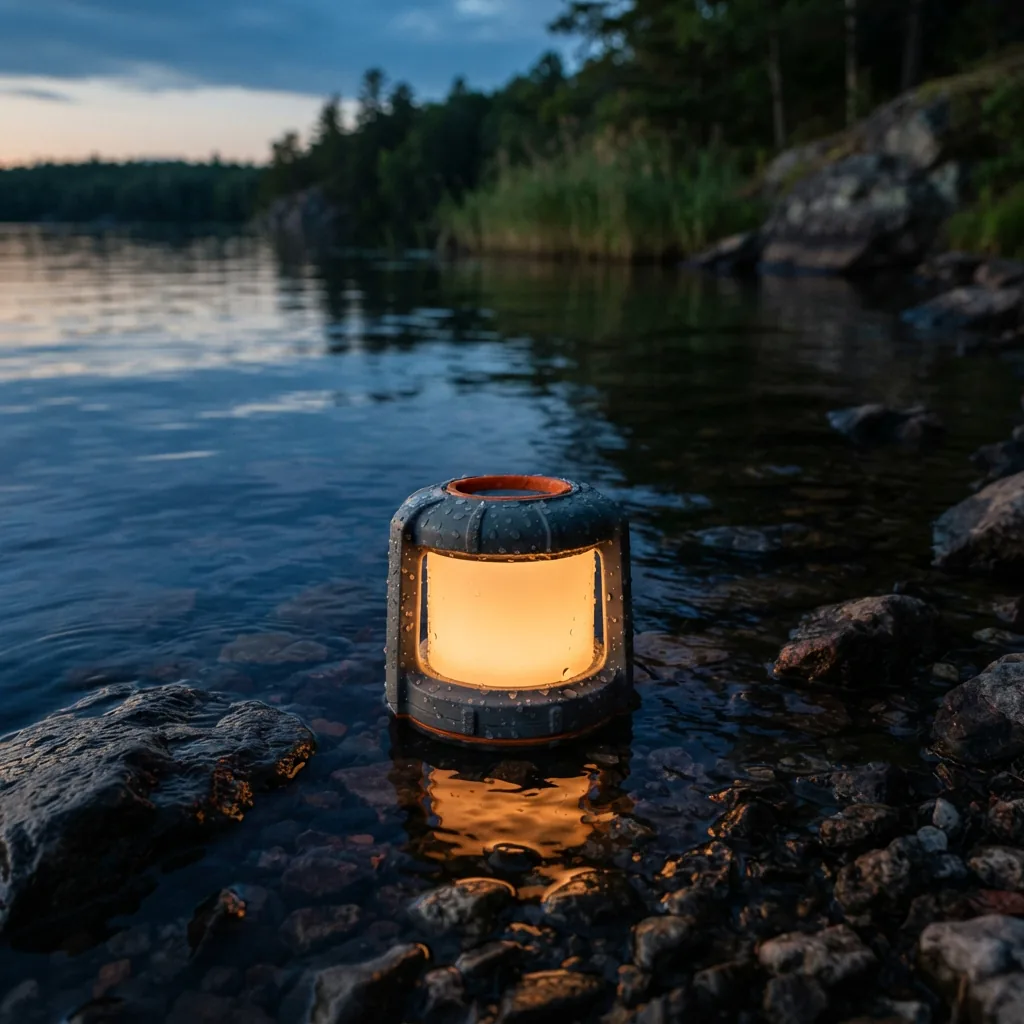
Ozark Trail Floating LED Lantern Flashlight for Water Trips and Wet Campsite Nights

Because it floats, this light earns its place near water: rafting, shoreline camps and rainy nights where a dropped lantern would otherwise be gone. It doubles as a handheld flashlight for the walk to the restroom, and water resistance keeps it working after a splash.
Who this gear suits

Lighting for first setups and regular weekends

From a family’s first campsite to value-minded backpackers, these lights suit short trips and weekend use. Brightness, run time and battery cost decide whether you get a full night of light or an early dim-out.

Family first campsite setup

New campers usually need one reliable light that everyone can find. Start with a lantern on the table and a tent light inside, then add an area light only if the site is large.

Backpacking and day-hike base camps

Weight and battery count matter when you carry gear in. A compact light with lower modes stretches power across two nights, so you spend less of the trip thinking about charging.

Value comparison against premium gear

Shoppers testing budget gear against top-end options should compare run time and setup ease, not only brightness. Ozark Trail lights trade some longevity and polish for a price that is easier to accept.

Brightness tells you how far light reaches, power source sets what it costs to keep running, run time shows how long a night lasts, and size decides what fits in the pack. Balance these four and the right light becomes obvious.

Four factors that decide which light you need

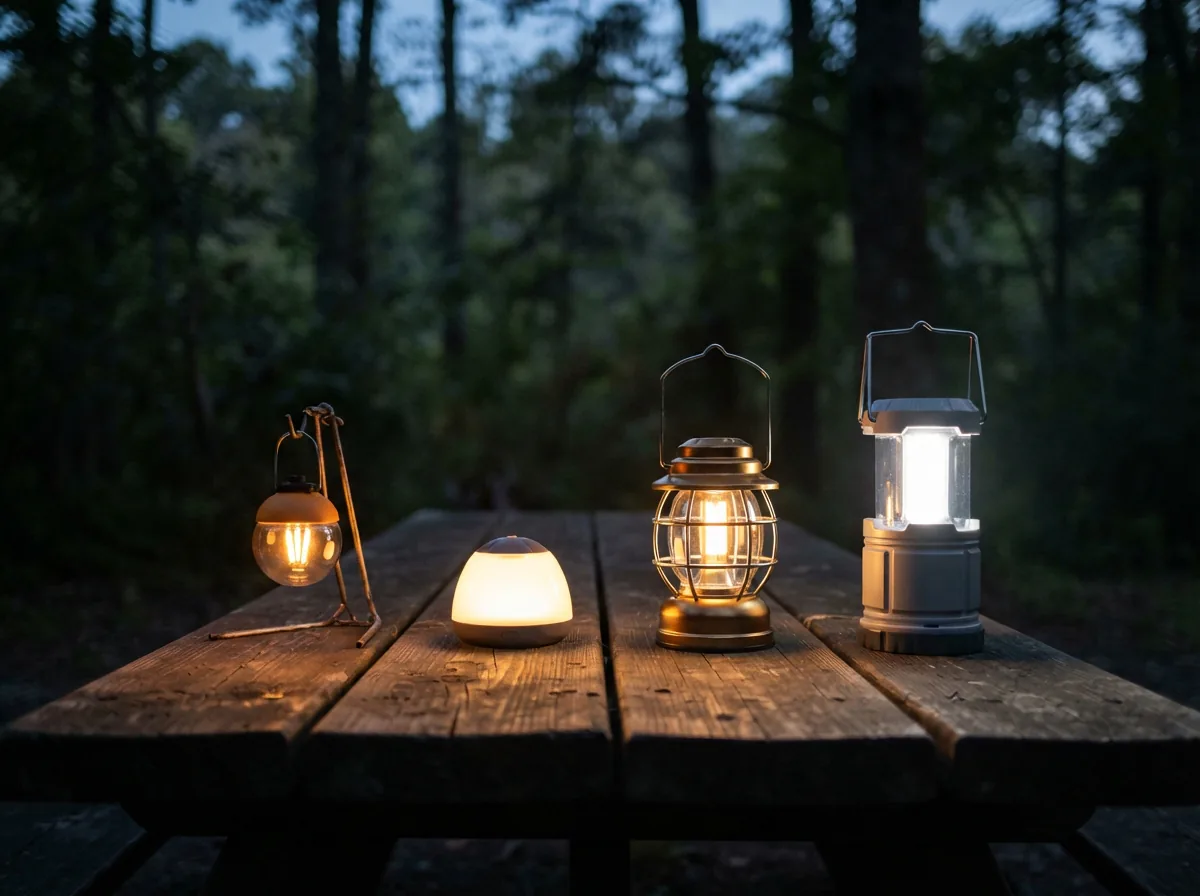
Four camping lights of different sizes lined up on a wooden table at dusk for comparison
Brightness and how far light reaches

A 100-lumen light works inside a tent where your eyes are close to the surface. Step up to 1000 or 1500 lumens when the beam must cover a table, a path and several tents at once.

Power source and running cost

AA batteries keep a small light simple and cheap to replace at a store near the campground. Rechargeable models cost more up front, then save you from buying cells after every weekend trip.

Run time across a full weekend

Higher modes use power quickly, so the number on the box usually applies to the lowest setting. Lower modes stretch a lantern through several nights and keep the walk to the tent lit.

Size, weight and setup ease

Anything you carry in should pack flat and hang easily. Bulkier area lights earn their space at car camps, while hanging sets suit canopies where several people need light at once.

Find your light type

Four lighting types and when each one fits

Tent lights, area lights, lanterns and water-safe options each solve a different problem. Match the type to where light is needed, how wide it must spread and whether rain or splashes are likely, then the choice narrows quickly.
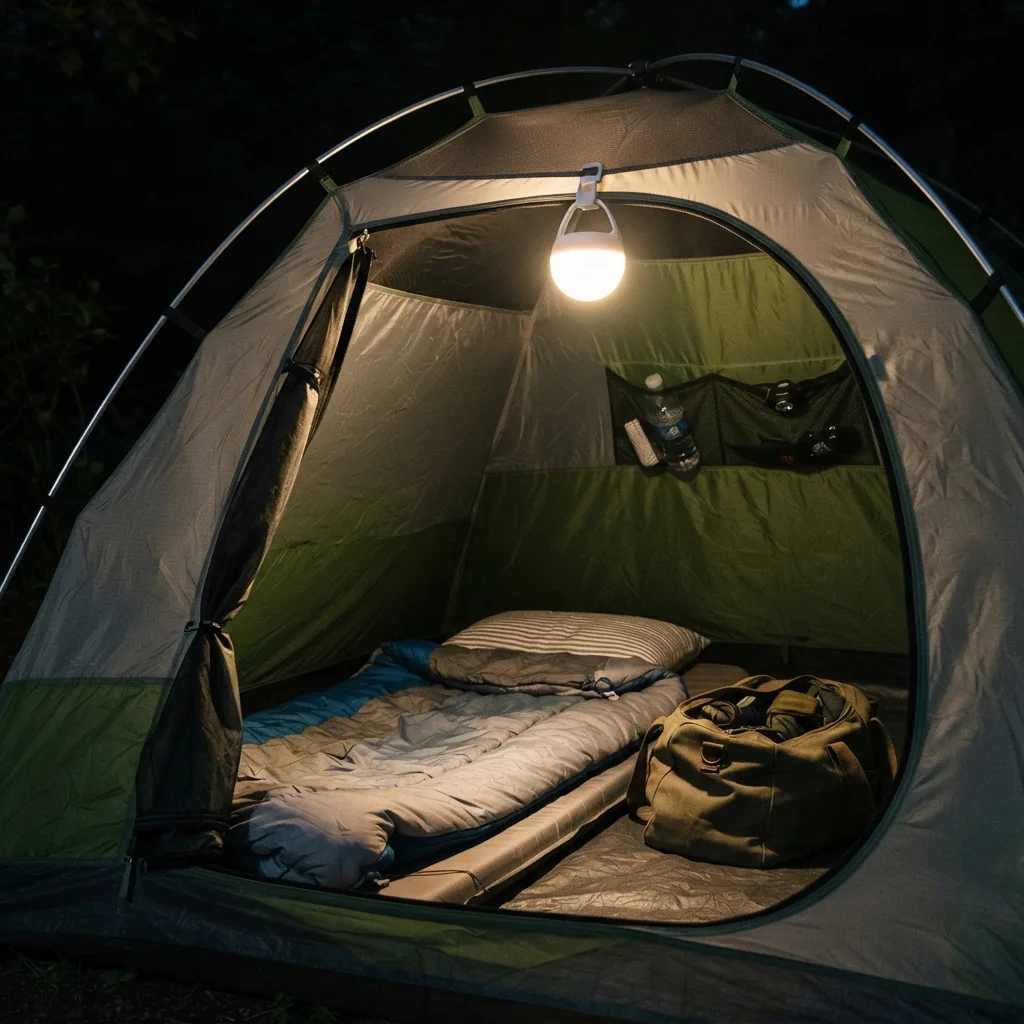
Small LED light clipped to a tent ceiling lighting the interior at night

Tent lights for close-range tasks

Look here when you mainly need light inside the tent: finding boots, reading, packing a bag. These are low-profile, close-range lights that run on small batteries and stay out of the way.

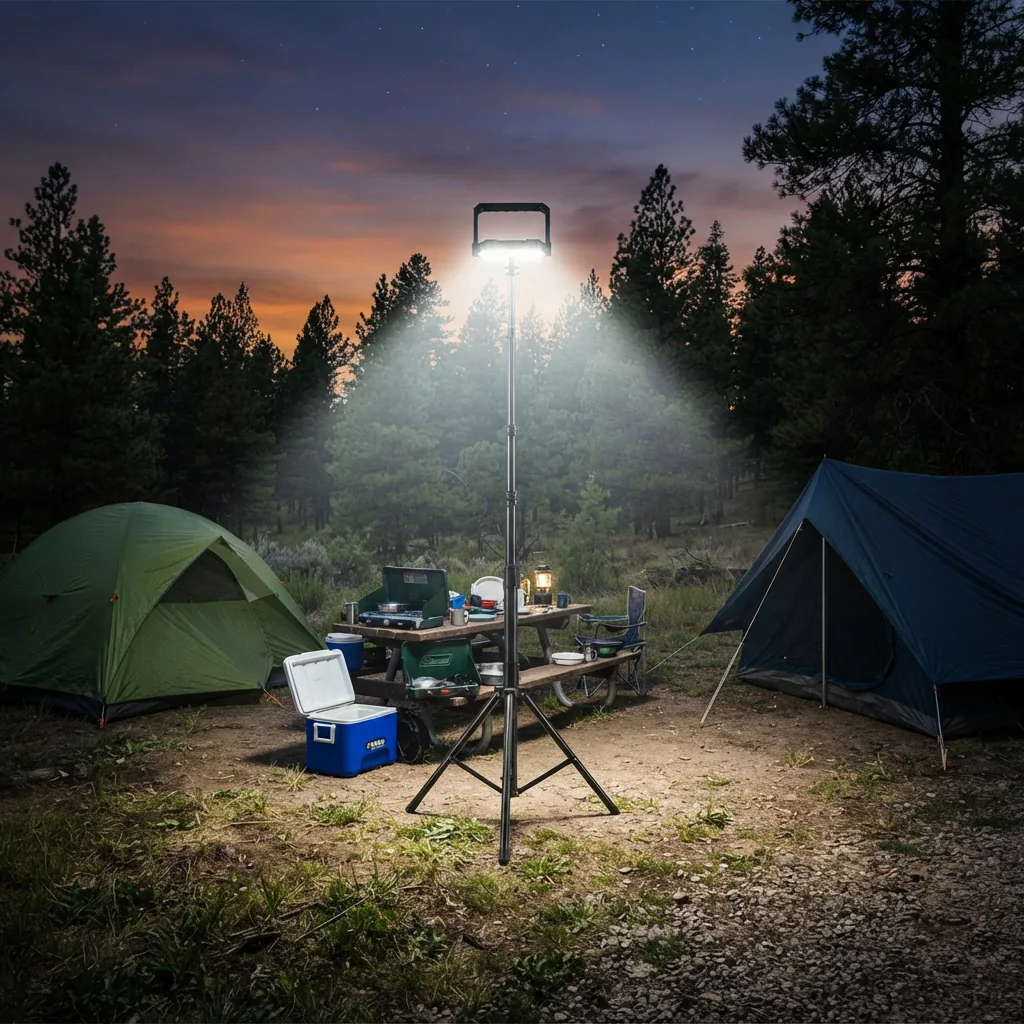
Tall area light standing on the ground lighting several tents at a campsite

Area lights that cover the whole site

Pick this direction when one light must reach tents, table and path at once. Higher output and a wider beam suit shared campsites, though the trade-off is a larger body and more frequent charging.

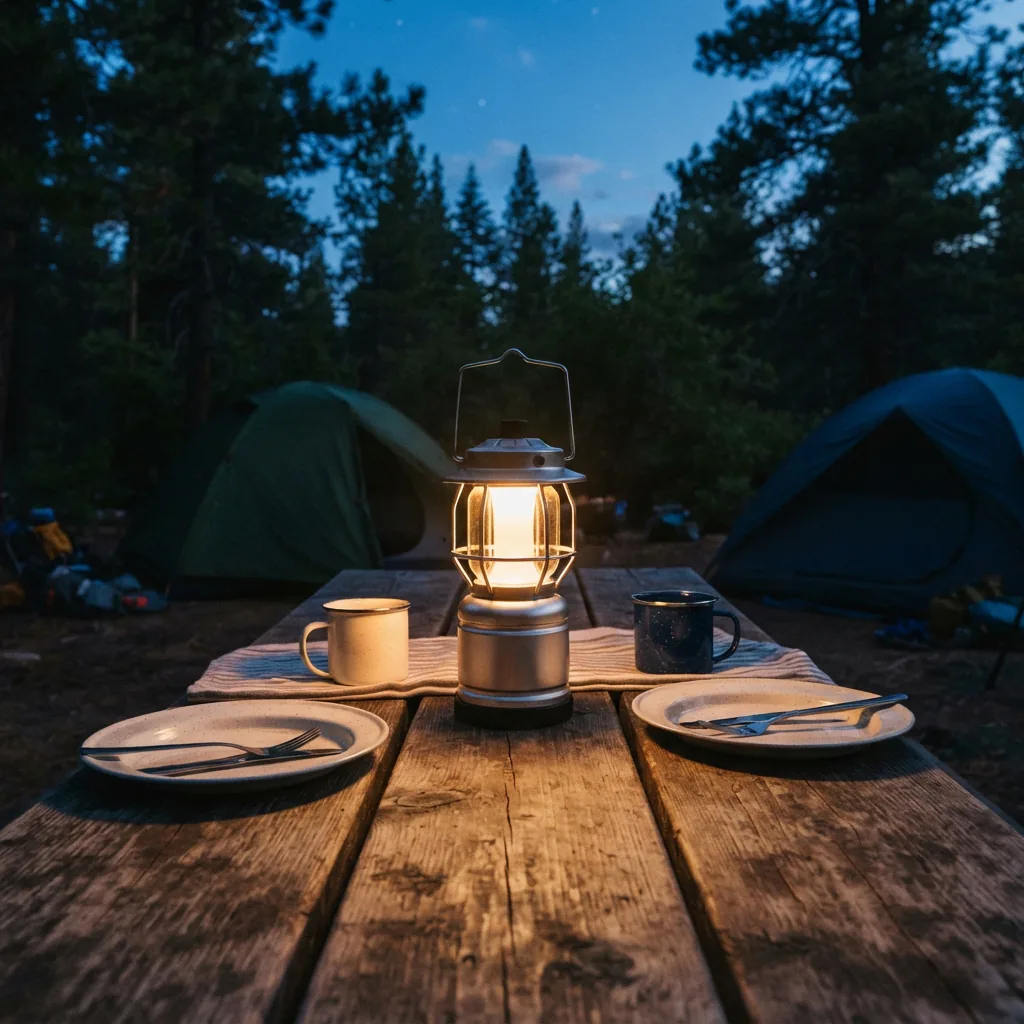
Camping lantern glowing on a picnic table during a campsite evening meal

Lanterns for steady table light

Lanterns suit eating, cooking and card games where light should sit still and spread evenly. Choose by mode count and run time: more settings let you stretch power across a longer weekend.

Water-resistant floating lantern resting at the edge of a lake beside a wet campsite

Water-safe lights for wet trips

For shoreline camps, rainy weekends and boats, look for water resistance and a shape that will not sink. These ask a little more in price but keep working when the gear gets splashed.

What campers report

First-person notes on lighting trips

These accounts describe buying and using camp lighting: what surprised people at the campsite, which settings got used most, and where a cheaper light proved good enough. Experiences vary with site size, weather and trip length.
We set up after dark and I was nervous the lights would not be bright enough, but a lantern on the table lit the whole meal. I used a lower mode most of the night and still had power in the morning without thinking about it once.
Decorative customer review avatar icon 1
Marta K.
Bought a first lighting kit for family weekends
I brought my old top-end lantern along to compare, and honestly the cheaper light handled two nights of reading and cooking fine. It took me longer to hang, and I expect to replace it sooner, but the savings made that an easy call.
Decorative customer review avatar icon 2
Derek P.
Compared budget gear against a premium brand
Everything I carry has to fit in a small pack, so I chose modes over raw brightness. The dim setting gave enough glow for the kids to settle, and the brighter one worked for packing up before sunrise on the drive home.
Decorative customer review avatar icon 3
Jules R.
Backpacks light into sites with kids
Rain came sideways on the second night and I kept waiting for the light to quit. It stayed dry and lit the path to the tent, which is all I really ask. Wet trips now decide what I buy first.
Decorative customer review avatar icon 4
Anna W.
Camper caught in rain on a shoreline trip
Questions before you buy

Practical answers for picking camp lighting

Around 100 lumens is enough for a tent, since the light bounces off nearby fabric and your eyes adjust quickly. Save 1000 lumens or more for open sites where the beam has to travel farther across the ground.
Rechargeable lights suit car camping, where you can top them up at home or from a portable power bank. Battery models fit better on longer or remote trips, since spare AA cells are easy to carry and swap in seconds.
Not always. More lumens also drain power faster, and a very bright light can glare off tent walls or blind the person across the table. Match output to the area you need to cover, then use a lower mode for close work.
Look for water resistance and a stable base, and keep battery doors shut when the weather turns. A floating design helps at shoreline camps, where an ordinary lantern dropped in the water would be difficult to recover.
Run time depends on the mode you choose. Lower settings can stretch a lantern to many hours or even days, while the brightest setting uses the power far faster, so plan around the setting you will actually use most nights.
Independent reviewers have judged this kind of low-cost gear reasonable for short trips, while noting it can be less convenient to set up and may not last as many years. For weekend use, the price difference often makes that trade-off worth accepting.
Keep exploring

More Ozark Trail gear worth a look

Hard-sided and soft-sided Ozark Trail coolers arranged on a wooden picnic table at a wooded campsite
Admin
Ozark Trail Cooler

Compare Ozark Trail coolers by size, shape and how you carry them, from hard-sided chests that hold ice for a weekend to soft totes and backpack coolers for a day out. Each option below shows capacity, format and the trip it fits best.


A group of Ozark Trail mountain bikes with front suspension parked on a dirt trailhead, a rider comparing frame sizes beside them
Admin
Ozark Trail Bike

Ozark Trail mountain bikes span hardtails and full suspension builds, sized from young riders to tall adults. Compare fit, suspension, wheels and gears to match your trails and your budget.

Assorted Ozark Trail folding and fixed blade knives arranged on a rustic wooden camp table
Admin
Ozark Trail Knife

This page lines up Ozark Trail knives so you can compare folding and fixed blades, locks, handles and carry options at a glance. Each pick notes what it handles best, from camp prep to a pocket blade you carry daily.

A row of Ozark Trail camping tents of several sizes pitched on a grassy campground with a family walking between them.
Admin
Ozark Trail Tents

Compare Ozark Trail tents by capacity, setup style, weather coverage and packed weight, from solo backpacking shelters to twelve-person family cabins built for drive-up weekend campsites.
