



Ozark Trail Griddle

This page gathers Ozark Trail griddles for camp cooking: portable propane burners, tabletop surfaces, cast iron plates and reversible grill-and-griddle combinations. Compare heat, cooking area, fuel and cleanup to decide which fits a weekend trip, a first camp kitchen or a backyard afternoon.

Four New Griddles for Your First Outdoor Kitchen

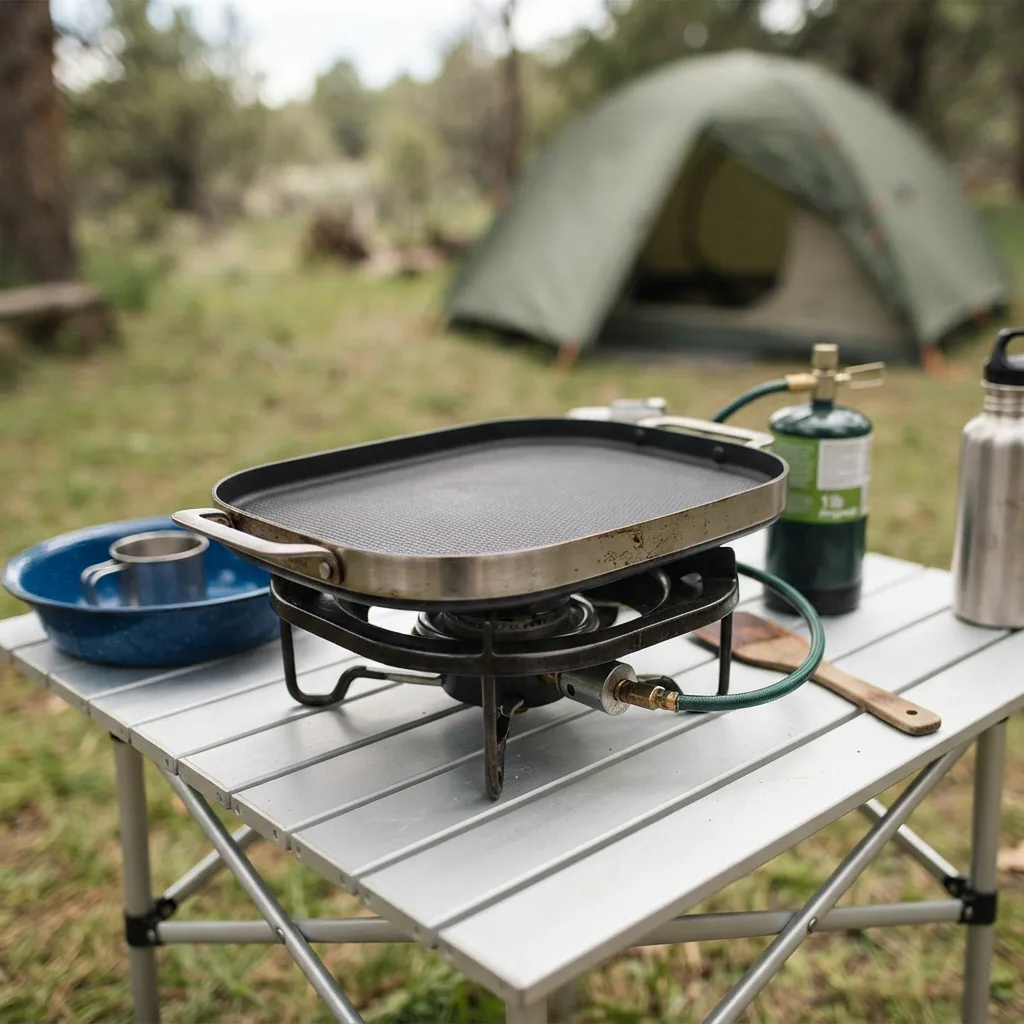
Ozark Trail 1-Burner 260 sq in Portable Propane Gas Outdoor Griddle for Weekend Camp Breakfasts

Priced at $94.00, this one-burner griddle gives you roughly 260 square inches of flat cooking space running on propane, so you can fry eggs, bacon and pancakes at the campsite instead of juggling a small camp stove. It fits weekend trips and first outdoor kitchen setups where one flame is plenty for a small group.

Ozark Trail 1-Burner Tabletop Griddle 18,000 BTU Propane 265-Square-Inch Surface for Big Campsite Meals

Brand new from Ozark Trail, this tabletop griddle pairs a 265-square-inch surface with an 18,000 BTU propane burner, giving a group of campers room to cook several things at once. The tabletop format keeps it on a picnic table or tailgate rather than a stand, which suits car camping where counter space matters more than pack weight.

Ozark Trail 22-Inch Cast Iron Griddle for Open-Fire Pancakes and Stovetop Breakfasts

This 22-inch cast iron griddle has no fuel of its own, which is its strength: it works over an open flame or on a stovetop. That makes it a simple upgrade for campers who already carry a fire ring or a burner, and cast iron holds heat evenly for pancakes and bacon. Expect some weight and a seasoning routine in return for that durability.

Ozark Trail Non-Stick Griddle for Quick, Easy-Cleanup Cooking at the Campsite Table

The non-stick surface is the point here. Cleanup after a weekend cookout takes a quick wipe rather than a scrub, which matters when you are rinsing at a campground sink or a streamside basin. It is a lighter, lower-commitment pick for outdoor cooking where convenience matters more than the decades-long life of cast iron.

Ozark Trail Portable Camp Griddle for Campsite Breakfasts and Picnic Grilling Sessions

Light enough to carry and easy to set down on a picnic table, this camp griddle handles the two jobs most campers actually need: a breakfast of eggs and pancakes at the site, and burgers or grilled sandwiches at a picnic. It is a straightforward first griddle for short trips, trading heavy-duty capacity for the freedom to cook wherever you park.
Worth a Second Look

More Griddles Buyers Keep Coming Back To

Ozark Trail Reversible Cast Iron Grill and Griddle, Pre-Seasoned for Two-in-One Fire Cooking

At $16.88, this pre-seasoned cast iron plate is the low-cost way to get two cooking surfaces. One side grills with ridges that let fat drain away; the other stays flat for eggs, pancakes and quesadillas. It works over a campfire grate or a home burner, so the same piece travels with you and stays useful in the kitchen.

Ozark Trail Deluxe Cast Iron Reversible Grill Griddle Plate, Black, 16 x 9 Inch for Compact Camp Cooking

Brand new, this deluxe reversible plate measures 16 x 9 inches, a size that sits comfortably on a two-burner camp stove without crowding the second burner. The compact footprint makes sense for pairs and solo campers who want grill marks one night and a flat breakfast surface the next without hauling a larger plate.

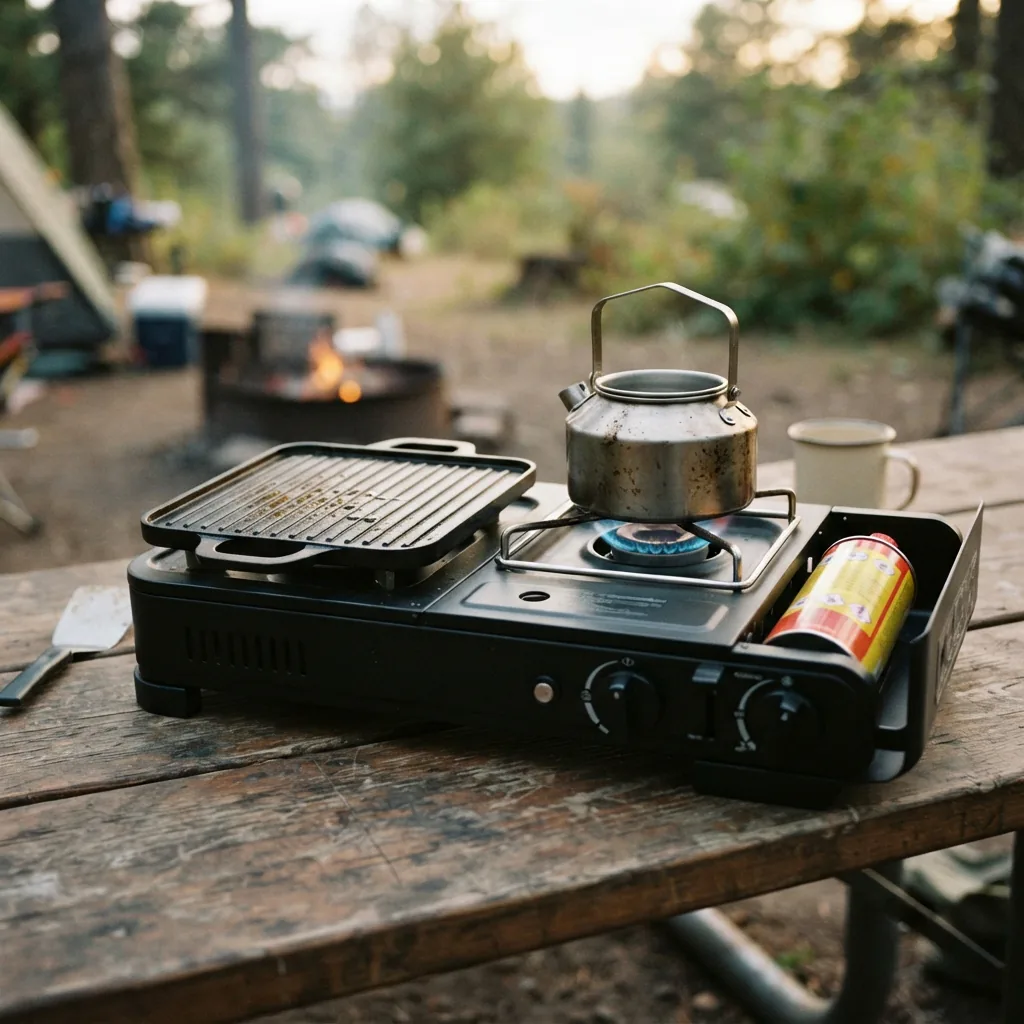
Ozark Trail 2-in-1 Portable Butane Griddle and Stove with Piezo Ignition, 2.2 kW

Priced at $41.97, this 2-in-1 runs on butane and switches between a griddle surface and a stove burner, so one canister supports both a griddled lunch and a pot of coffee. The 7,650 BTU piezo-electric ignition lights without matches, and the tabletop size suits balcony cooking, tailgates and compact campsites.
Who It Serves

Trips and Tasks a Griddle Handles Well

A griddle serves car campers cooking breakfast for a family, hikers who want one flat surface on a short trip, and backyard cooks working a tailgate table. The result to weigh is simple: more cooking surface means more food at once, and more fuel and weight to carry.

Family Breakfast at the Campsite

One large flat surface lets a parent cook eggs, bacon and pancakes in rotation while everyone else sets out plates. You get a hot breakfast for four without a second stove, and the cost is simply a bigger surface to scrub once the morning is over.

Short Solo Trips and Light Packs

Overnighters reward compact plates that sit on a small burner or straight over coals. You gain a real cooking surface without hauling a fuel system, and cleanup finishes in a few minutes before it gets dark.

Tailgates, Picnics and Backyard Cookouts

A tabletop griddle with its own burner works on a tailgate or a patio table wherever you park. Burgers and grilled sandwiches come off in batches, and a non-stick finish keeps the end of the afternoon easy.

Four factors decide which griddle suits your trip: how much food you cook at once, where the heat comes from, how much weight you carry, and how you store it. Each one shifts the trade-off between capacity, convenience and price.

Four Factors That Decide Which Griddle Fits

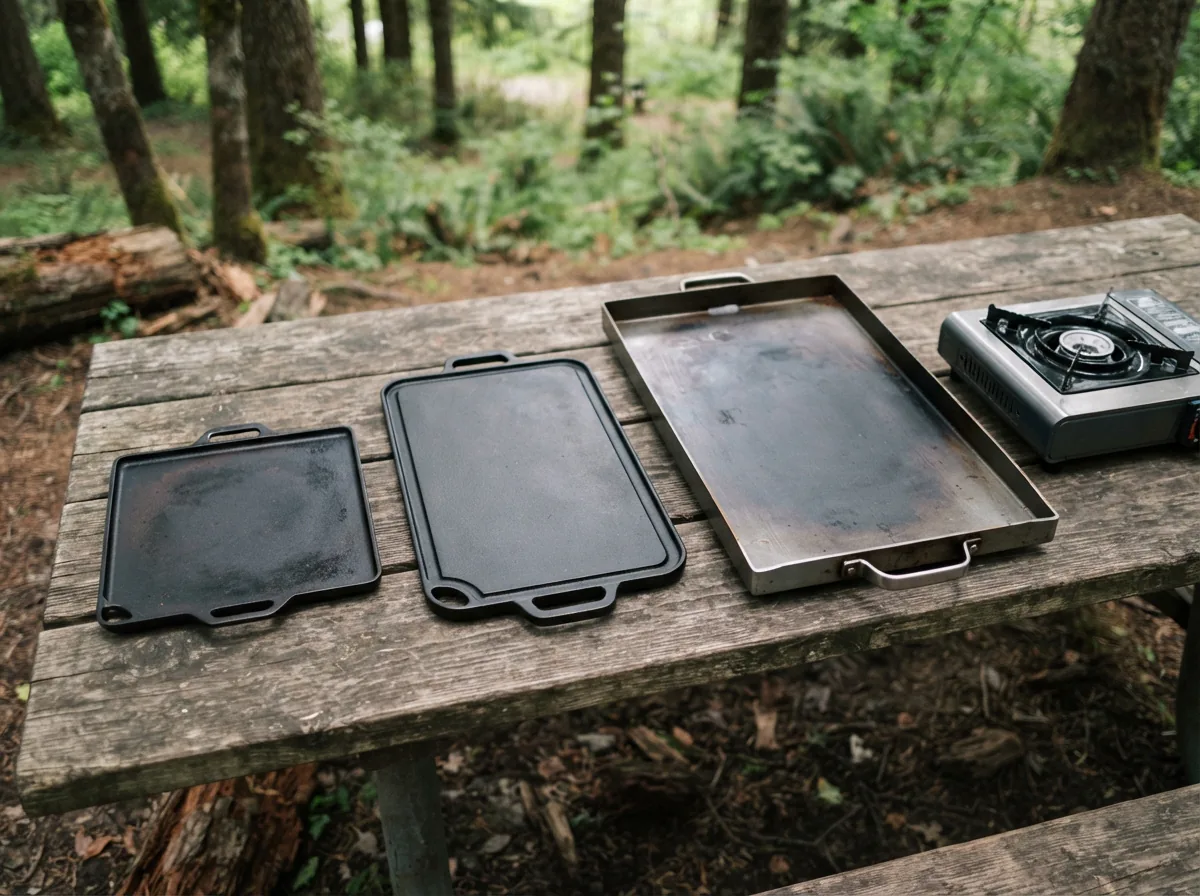
Flat unbranded griddle plates and a small camp burner arranged side by side on a wooden picnic table for comparison, no people present.
Cooking Area and Group Size

Cooking area decides how much food you hold at once. Around 100 square inches serves one or two people, while 260 to 265 suits a family. Larger surfaces cost more fuel and take more table space.

Fuel Source and Setup Time

Fuel source changes setup. Propane and butane light fast and hold steady heat, but you carry canisters. Cast iron borrows heat from a fire or burner, adding nothing to pack and nothing to run out of mid-trip.

Material, Weight and Cleanup

Material drives weight, cleanup and lifespan. Non-stick wipes clean quickly and carries light, but wears with heavy use. Cast iron lasts for years and browns evenly, though it asks for drying and oiling.

Trip Length and Storage Space

Trip length and storage decide how much griddle is worth hauling. Car camping supports a full-size surface; one overnight favors a compact plate that fits a bin. Measure your table and trunk before you buy.

Know the Types

Four Griddle Styles and How to Tell Them Apart

Griddles in this category split by how they make heat and how much room they take. Cast iron plates borrow heat from a fire or burner, propane and butane models bring their own flame, and compact or two-in-one designs trade cooking area for easier packing. Start with where you will cook, then narrow by size.
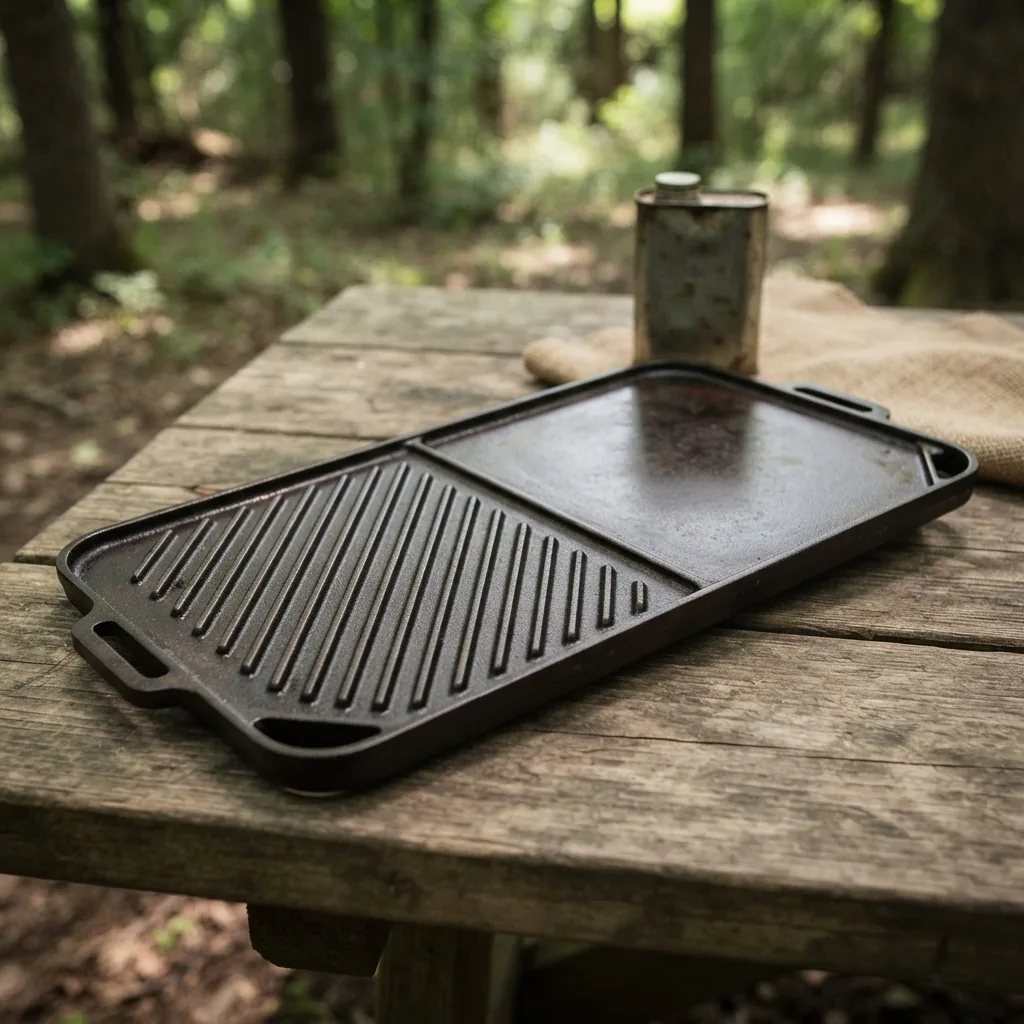
Reversible cast iron griddle plate with one ridged grilling side and one flat side, resting on a wooden camp table, no people present.

Reversible Cast Iron Plates

One cast iron plate covers a campfire grate, a camp stove and your home burner. It browns evenly and lasts for years, but adds real weight and needs drying and oiling so rust does not set in during storage.

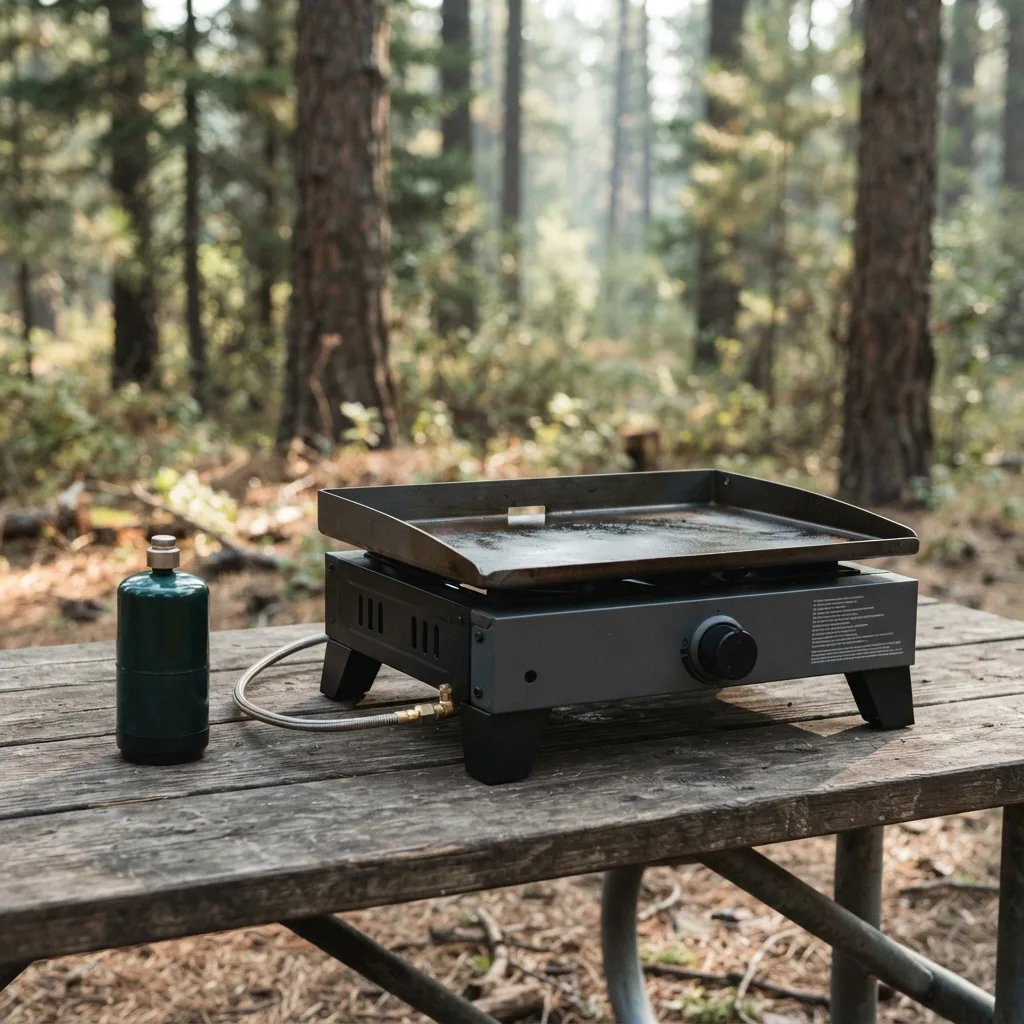
Single-burner propane griddle with a wide flat plate on a camp table connected to a small propane cylinder, no people present.

Single-Burner Propane Griddles

A single burner under a wide flat plate gives you steady, adjustable heat and room for several servings at once. It needs propane canisters, but breakfast for a family stops being a rotation problem.

Compact tabletop non-stick griddle sitting on a single camp stove burner on a small folding table, no people present.

Compact Tabletop Surfaces

Smaller tabletop and non-stick surfaces fit a picnic table, a balcony or one burner of a camp stove. Cleanup is quick and storage is easy, and the trade-off is simply less room to cook at one time.

Portable butane 2-in-1 griddle and stove unit with a griddle plate on one side and a burner on the other, on a camp table, no people present.

Two-in-One Griddle and Stove

A butane unit that flips between a griddle surface and a stove burner carries one fuel for two jobs. It suits tailgates, balconies and compact sites where space and simplicity matter more than raw capacity.

Campers Report

What Weekend Cooks Say About Griddle Camping

Cooking on a griddle changes the pace of a camp morning. The accounts below describe how a flat surface holds heat, how cleanup goes at a campground sink, and how much food one burner can realistically turn out when friends stop by the site.
We used to fight over one small camp stove while the kids waited for breakfast. Moving to a flat griddle surface let me cook eggs and pancakes side by side, and everyone ate sooner. Cleanup took a rinse and a wipe at the campground sink, so the morning did not end in a long scrub.
Decorative customer review avatar icon 1
Dana R.
Car camping with two kids on short weekend trips
On a single night out I want one piece of gear that earns its space. A small cast iron plate sat right on the fire grate and gave me a real cooking surface instead of a pot. It is heavier than a titanium setup, but the even heat and the price make it an easy trade for me.
Decorative customer review avatar icon 2
Marcus T.
Solo overnight hikes where weight decides the packing list
I spent a week reading specs before ordering and kept coming back to the same question: how much surface do two people need? The mid-size option turned out to be plenty for us, and the money I saved went into a better propane hose. It is not premium gear, but it has handled every trip so far.
Decorative customer review avatar icon 3
Priya S.
First-time griddle buyer comparing budget options
Eight people showed up hungry and I cooked in three rounds on one flat surface without anyone waiting long. The heat held steady the whole time, and the non-stick finish meant I was done scrubbing in a few minutes. I would like a wider plate next season, but it got the job done well.
Decorative customer review avatar icon 4
Chris L.
Cooking for a group at a weekend campsite potluck
Straight Answers on Griddles

Practical Trade-Offs Before You Pick a Griddle

Cast iron works over an open flame or a burner and lasts for years, but it is heavier and needs seasoning. Propane griddles add a regulated flame and a large flat surface, which makes cooking for several people faster. Choose by how you cook and how much weight you want to carry.
Roughly 100 square inches comfortably serves one or two people, while 260 to 265 square inches gives room to cook several servings at once, which suits families and small groups. If you mostly cook for yourself, a smaller 16 x 9 inch plate stores and cleans more easily.
Cast iron plates are the flexible choice: they go over a campfire grate, a camp stove burner or a home stovetop. Propane and butane griddles bring their own heat source, so they need fuel canisters but work anywhere you can set a flat, level surface with some ventilation.
Non-stick surfaces wipe down quickly with minimal effort, which is handy at a campground sink. Cast iron asks for a little more: scrub, dry, then add a light coat of oil so it stays ready. Ten minutes after each meal keeps either type in good shape for years.
For short trips and regular weekend use the price-to-performance case is strong: a working cooking surface at a fraction of specialist-brand cost. Independent reviewers of Ozark Trail gear have called it reasonable for short trips while noting it is less convenient and less long-lasting than top-end options.
Propane and butane models light quickly and hold a steady temperature, so beginners can focus on cooking rather than fire management. Just plan for canisters and airflow. If you already own a camp stove or enjoy cooking over coals, a cast iron plate avoids the extra fuel entirely.
Keep Exploring

More Ozark Trail Gear for the Rest of Your Trip

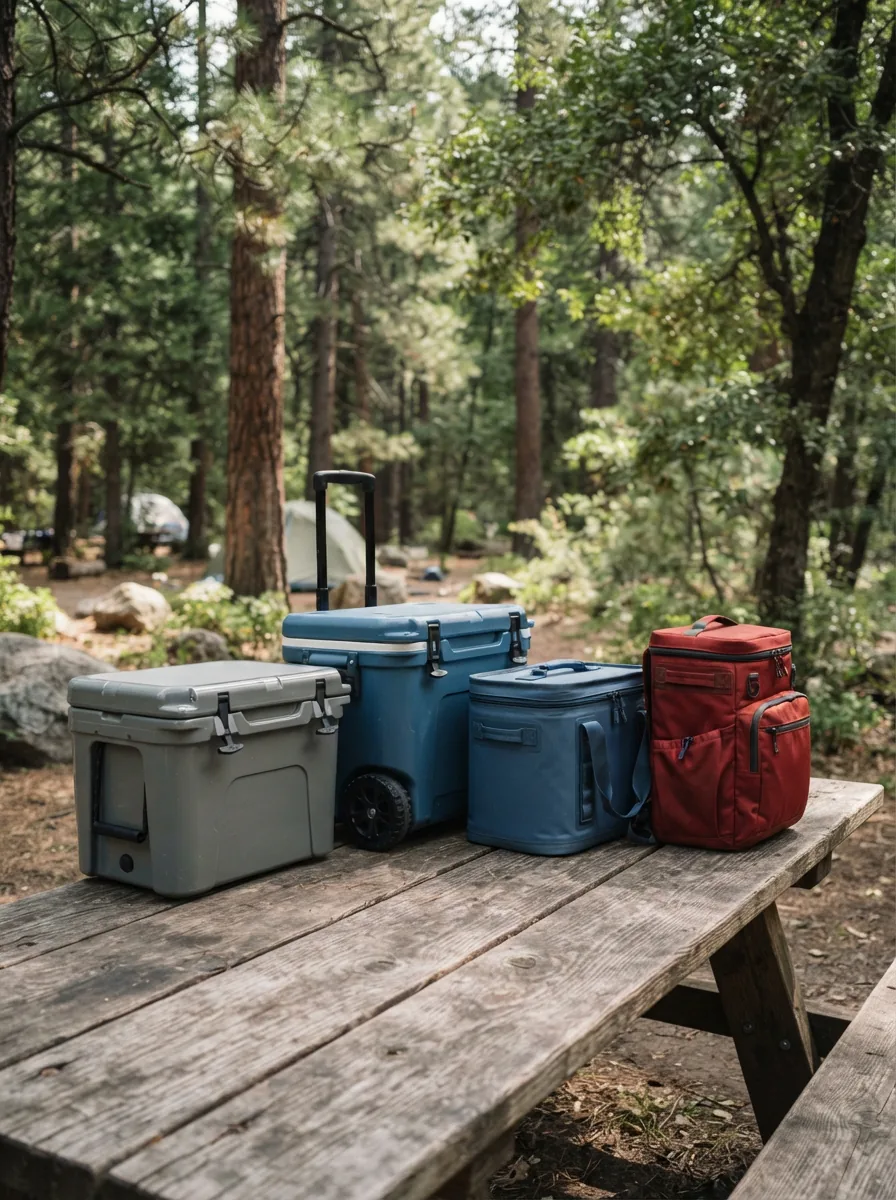
Hard-sided and soft-sided Ozark Trail coolers arranged on a wooden picnic table at a wooded campsite
Admin
Ozark Trail Cooler

Compare Ozark Trail coolers by size, shape and how you carry them, from hard-sided chests that hold ice for a weekend to soft totes and backpack coolers for a day out. Each option below shows capacity, format and the trip it fits best.
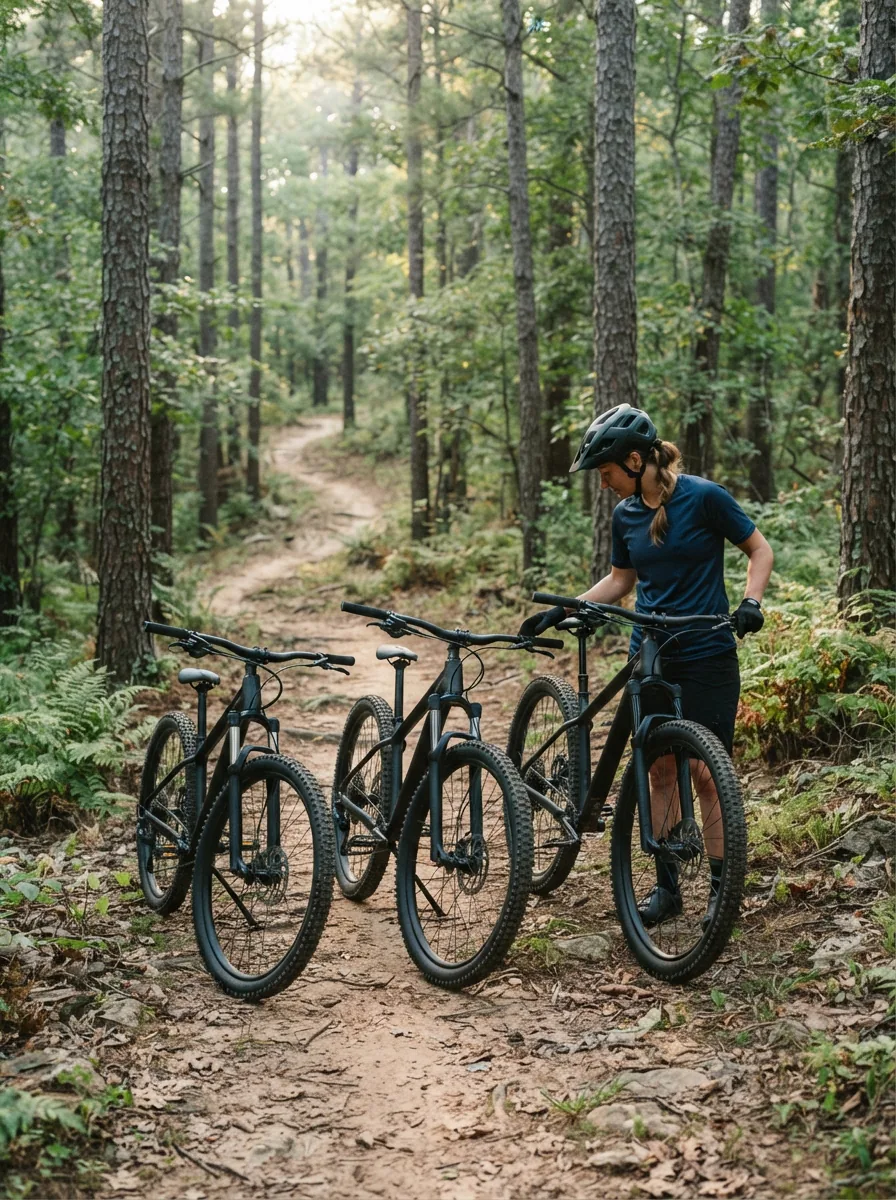
A group of Ozark Trail mountain bikes with front suspension parked on a dirt trailhead, a rider comparing frame sizes beside them
Admin
Ozark Trail Bike

Ozark Trail mountain bikes span hardtails and full suspension builds, sized from young riders to tall adults. Compare fit, suspension, wheels and gears to match your trails and your budget.

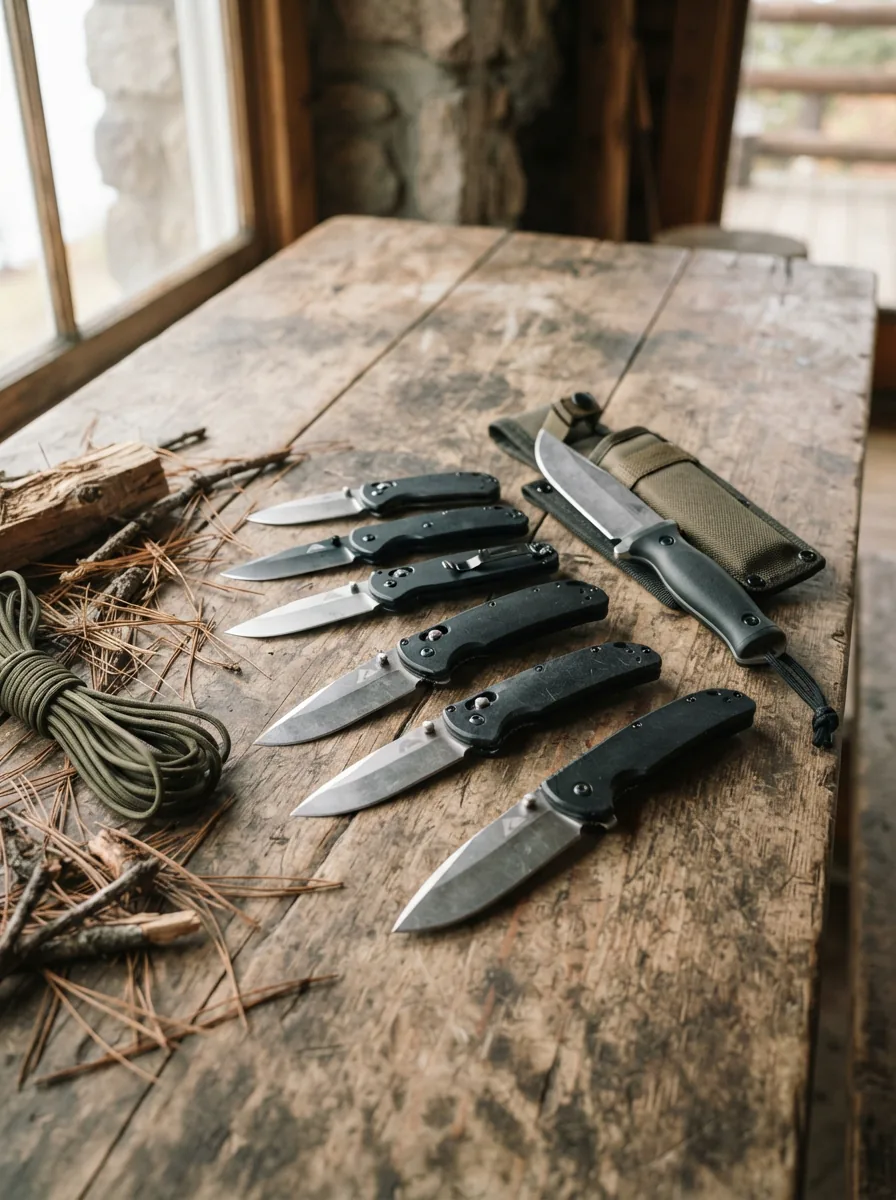
Assorted Ozark Trail folding and fixed blade knives arranged on a rustic wooden camp table
Admin
Ozark Trail Knife

This page lines up Ozark Trail knives so you can compare folding and fixed blades, locks, handles and carry options at a glance. Each pick notes what it handles best, from camp prep to a pocket blade you carry daily.

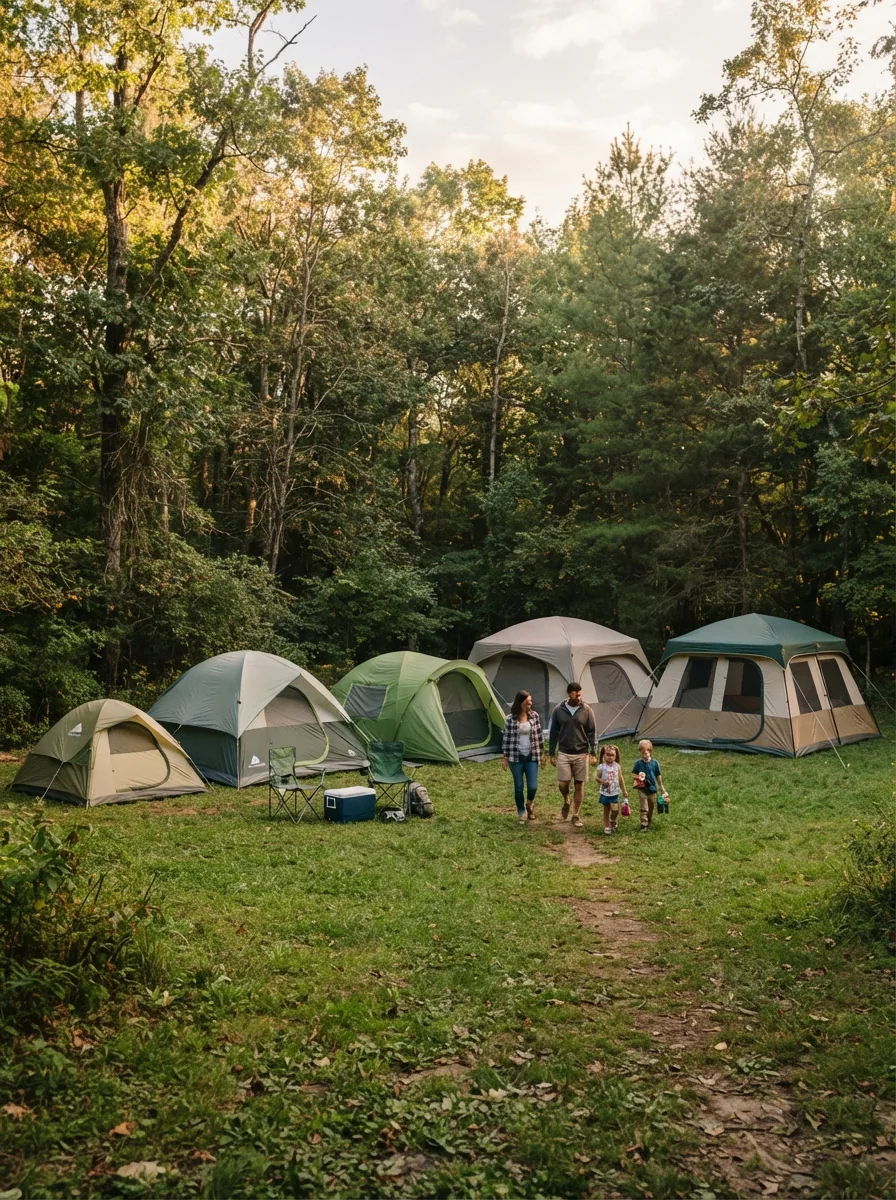
A row of Ozark Trail camping tents of several sizes pitched on a grassy campground with a family walking between them.
Admin
Ozark Trail Tents

Compare Ozark Trail tents by capacity, setup style, weather coverage and packed weight, from solo backpacking shelters to twelve-person family cabins built for drive-up weekend campsites.