



Ozark Trail Edc Knife

This page gathers Ozark Trail folding knives for side-by-side comparison. Compare blade length, lock style and handle material to find the folder that fits pocket use, camp prep or a first setup.

Four fresh picks worth a closer look

Ozark Trail 7.5 in D2 Slide Lock Folding Knife with Black Handle, Reliable Everyday Carry

D2 blade steel is the draw here: it resists wear well enough that this folder stays sharp through repeated cuts on rope and cardboard. The slide lock gives a solid open position, and the 7.5 in overall length keeps it usable without feeling large. The black handle stays understated in a pocket.

Ozark Trail Dual-Clip EDC Folding Knife, 3 in Blade, 4 in Aluminum Handle, Slim Pocket Carry

At 7 in open with a 3 in blade, this folder sits in the middle of the range and suits most everyday cuts. The 4 in aluminum handle keeps weight low, and the dual clip lets you change pockets or carry orientation without tools. A sensible first EDC knife for someone who wants options.

Ozark Trail Glacier Shaft-Lock Folding Knife, 7.5 in, White Handle for a Bright Trail Kit

The Glacier stands out by looks first: a white handle that is easy to spot in a pack or on the ground. Its shaft lock holds the blade open with a firm action, and the 7.5 in size covers everyday cutting without excess. Choose it when visibility matters as much as cutting.

Ozark Trail Trailman 8.5 inch Folding Knife Black, Longer Blade for Camp Tasks and Chores

The longest folder here, at 8.5 in, gives more blade for bigger jobs like cutting thick cord or breaking down cardboard. The black finish stays discreet, and the Trailman name suits a knife you would hand to someone doing real camp chores. Keep it in the camp box rather than a shirt pocket.

Ozark Trail Compact Folding Knife with 3.1 in Stainless Blade for Everyday Pocket Carry

The smallest folder here, with a 3.1 in stainless steel blade, is made for pocket carry you barely notice. Stainless handles moisture, and the size suits opening packages, cutting tape and light food prep rather than heavy camp work. It is the pick for a jacket pocket.
More to compare

Three more folders with different strengths

Ozark Trail 7.5 in Ball Bearing Slide Lock Folder, 3.3 in Blade, Smooth Open, Quick Daily Carry

Ball bearings at the pivot mean the blade swings open with less effort, helpful when your hands are full or cold. Pair that with a slide lock and a 3.3 in blade and you get a quick, controlled folder for repeated small cuts. It suits quick daily cutting better than heavy work.

Ozark Trail Zephyr 7.5 in Folding Pocket Knife, Slim Blade for Everyday Pocket Carry

Slimmer in profile, the Zephyr is built for pocket comfort first. The 7.5 in folder keeps a thin silhouette so it does not print through fabric, while the folding blade still gives enough edge for daily cutting. Best where carry feel outranks raw size, and easy to keep in a front pocket all day.

Ozark Trail Nimbus Folding Knife, D2 Drop Point Blade, Blue Aluminum Handle, Lightweight EDC

D2 steel again, in a drop point shape that is easy to control for fine cuts. The blue aluminum handle is light, rigid and easy to spot. Being pre-owned, it asks you to weigh any wear against a lower entry price before buying. Inspect it closely and it can be good value.
Where it earns its keep

Three jobs these folders handle well

These folders cover the small tasks that show up on a trail day, a weekend campout or a home repair pile. Think about what you cut most, then carry the size you will actually keep on you.

Camp prep and simple food tasks

Slicing cheese, opening packaging or trimming a marshmallow stick are quick jobs a modest blade handles fine. Pick something you can rinse after food use without fretting about the finish.

Trailside repairs on the go

Cord, webbing and zip ties break when you are miles from the car. A pocket folder lets you cut and rework gear on the spot, so a modest blade still beats having no knife.

Everyday pocket carry at home

Opening boxes, cutting tape and trimming loose thread are the weekly tasks that justify keeping a knife close. Choose a size you will carry daily rather than the largest blade you own.

Blade length sets what you can cut, lock style sets how secure it feels, and handle material sets weight and grip. Each factor points to a different fit: pocket carry, camp kit or a first knife.

What to weigh before you pick a folder

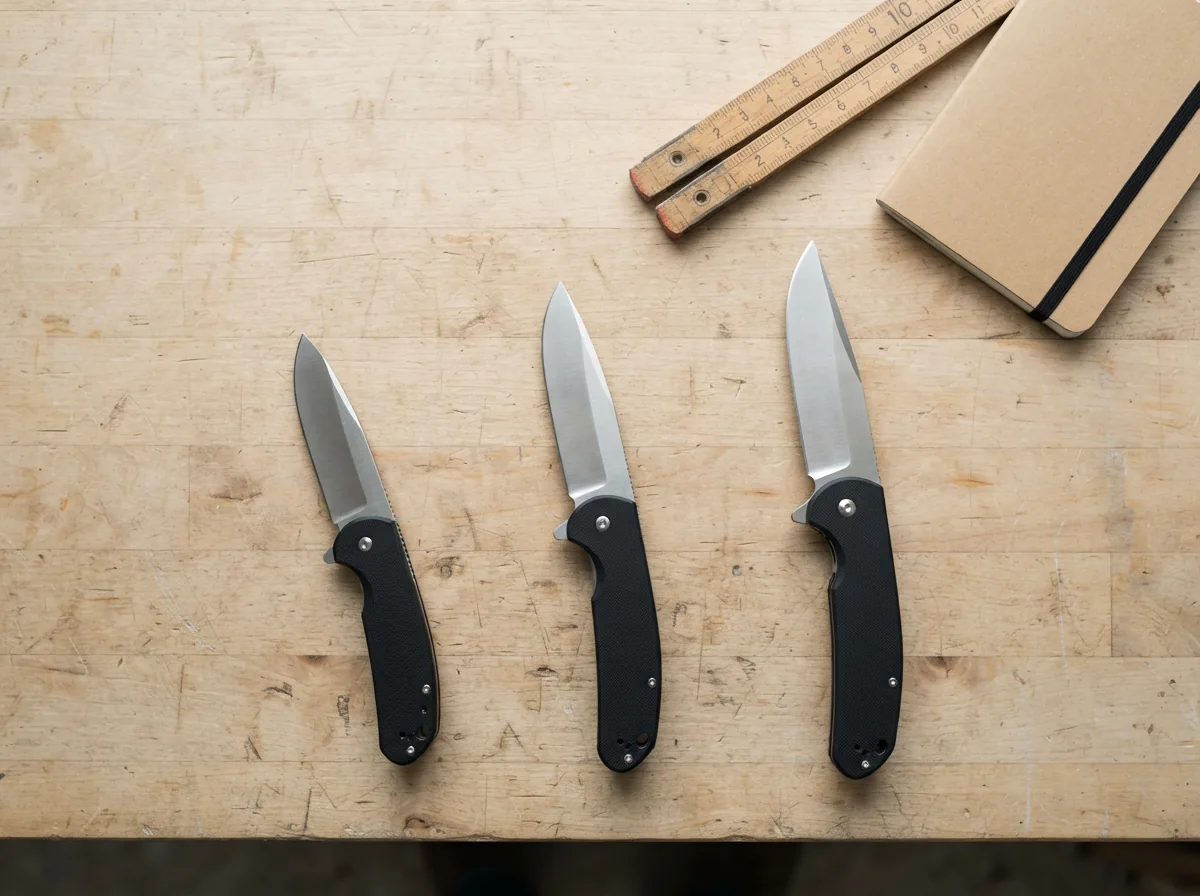
Three unbranded folding knives of different blade lengths laid beside a ruler and notebook on a workbench
Match blade length to the job

Shorter blades near 3 in handle daily cuts and carry easily, while 7 to 8.5 in folders give reach for thicker material. Bigger is not better if you rarely cut anything substantial.

Pick a lock you can work by feel

Slide locks, shaft locks and liner releases each open differently. Picture the motion one-handed: a lock you can work smoothly is one you will actually use instead of avoid.

Weigh handle material and grip

Aluminum stays light and rigid, textured composites grip when hands sweat. If the knife will live in a pack, saved ounces matter more than a polished finish on the scales.

Balance price against expected life

Budget folders do well for short trips and weekend use, though they may not hold an edge as long as costlier steel. Decide how hard you will use it before paying more.

Finding your fit

Four ways to narrow this knife range

Blade length, lock style and handle build split this range, and each choice changes where it fits. Longer blades take on bigger jobs, shorter ones vanish in a pocket, and lock feel sets your confidence.
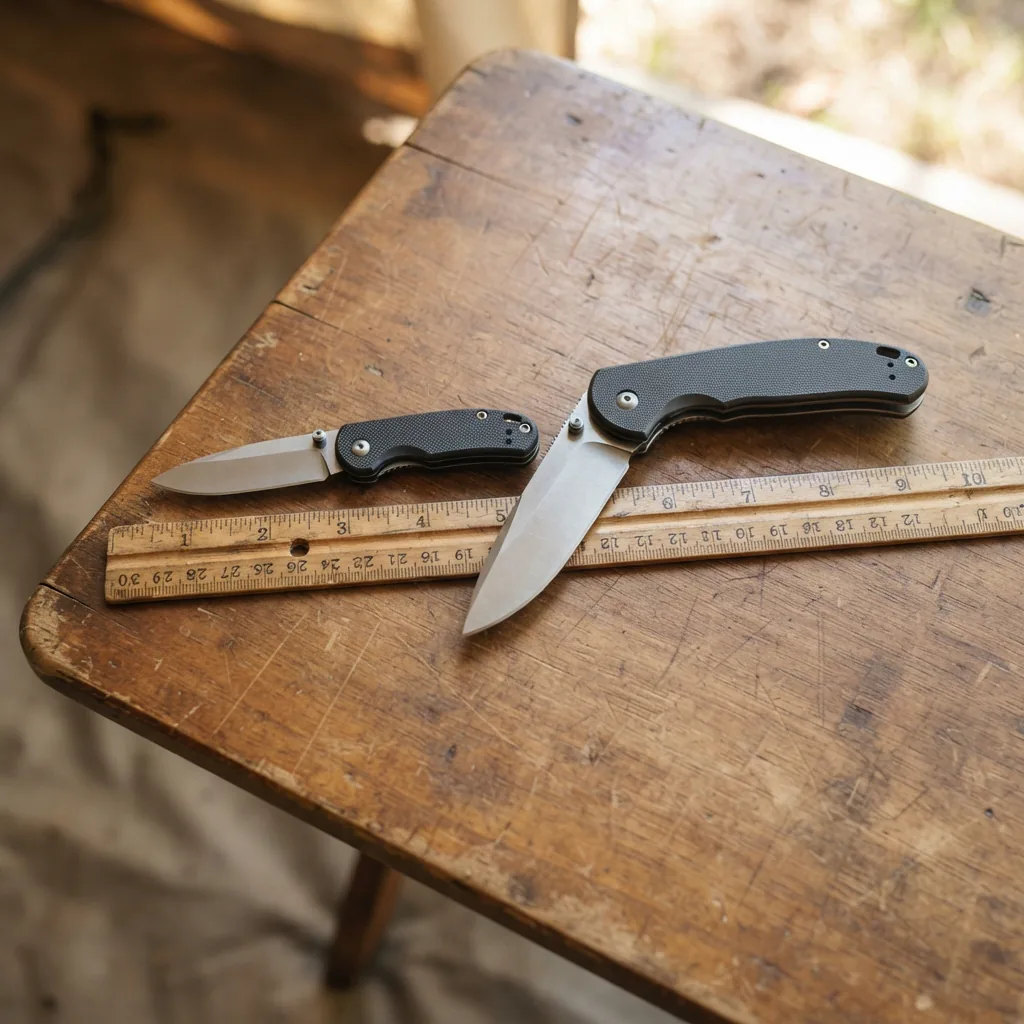
Small and large folding knives opened side by side against a wooden ruler on a camp table

Blade length and reach

A 3.1 in blade suits small daily cuts and hides in a pocket, while an 8.5 in folder gives more edge for bigger camp chores. Longer blades simply ask for more carry room.

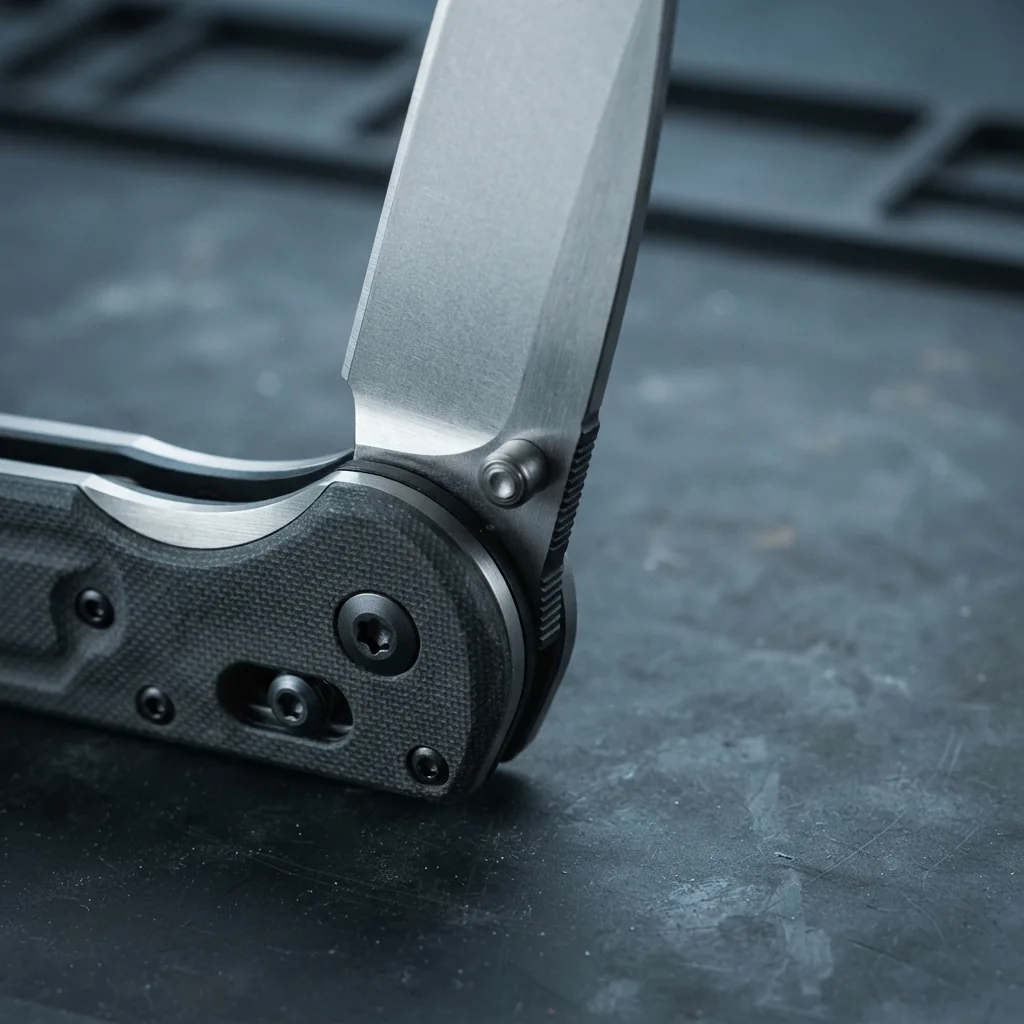
Close view of an open folding knife pivot showing the locking mechanism on a dark work mat

Lock style and security

Slide locks and shaft locks both hold the blade open, but they release differently under the thumb. Pick the motion you can work reliably, since a solid lock matters more than any spec sheet.

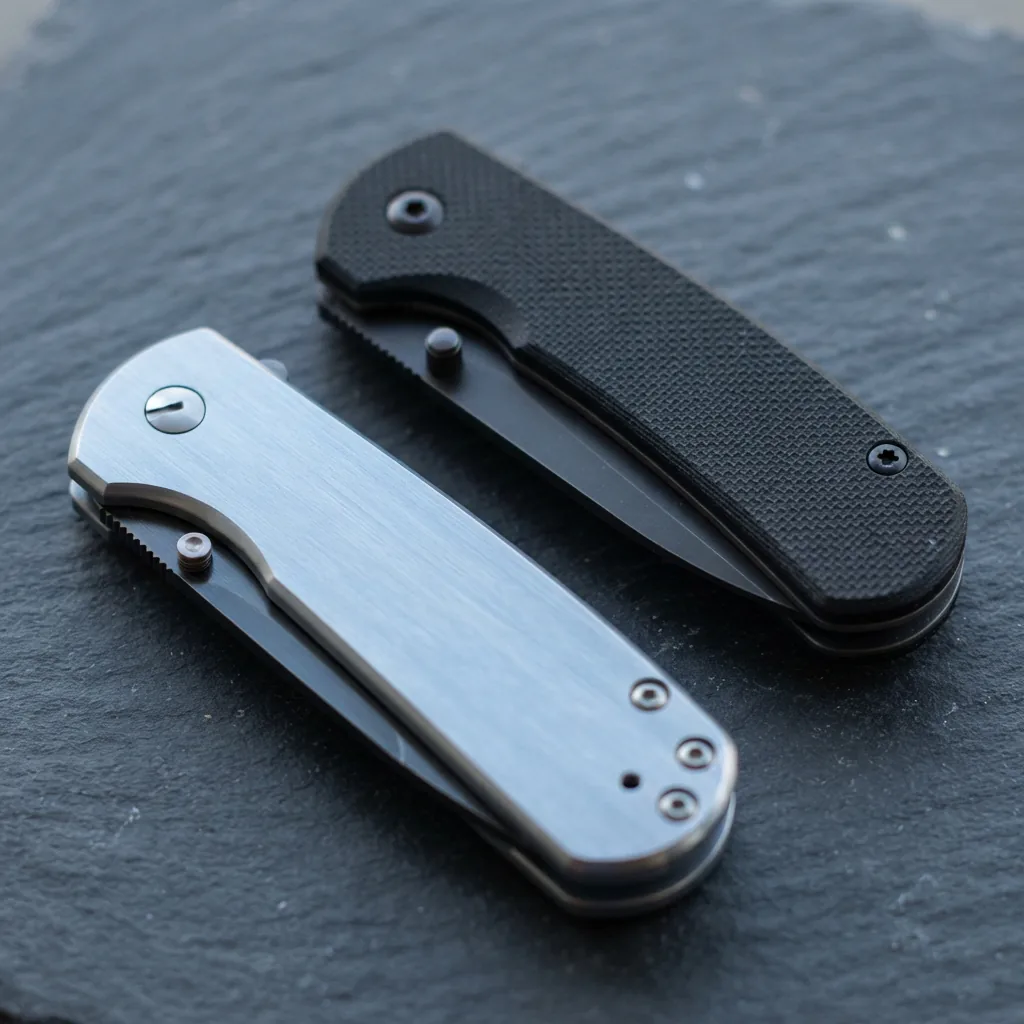
Two closed folding knives showing smooth aluminum and textured composite handles on slate

Handle material and grip

Aluminum handles stay light and rigid, while textured black scales grip better when hands are damp. Think about how the folder feels after a long stretch of cutting, not just how it looks.

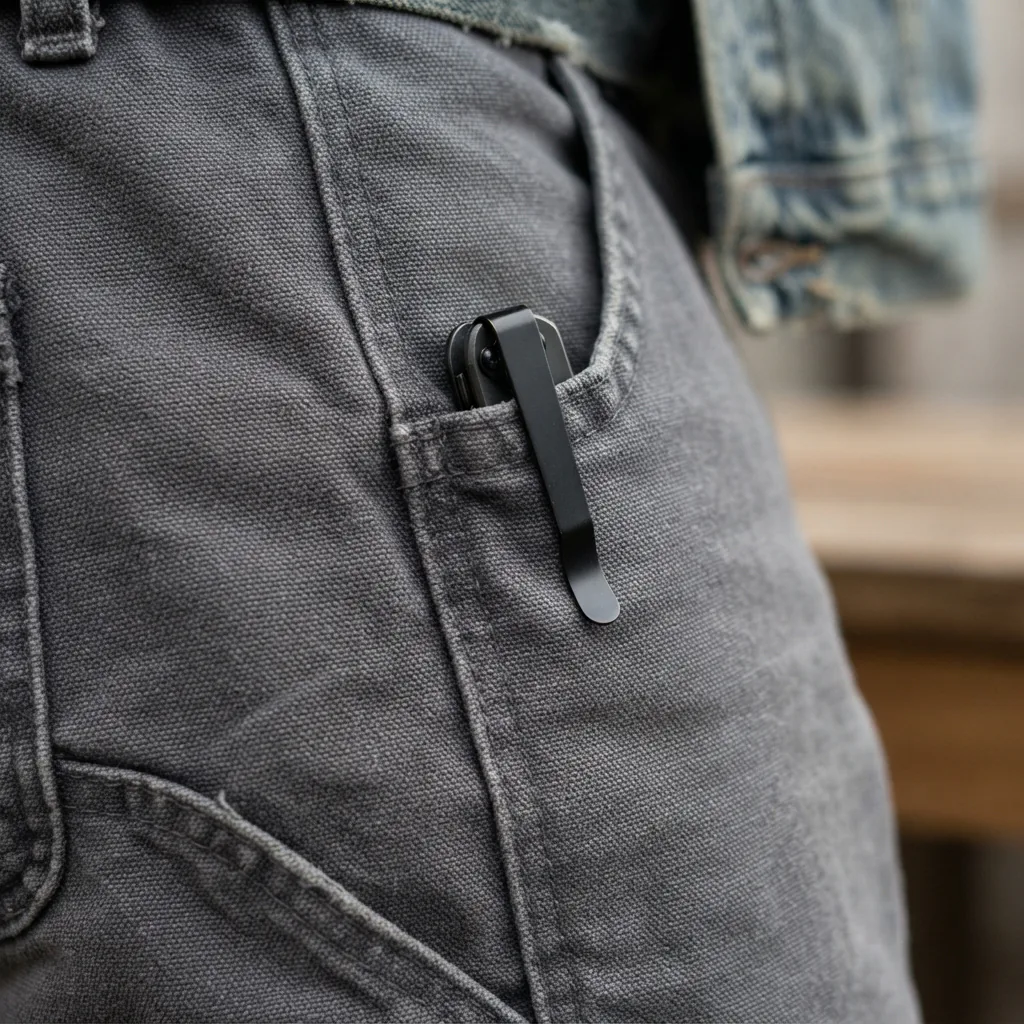
A folded pocket knife clipped to the edge of a canvas trouser pocket outdoors

Carry style and daily use

A dual clip lets you switch pockets or carry orientation, and a slimmer knife rides unnoticed until needed. Match the clip and weight to where the knife will actually live day to day.

From fellow shoppers

What it feels like to carry one

These accounts describe buying and living with a value-priced folder: how it rides in a pocket, how the lock behaves over time and where the trade-offs show up. Expect honest notes about edge holding rather than perfection.
I wanted a knife I would not worry about dropping in the dirt, and this fit the bill. It opens cleanly, rides in my hip pocket without pulling fabric down, and has handled cord and packaging all summer. I touch up the edge occasionally, as expected at the price.
Decorative customer review avatar icon 1
Dana R.
Carries one on dog walks and camp weekends
I bought it as a starter knife for our camp box and it has been fine for marshmallow sticks and opening food bags. The lock feels solid when open, and I like that losing it would not sting. Good value for occasional family use.
Decorative customer review avatar icon 2
Marcus T.
First knife for a family camping kit
I own a costlier folder and reach for this one more often because I am not careful with it. It dulls faster, sure, but a quick strop fixes that. For the trips I actually take, carrying a knife I bring along beats paying more. That trade-off suits me.
Decorative customer review avatar icon 3
Priya S.
Compares budget folders against pricier steel
Used it on a wet weekend and came home with two honest notes. The blade cut well throughout, but I dried it slowly and found surface moisture near the pivot that wiped off. For the money I am pleased; just plan on basic upkeep and it will keep working.
Decorative customer review avatar icon 4
Ben H.
Noticed the trade-offs after a rainy trip
Straight answers

Common questions before choosing a folder

A blade near 3 in covers opening boxes, cutting cord and light food prep, and it disappears in a pocket. Anything from 7 in up gives more edge for camp work but needs more room to carry. Match the length to what you actually cut most days.
Ozark Trail is a Walmart private label priced for value, so you get a working folder without specialist-brand cost. Reviewers have called the brand a reasonable buy for short trips while noting that pricier gear lasts longer and carries easier. Judge it on the trips you take.
Both hold the blade firm when open, but they release differently. A slide lock uses a moving bar along the handle, while a shaft lock pivots near the hinge. Pick whichever you can work smoothly one-handed after your hands get tired.
Edge life depends on the steel, how it was heat treated and what you cut through. Budget blades need honing more often than premium steel, so keep a simple sharpener nearby and never pry or twist with the blade. Used only for cutting, an inexpensive folder can work for years of weekend use.
Knives generally cannot go in carry-on baggage, and workplaces, parks and event venues often set their own rules. Check local law and the policy where you are headed before you pocket a folder, and keep it sheathed or stowed rather than on display.
Rinse grit from the pivot, dry the blade and handle fully, then add a drop of light oil to the hinge. Wipe it before storage and it will open smoothly next time. Salt water deserves extra attention, since it speeds corrosion on any steel.
Keep exploring

Where to go next from this category

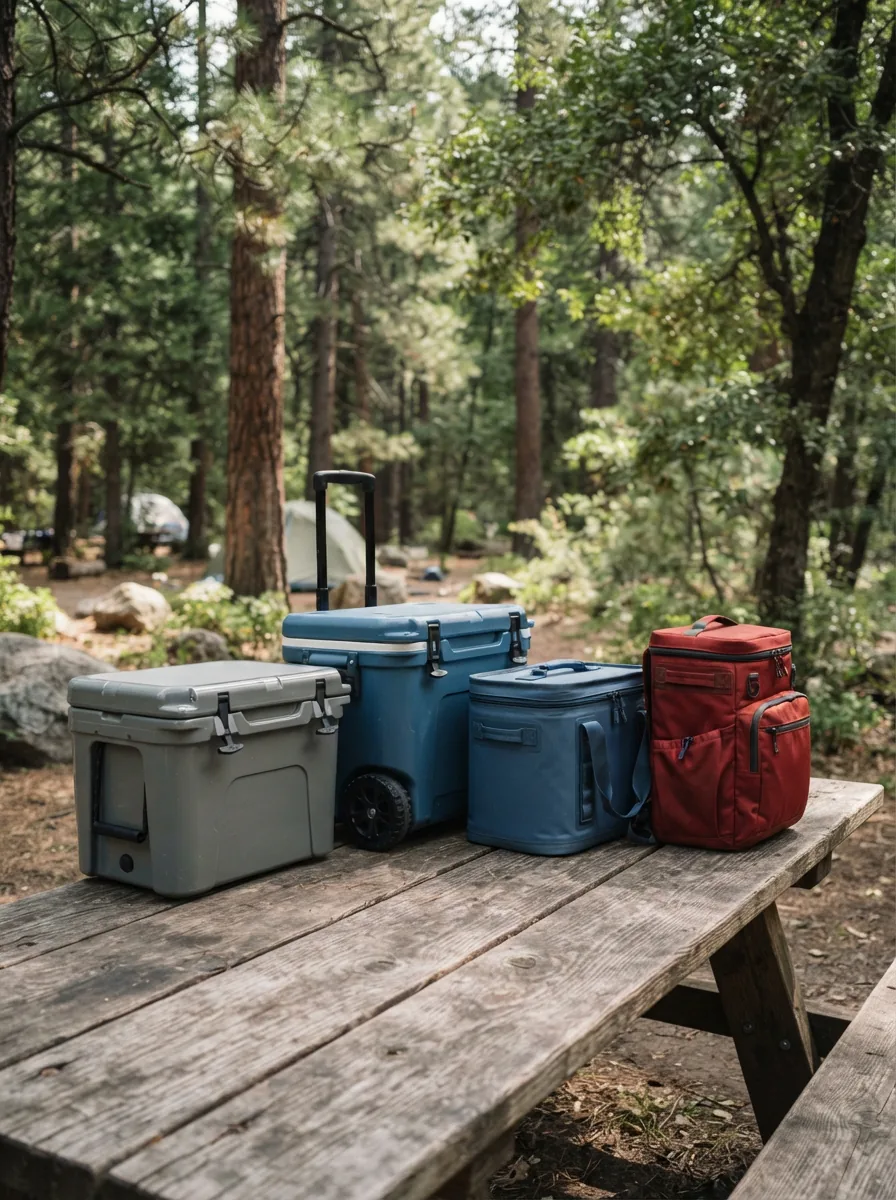
Hard-sided and soft-sided Ozark Trail coolers arranged on a wooden picnic table at a wooded campsite
Admin
Ozark Trail Cooler

Compare Ozark Trail coolers by size, shape and how you carry them, from hard-sided chests that hold ice for a weekend to soft totes and backpack coolers for a day out. Each option below shows capacity, format and the trip it fits best.
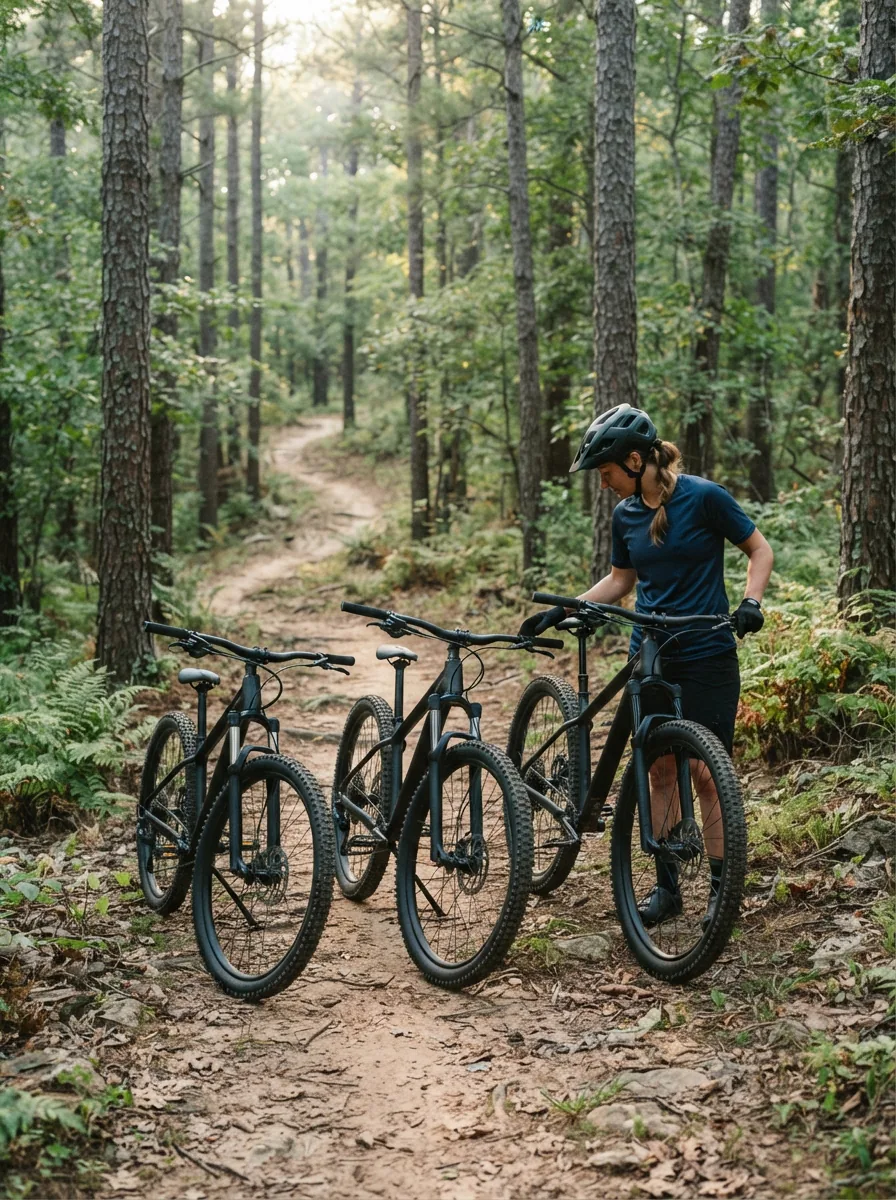
A group of Ozark Trail mountain bikes with front suspension parked on a dirt trailhead, a rider comparing frame sizes beside them
Admin
Ozark Trail Bike

Ozark Trail mountain bikes span hardtails and full suspension builds, sized from young riders to tall adults. Compare fit, suspension, wheels and gears to match your trails and your budget.

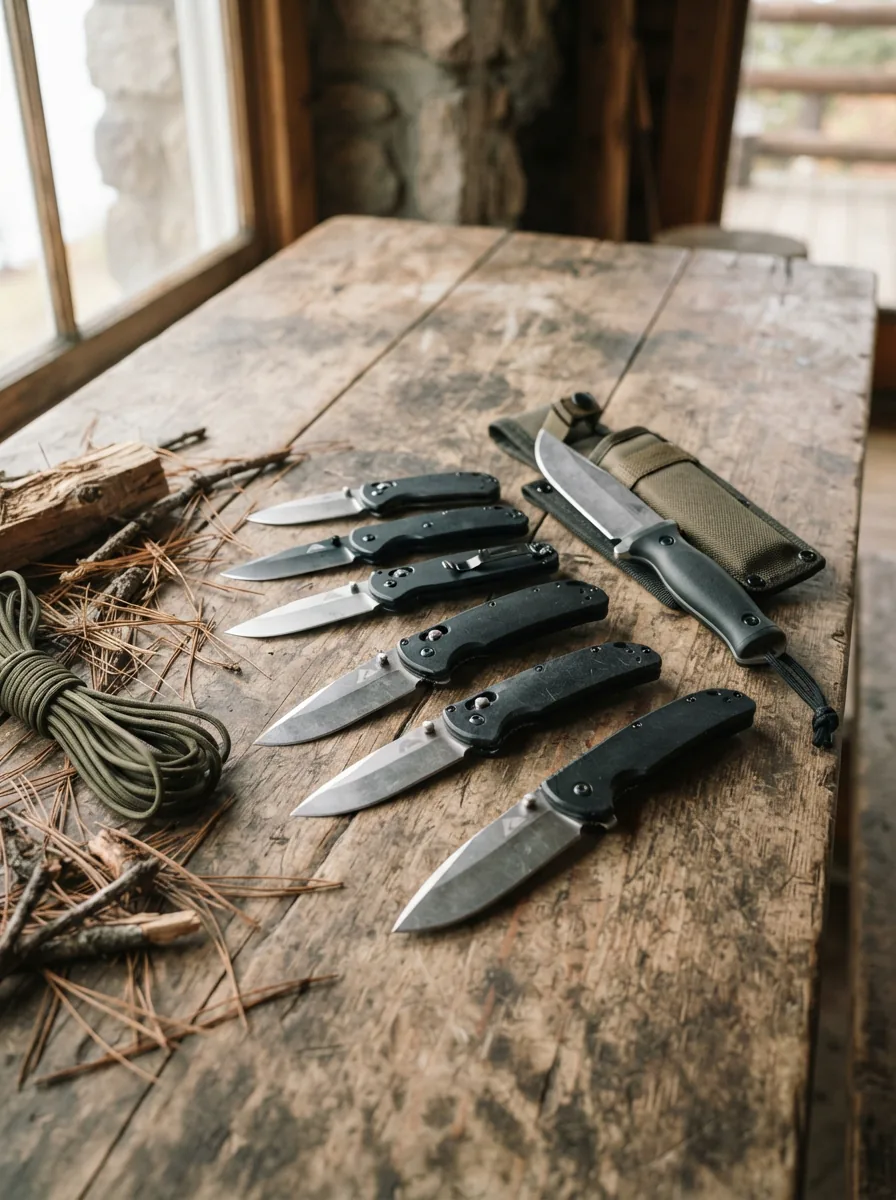
Assorted Ozark Trail folding and fixed blade knives arranged on a rustic wooden camp table
Admin
Ozark Trail Knife

This page lines up Ozark Trail knives so you can compare folding and fixed blades, locks, handles and carry options at a glance. Each pick notes what it handles best, from camp prep to a pocket blade you carry daily.

A row of Ozark Trail camping tents of several sizes pitched on a grassy campground with a family walking between them.
Admin
Ozark Trail Tents

Compare Ozark Trail tents by capacity, setup style, weather coverage and packed weight, from solo backpacking shelters to twelve-person family cabins built for drive-up weekend campsites.