





Ozark Trail Clothing

Compare Ozark Trail jackets, tops, pants and layers built for day hikes, cool mornings and weekend trips. See how insulation, weather coverage and fit differ so you can match each piece to your trail time and budget.

Four new layers, each built for a different job

Men's and Big Men's Fleece Zip-Front Jacket, Sizes S-3XL, Warm Layer for Cool Mornings

The full zip makes this fleece easy to vent when you warm up on a climb, and easy to close at a windy overlook. The soft knit works as a standalone layer on cool mornings or under a shell when the temperature drops. Big Men’s sizing keeps the same fit options across the range.

Men's and Big Men's Pinnacle System Rain Jacket, Sizes S-3XL, Steady-Rain Trail Coverage

When the forecast turns wet, this shell is the piece you reach for first. The Pinnacle System keeps steady rain off on a hike without the bulk of a heavy coat, and it packs small for a daypack. Sizes S-3XL cover a broad range, so layering over a fleece stays comfortable.

Men's and Big Men's Windbreaker Jacket, Sizes S-3XL, Light Layer for Breezy Days on the Trail

Wind is what usually makes a short walk feel colder than the thermometer says. This windbreaker cuts that chill at a weight you can carry all day, ideal for breezy trailheads and shoulder-season outings. It is not a rain shell, so plan a different layer if steady rain is likely.

Men's and Big Men's Hike Pants, Sizes 30-46 for Long Trail Days with Room to Move

Pants decide how a long day feels. These hike pants give room through the leg for stride and scrambling while sizing from 30 to 46 helps more shoppers find a fit that sits comfortably under a pack hip belt. They pair with the jackets here for a complete kit without moving into premium pricing.

Women's and Women's Plus Hike Leggings, Sizes XS-3X, Comfortable Fit for Long Trails

Leggings are the easiest bottom layer to wear all day, and this pair covers XS through 3X so more hikers find a close fit. The stretch moves freely on climbs and stays comfortable sitting around camp afterward. Choose them for warm-weather hikes or as a base under rain pants when the trail turns wet.
More to compare

Three more pieces for colder, longer days

Men's Crewneck Lightweight Thermal Top with Long Sleeves, Sizes S-3XL, Slim Base Layer Under Shell

Base layers do the quiet work of moving sweat away while you hike. This crewneck thermal is lightweight, so it adds warmth without bulk under a shell or midlayer. Long sleeves cover the arms on cold starts, and sizes S-3XL keep the fit consistent with the line.

Men's and Big Men's Mix Media Fleece Jacket, Sizes S-3XL, Two-Tone Warmth for Weekend Camp

Two textures in one jacket means warmth where you need it and breathability where you overheat. The mix media build makes this a good midlayer for changing weather on a day hike, and the zip front lets you adjust fast at a trailhead. Sizes S-3XL suit a range of builds and layer comfortably over a thermal top.

Men's and Big Men's Puffer Jacket, Sizes S-3XL, Cold-Morning Insulation for Camp and Trail

Cold mornings at camp are where insulation earns its space in the pack. This puffer traps heat around your core so you stay comfortable while you cook breakfast or wait out a windy break, then layers under a rain shell when weather turns. It is the warmest single piece in this selection, sized S-3XL.
Who this suits

Trips and tasks this clothing is made for

These pieces work for families setting up a first camp, hikers who want freedom of movement, and shoppers assembling a kit without premium prices. Think about trip length and weather, since that decides how many layers you actually need.

Weekend campers dressing in layers

Families camping on weekends need clothes that dry reasonably, layer easily and survive repeat washings. A fleece, a shell and sturdy pants cover cool nights, morning dew and the walk to the bathhouse.

Day hikers who want easy movement

Day hikers cover distance fast and want clothing that stretches with the stride. Lightweight tops and pants with room through the leg keep you moving without heavy fabric weighing you down.

Value shoppers building a first kit

Shoppers building a first kit can start with one warm layer and one weather layer, then add pieces as trips grow. Buying gradually keeps the total cost low while you learn what you actually wear.

Match each piece to how cold, wet and long your trip will be. More insulation adds warmth but runs warm on mild days, while lighter shells suit short outings. Fit, layering room and budget decide which mix works for you.

How to match layers to weather, trip length and budget

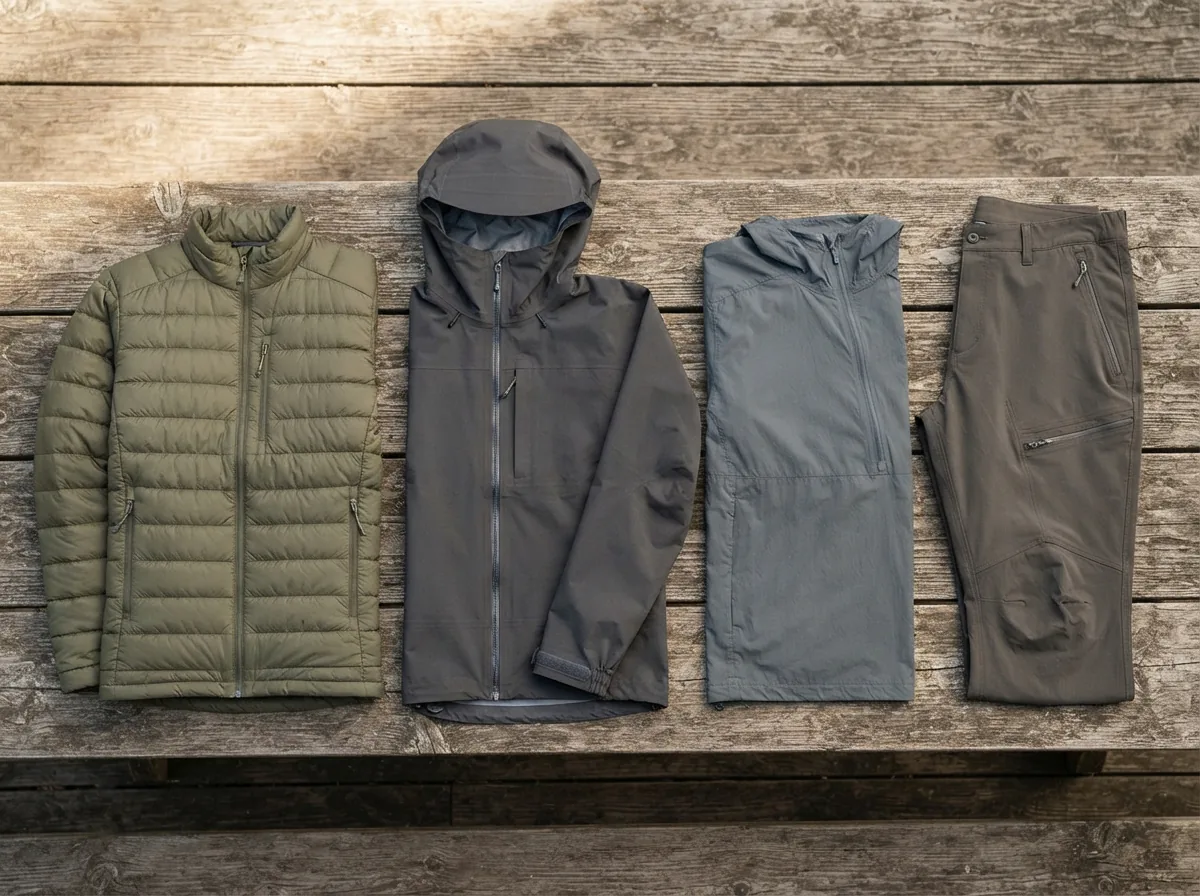
Hiking jacket, rain shell, windbreaker and hiking pants laid side by side for comparison on a wooden bench
Warmth level against trip length

Warmth matters most when you stop moving. A puffy holds heat around camp after a hike, while a thermal top works better as a base under a shell. Colder, longer trips reward insulation than a short walk does.

Weather coverage for the forecast

Rain and wind coverage changes the day. A full rain shell beats a windbreaker in steady rain, but it weighs more and adds little heat. Check the forecast and pick the lightest layer that still protects you.

Fit and sizing across the range

Sizing runs from S to 3XL and 30 to 46 in pants, so room for a base layer is easy to plan. Roomier cuts layer better, while trimmer fits move easier when you are working hard uphill on a climb.

Price compared with longer use

Low prices make it simple to buy two pieces instead of one. For a few weekends a year this value works well, though heavier daily use may call for sturdier, pricier gear that lasts longer.

Four ways to dress

Find the layer type that fits your forecast

This range splits by what the weather asks of you: insulation for cold still air, a shell for rain, a light layer for wind, and bottoms for movement. Tell them apart by fabric weight and coverage, then match to the forecast.
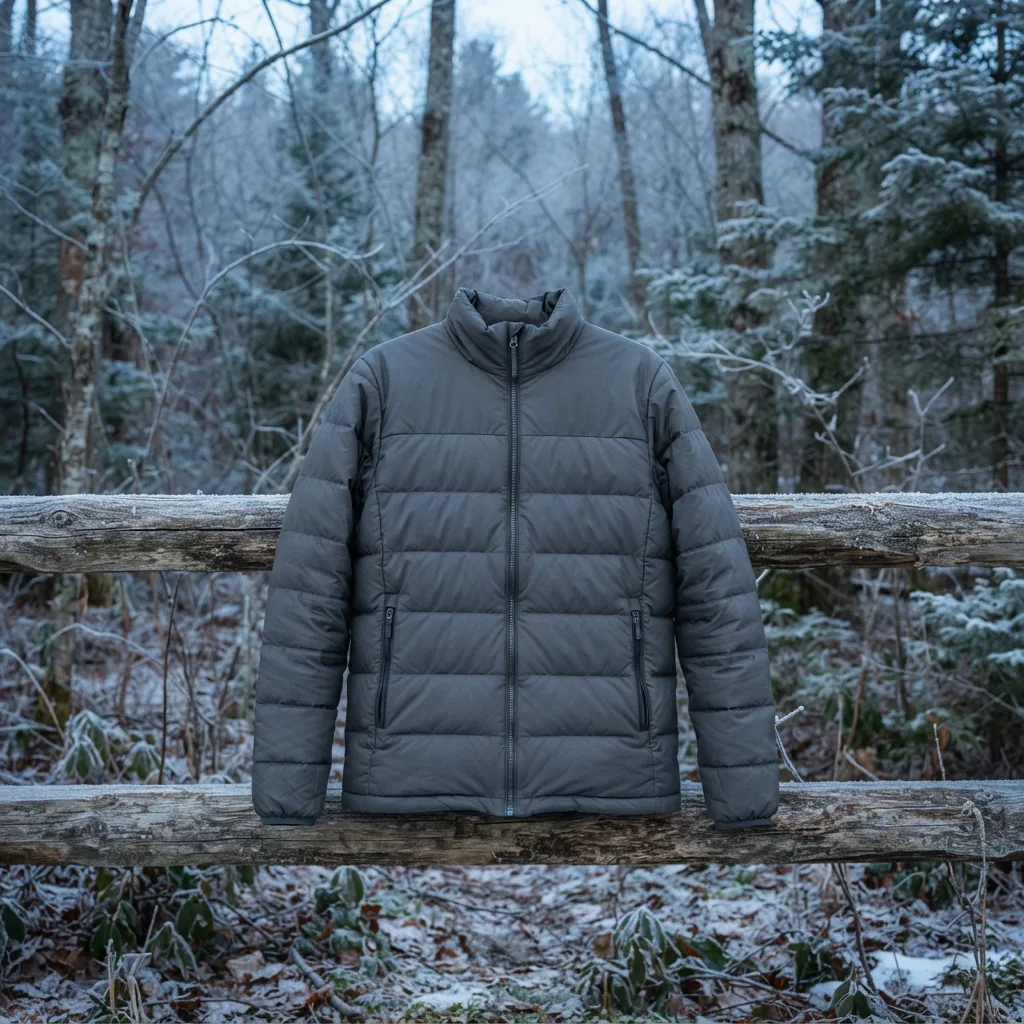
Insulated zip jacket hanging on a wooden trailhead rail on a frosty morning

Insulated jackets for cold starts

Best when you will stop moving, like at camp or a summit break. Denser fill holds heat close to the body and adds bulk, so wear it as your outer layer over a thermal.

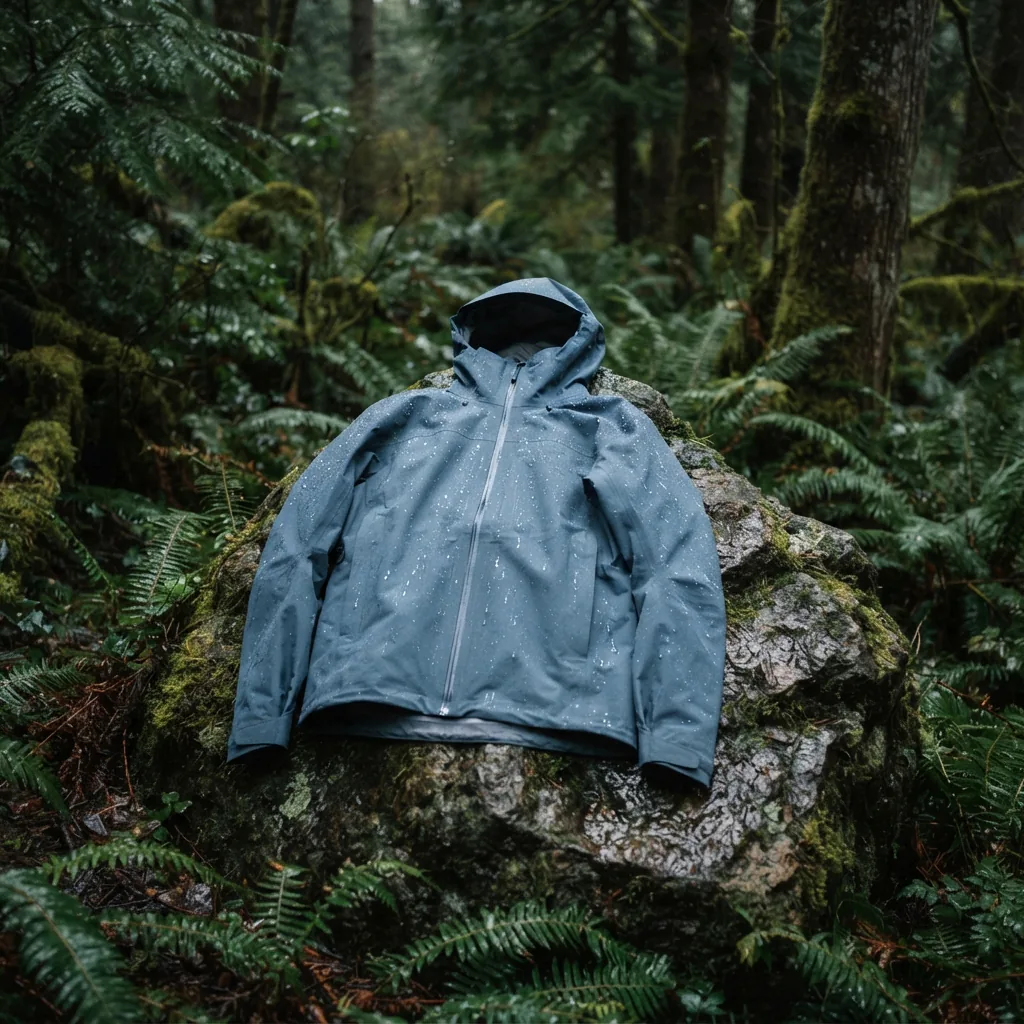
Slate blue rain shell draped over a mossy rock with water droplets on the shoulders

Rain shells for wet forecasts

Choose this when rain is likely rather than merely possible. A shell blocks water and wind at once, but it adds little warmth, so pair it with a fleece underneath.

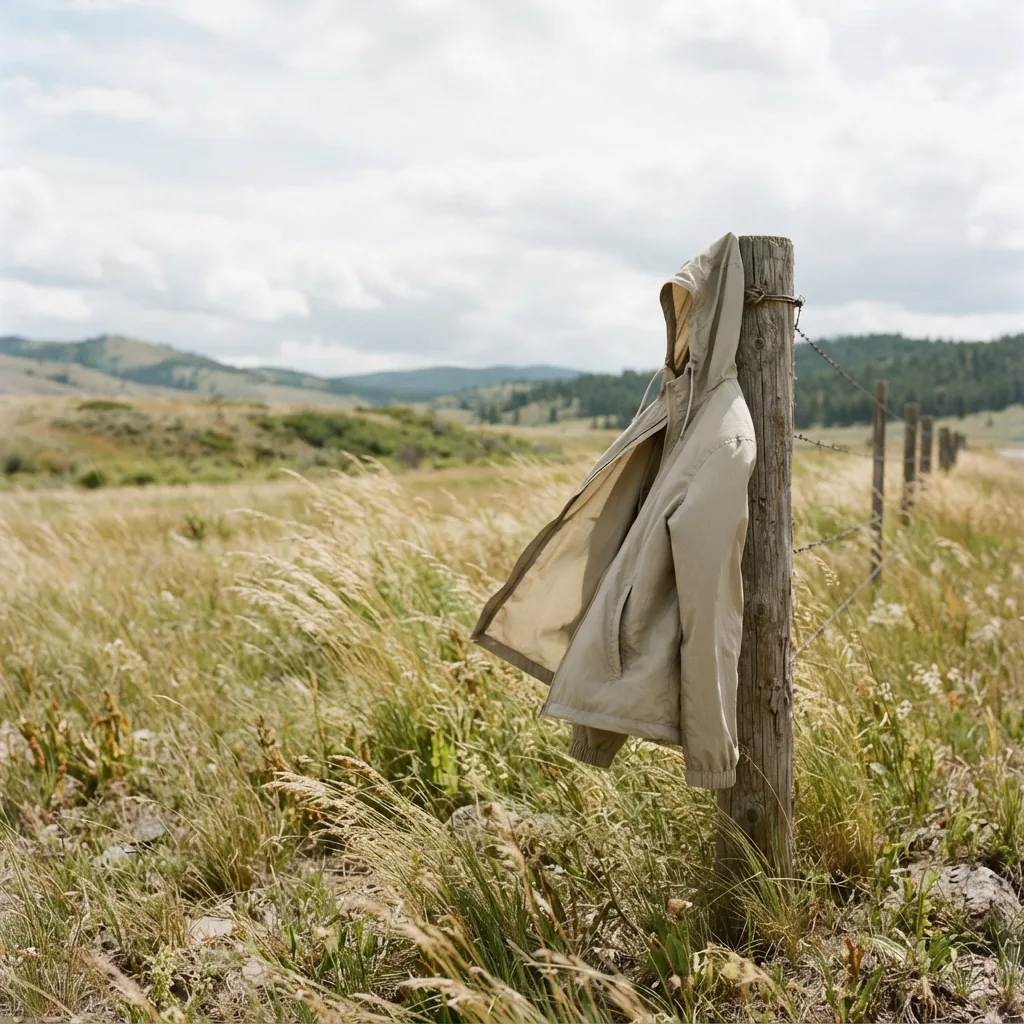
Light sand-colored windbreaker hanging from a fence post in an open meadow

Light wind layers for breezy days

A windbreaker is the lightest option and lives in a pack all day. It cuts wind chill on exposed ridges and breezy mornings, yet it will not keep you dry in steady rain.

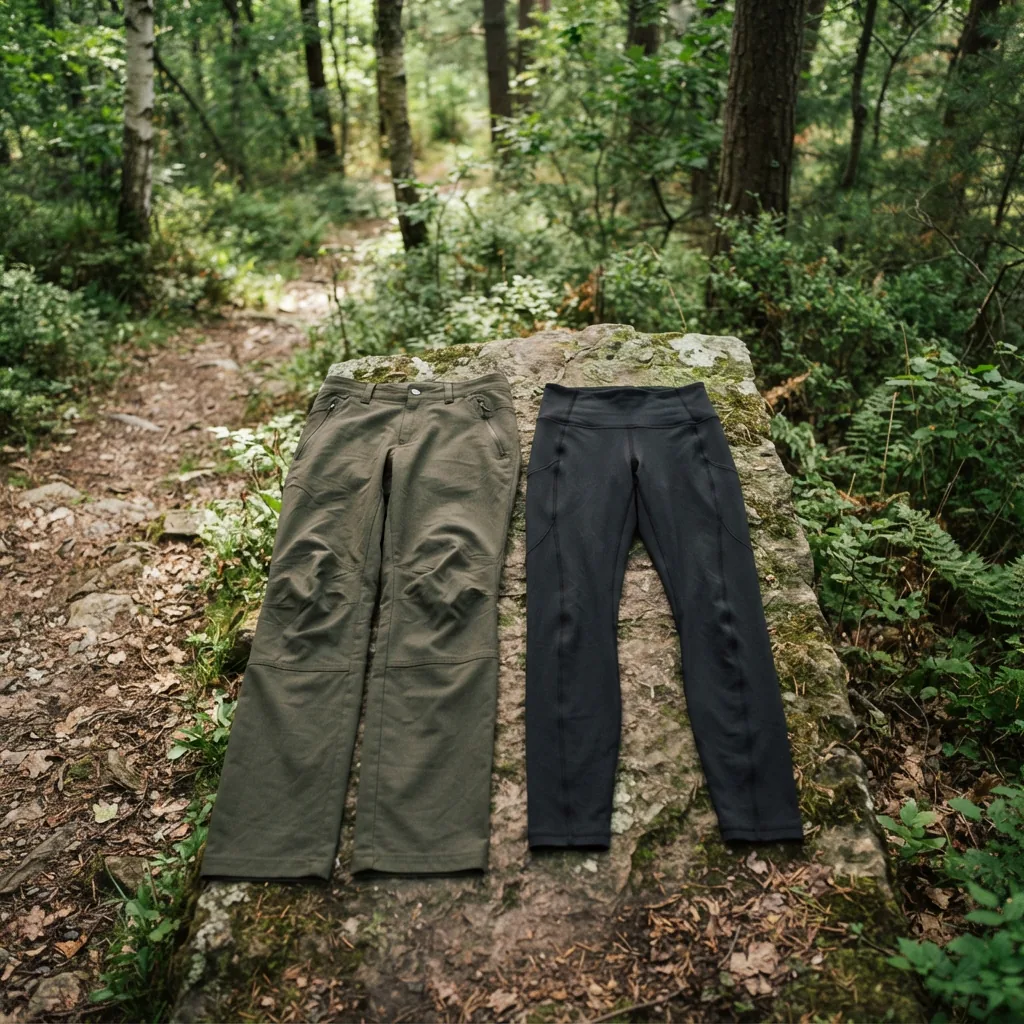
Hiking pants and leggings laid side by side on a flat stone beside a woodland trail

Hike pants and leggings for movement

Pants give coverage against brush and rocks, while leggings move easier and suit warm days. Decide by terrain first, then check whether you want room for a base layer underneath.

What shoppers say

First-person notes from trail and camp use

These accounts describe buying and wearing outdoor layers in this price range: how fit, comfort and warmth held up after a full day, and where the trade-offs showed up. They focus on the experience rather than one specific item.
I wore a fleece over a thermal for an early hike and never felt overheated once we started climbing. The full zip let me dump heat at the top, and I was still warm standing around afterwards. For the price, I would buy this setup again for weekend trips.
Decorative customer review avatar icon 1
Dana R.
Layered up for a cold morning start
Steady rain arrived on the second morning and my shell kept my base layer dry enough to stay comfortable. It is not as refined as the expensive jackets my friend owns, but it did the job and packed small in the daypack, which is all I asked of it.
Decorative customer review avatar icon 2
Marcus T.
Rain held off on a two-day family camp
Three of us bought bottoms in different sizes and the fit matched what the charts said, which made ordering easier. The stretch was fine on a longer walk, and nothing rubbed at the waist under the pack. That consistency is the reason we came back for more.
Decorative customer review avatar icon 3
Priya S.
Sizing that worked for our group
I have used my layers through a season of weekend outings. Colors faded a little and the zipper needs a firm pull now, but nothing has failed. For trips of a few days it has been dependable, and I would rather replace it occasionally than pay premium prices.
Decorative customer review avatar icon 4
Ken W.
Weekend use after a full season
Questions before you buy

Answers on fit, weather and trip length

It depends on the weather and how hard you will move. A rain jacket handles steady rain, a windbreaker only blocks wind, and a fleece adds warmth when you stop. For an uncertain day, pack a fleece plus a light shell so you can add or drop a layer at a trailhead.
Most pieces here run from S to 3XL, with pants in 30 to 46 and leggings XS to 3X. If you plan to wear a thermal underneath, a roomier size keeps the shoulders comfortable. Check the size listed on the style you pick rather than assuming every cut fits the same.
For cool, dry nights these layers work well as a system: a thermal base, a fleece or puffer for warmth, and a shell for weather. Reviews describe the brand handling short trips and regular weekends reliably, though heavier daily use may call for tougher gear.
Both are built for movement on the trail, but they suit different conditions. Hike pants give full coverage and more protection against brush and rocks, while leggings are lighter and easier to wear in warm weather or as a base layer under rain pants.
You give up some refinement rather than basic function. Independent reviews describe the brand as a reasonable buy for short trips, with trade-offs in setup ease and long-term durability. For weekend use and occasional hikes, the lower price often matters more than extra features.
Bring one insulating layer and one weather layer you can add or remove. A fleece or puffer handles a cold start, and a rain jacket goes on top if showers arrive. Pieces in this range are light enough to carry all day without adding much weight to your pack.
Keep exploring

See where these layers fit in the wider range

Hard-sided and soft-sided Ozark Trail coolers arranged on a wooden picnic table at a wooded campsite
Admin
Ozark Trail Cooler

Compare Ozark Trail coolers by size, shape and how you carry them, from hard-sided chests that hold ice for a weekend to soft totes and backpack coolers for a day out. Each option below shows capacity, format and the trip it fits best.


A group of Ozark Trail mountain bikes with front suspension parked on a dirt trailhead, a rider comparing frame sizes beside them
Admin
Ozark Trail Bike

Ozark Trail mountain bikes span hardtails and full suspension builds, sized from young riders to tall adults. Compare fit, suspension, wheels and gears to match your trails and your budget.

Assorted Ozark Trail folding and fixed blade knives arranged on a rustic wooden camp table
Admin
Ozark Trail Knife

This page lines up Ozark Trail knives so you can compare folding and fixed blades, locks, handles and carry options at a glance. Each pick notes what it handles best, from camp prep to a pocket blade you carry daily.

A row of Ozark Trail camping tents of several sizes pitched on a grassy campground with a family walking between them.
Admin
Ozark Trail Tents

Compare Ozark Trail tents by capacity, setup style, weather coverage and packed weight, from solo backpacking shelters to twelve-person family cabins built for drive-up weekend campsites.
