
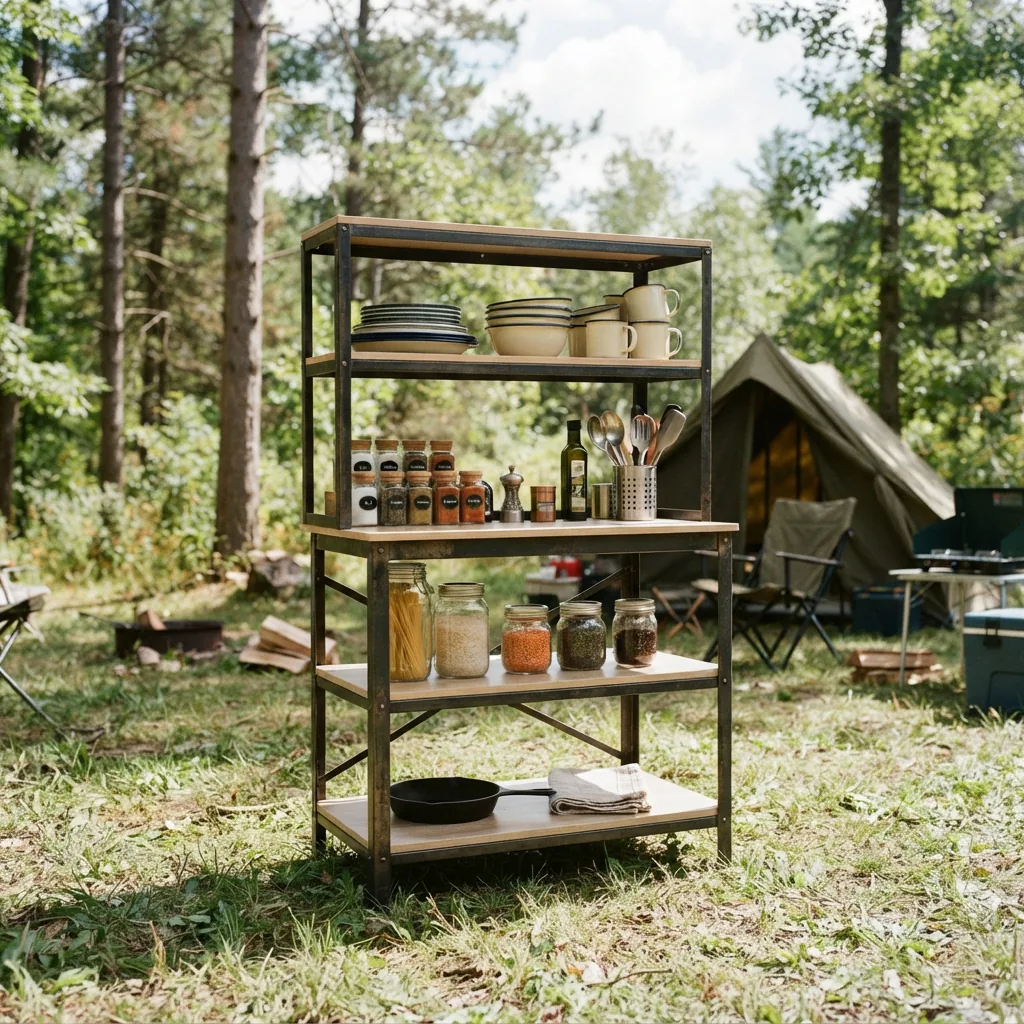





Ozark Trail Camp Kitchen

Compare Ozark Trail camp kitchens, prep stations and cook stands in one place. See how workspace, sink access, setup time and packed size differ, so you can match the setup to your trip length and vehicle space.

Four setups that earn their space in your trunk

Ozark Trail Camp Kitchen with Sink — Built-In Cleanup Space for Multi-Night Trips

Cleanup is the part most camp setups handle with a bin on the ground. This kitchen puts a sink basin right beside the workspace, so rinsing vegetables or washing plates happens where you already cook. It fits longer stays, where washing up at the picnic table stops feeling convenient.

Ozark Trail Folding Camp Kitchen — Durable Cook Space That Folds Flat for the Trunk

A folding frame gives you one dependable place to set the stove and stash the gear you reach for all evening. It opens into a stable surface, then folds flat for the drive home. Best for campers who want work space and simple storage without a bulky build in the trunk.

Ozark Trail Camp Kitchen Organizer — Compact Caddy That Keeps Every Utensil in Reach

Small tools vanish in tent corners and under cooler lids. This compact organizer gives utensils, tongs and spices a single home at camp, so prep moves faster and you pack out with nothing left behind. It suits campers who already have a table but keep losing the small things.

Ozark Trail Portable Camp Kitchen Table — A Lightweight Prep Surface That Sets Up in Minutes

When you want to cook without claiming the picnic table, this lightweight table opens quickly into a dedicated prep surface. It handles chopping and food prep without a complicated build, which suits campers who move sites often or camp for a single night out.

Ozark Trail Camp Kitchen with Countertop — Roomy Work Surface for Full Camp Meals

A spacious countertop makes this the pick when camp means real meals rather than reheating. You get room to chop, season and set down hot pans without clearing between steps, and the frame stands on its own instead of taking over the picnic table. It suits family camps where cooking happens every evening.
More ways to organize camp cooking

Three more picks for storage, prep and stove height

Ozark Trail Camp Kitchen Hutch — Freestanding Storage That Keeps Food Off the Ground

The hutch gives plates, spices and dry goods a dedicated shelf instead of a bag on the ground. Standing height keeps food within reach while you cook, and the open design means you can see everything you packed. It works best paired with a stove stand or folding table nearby.

Ozark Trail Camp Kitchen Roll-Up Prep Station — Flat Chopping Space, Small Packed Size

The slatted top unrolls flat for chopping and mixing, then folds down to a size that slides into your vehicle with the rest of the camp cooking gear. It is a good fit when prep space is the only thing you are short on and a stove already lives elsewhere at the site.

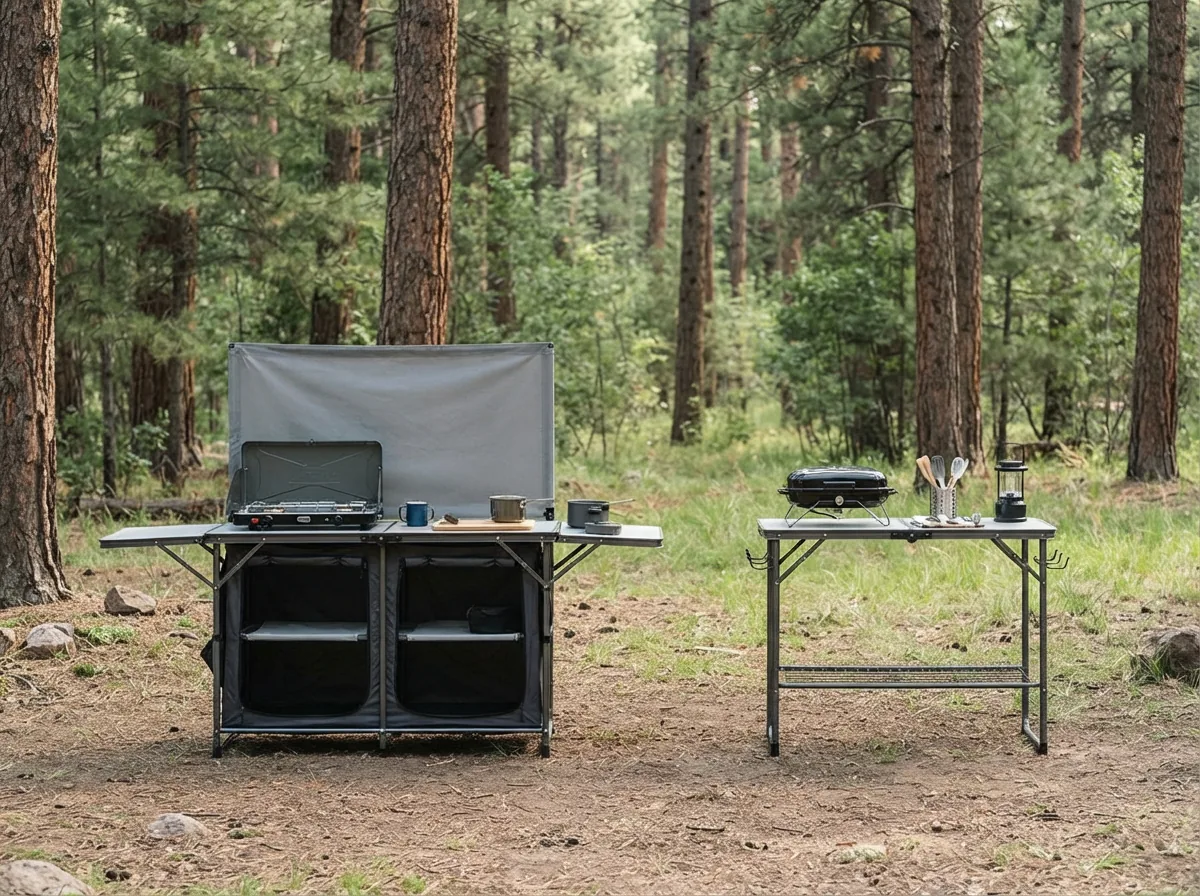
Ozark Trail Camp Kitchen Cook Stand — Sturdy Stove Height and Room for Fuel Below

Built to hold a camp stove at a comfortable working height, this stand keeps you off your knees while you cook. Open space underneath holds fuel bottles, and a grate steadies pots during a boil or stir-fry. It is a focused piece for campers who want stove height without a full kitchen.
Where a camp kitchen earns its keep

Who gets the most out of a camp kitchen setup

A camp kitchen serves different jobs depending on who is eating and how long you stay. Family camps, quick overnights and tight sites each reward a different balance of workspace, setup speed and storage, so weigh the result you want before picking.

Family camping with real meals to cook

When three or four people eat at camp, a full kitchen keeps prep moving without turning the picnic table into a cluttered mess, and everyone can help without getting underfoot.

Weekend trips with a short setup window

Arriving near dark rewards a kitchen that unfolds in minutes. A compact table or cook stand gives you a working surface before the light goes, without a long build.

Organizing a small campsite footprint

In tight sites, vertical storage and caddies keep cooking gear in one zone. That leaves the fire ring clear and makes it easier to leave the site as you found it.

Camp kitchens differ less by price than by workspace, sink access, setup effort and packed size. A countertop model helps when you cook full meals; a roll-up station suits quick prep. Match those factors to your trip length.

How to match a camp kitchen to your trip length

Two folding camp kitchens of different sizes set up side by side at a pine campsite for comparison
Workspace size decides what meals you can cook

A wide countertop lets you chop, season and rest hot pans at the same time. Narrower surfaces still handle a stove and a plate, but you clear space between steps and cook in smaller batches.

Setup effort matters after a long drive

Unfolding legs and locking latches takes a few minutes when you arrive tired. If you move camp each night, a simpler frame with fewer parts saves real time every evening.

Packed size limits what fits in the car

Folding and roll-up designs collapse into flat shapes that slide beside coolers. Bulkier kitchens offer more room to work but claim noticeably more trunk space on the drive out.

Storage features cut down on loose gear

Shelves, hutches and utensil caddies keep plates, spices and tools off the ground and easy to reach, so you carry fewer bags and spend less time digging through the vehicle.

Kinds of camp kitchens

Four directions to compare before you choose

Camp kitchens split into practical directions: full setups with a countertop and shelving, simple folding tables, compact roll-up prep stations, and storage pieces like hutches. Read your meals first, then match the direction to your trunk space.
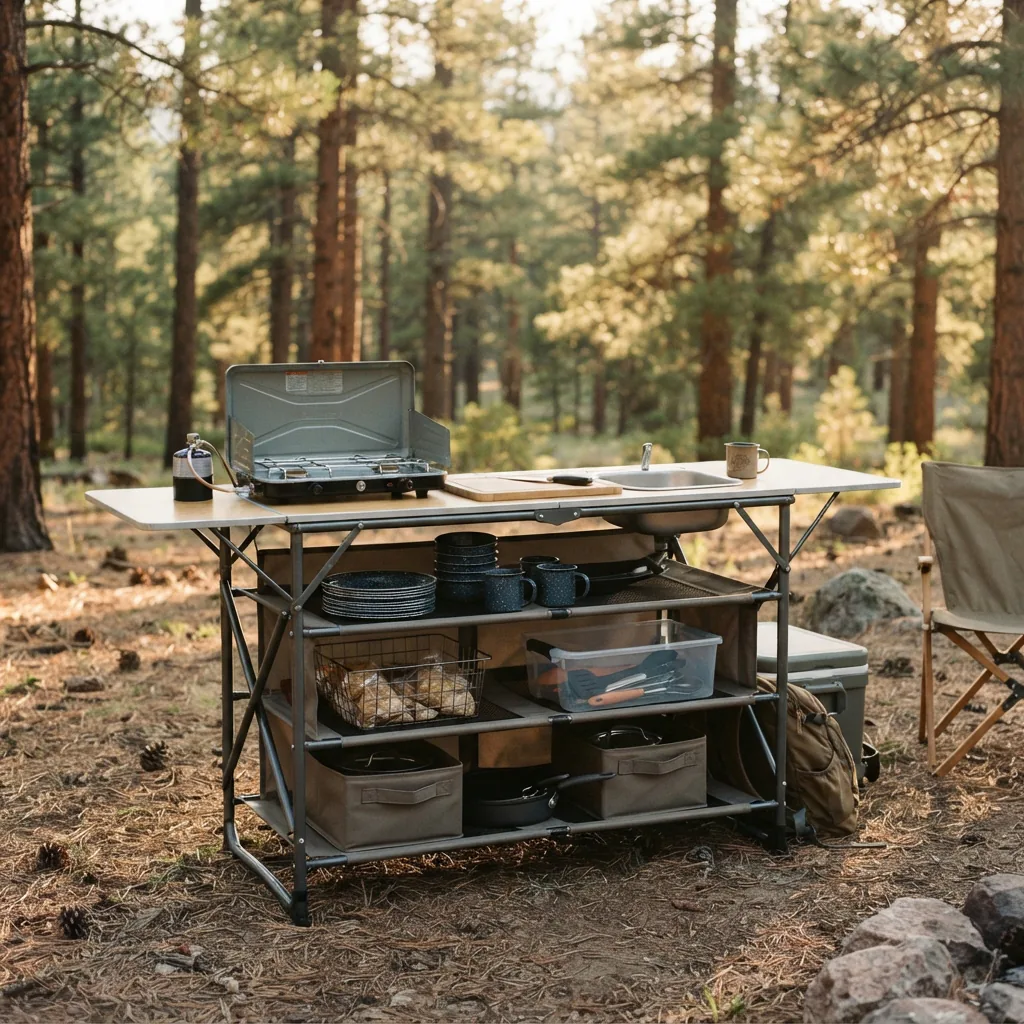
Folding camp kitchen with a wide countertop and open shelving at a pine campsite

Full kitchens with a countertop

The largest option, offering wide prep space plus shelving for plates and bins. Best when you cook several dishes a night and have the vehicle room to carry it.

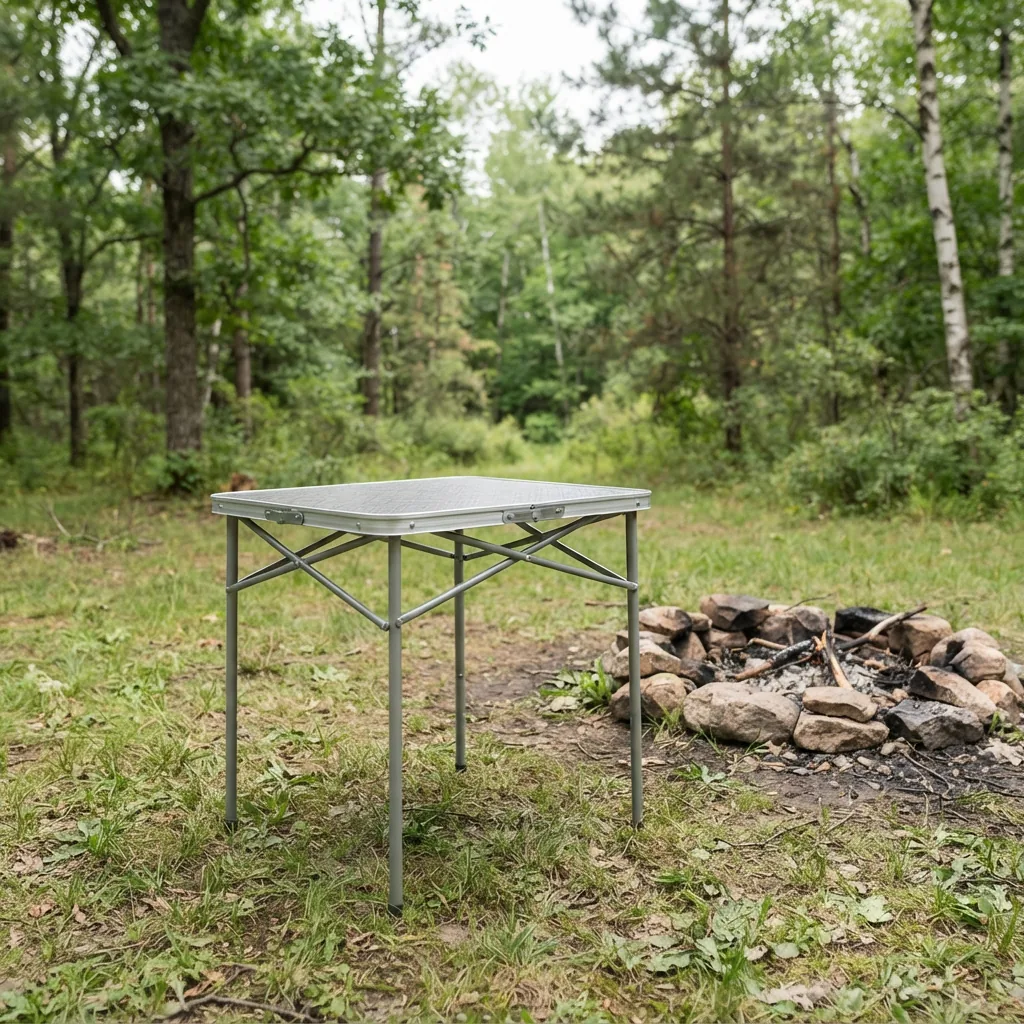
Simple folding camp table with an open flat top beside a campfire ring at a campsite

Folding tables for quick setup

Simple frames that open into a usable surface. They trade storage compartments for lighter weight and faster packing at the end of the trip.

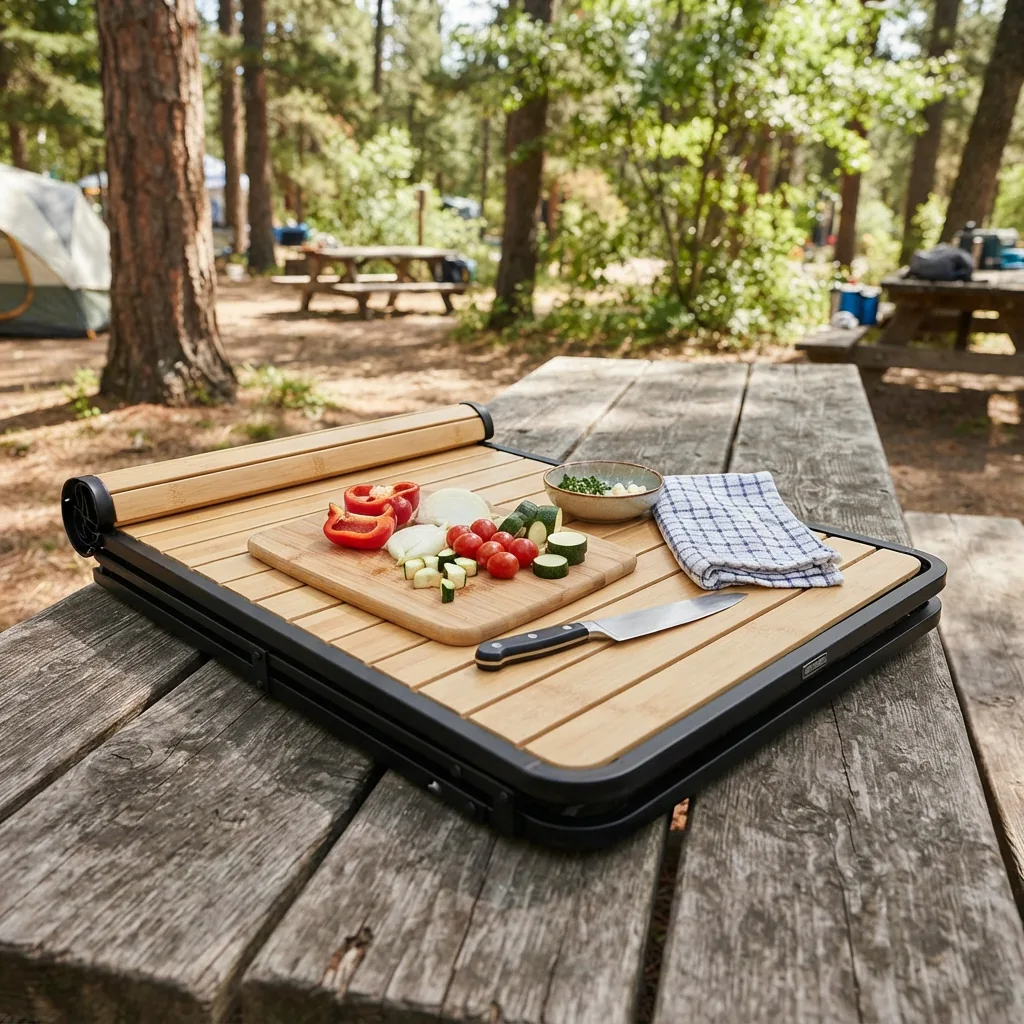
Slatted roll-up camp prep station unrolled flat with a cutting board and vegetables

Roll-up prep stations

Slatted tops that unroll flat for chopping and mixing, then fold down small. They suit prep work and tighter sites rather than full meal service.

Freestanding camp hutch with open shelves holding plates, spice jars and dry goods

Hutches and utensil organizers

Storage-led pieces that hold plates, spices and tools off the ground and in view. Pair one with a stove stand when you want to spread gear out.

What campers report back

First-hand notes on cooking at the campsite

Campers describe the same turning point: cooking stops feeling improvised once gear has a place. These accounts cover prep space, packed size and tidier sites, the trade-offs people weigh when comparing surfaces.
I used to prep everything on the cooler lid, which left no room for anything else. A dedicated surface changed the whole evening. Chopping and seasoning happened in one spot, and cleanup took minutes instead of dragging on. Camp cooking started feeling organized instead of improvised.
Decorative customer review avatar icon 1
Dana R.
Family camper who cooks full meals at camp
I camp two nights most weekends and I care more about packed size than extra features. A simple folding surface gives me somewhere to set the stove and my plate, then slides flat beside the cooler. Setup takes under five minutes, which matters when I roll in late after work.
Decorative customer review avatar icon 2
Miguel T.
Solo hiker who wants a fast, light setup
With four of us cooking, loose utensils were the worst part of the trip. A small organizer and one shelf got everything off the ground and into a single zone. I stopped digging through bins mid-meal, and the site stayed tidier at the end of the night. Modest addition, real payoff.
Decorative customer review avatar icon 3
Priya S.
Group camper who values storage and order
Space is tight once the cooler and bins are loaded, so I compared packed sizes before anything else. I picked a design that folds down thin and still gives me a working surface when I arrive. I accept that it gives up storage compartments, and that trade felt right for my trips.
Decorative customer review avatar icon 4
Tom W.
Weekend car camper with a tight trunk
Questions worth asking

Common trade-offs when choosing a camp kitchen

For one or two people making simple meals, a compact surface with room for a stove and a cutting board is enough. Larger groups or multi-dish dinners benefit from a countertop with shelving, since extra room reduces the clearing between steps.
Cook stands are built to hold a stove at working height with a grate to steady pots, and folding kitchens give a flat surface for the same job. Make sure the frame sits on level ground and keep fuel bottles in the open space below rather than on the worktop.
Most folding kitchens open in a few minutes once you know the latch order. Practicing once at home removes the guesswork, so you are not sorting parts in the dark after a long drive out to the site.
Budget camp kitchens are built for regular weekend use rather than years of heavy trips. Expect solid service if you dry the surfaces, avoid overloading shelves and store the frame folded flat, and plan to replace rather than repair down the line.
Folding and roll-up designs collapse into flat shapes that slide beside coolers and bins. The bulkier kitchens with counters and shelves claim noticeably more room, so it is worth measuring your trunk before choosing the largest option.
An organizer keeps utensils, plates and spices in one grabbable place instead of loose bags. Campers who move between the cooking area and the eating area tend to find it saves more time than the small amount of packed space it takes.
Keep exploring camp cooking

See more gear that rounds out your camp kitchen

Hard-sided and soft-sided Ozark Trail coolers arranged on a wooden picnic table at a wooded campsite
Admin
Ozark Trail Cooler

Compare Ozark Trail coolers by size, shape and how you carry them, from hard-sided chests that hold ice for a weekend to soft totes and backpack coolers for a day out. Each option below shows capacity, format and the trip it fits best.


A group of Ozark Trail mountain bikes with front suspension parked on a dirt trailhead, a rider comparing frame sizes beside them
Admin
Ozark Trail Bike

Ozark Trail mountain bikes span hardtails and full suspension builds, sized from young riders to tall adults. Compare fit, suspension, wheels and gears to match your trails and your budget.

Assorted Ozark Trail folding and fixed blade knives arranged on a rustic wooden camp table
Admin
Ozark Trail Knife

This page lines up Ozark Trail knives so you can compare folding and fixed blades, locks, handles and carry options at a glance. Each pick notes what it handles best, from camp prep to a pocket blade you carry daily.

A row of Ozark Trail camping tents of several sizes pitched on a grassy campground with a family walking between them.
Admin
Ozark Trail Tents

Compare Ozark Trail tents by capacity, setup style, weather coverage and packed weight, from solo backpacking shelters to twelve-person family cabins built for drive-up weekend campsites.
