





Ozark Trail 4 Person Tent

Compare Ozark Trail 4 person tents side by side: instant domes, dark rest cabins, screen houses and awning models, with honest notes on setup time, interior space and how each holds up on short weekend trips.

Four 4 person tents, each built for a different trip

Ozark Trail 4 Person Instant Dome Tent New in Box 30 Sec Setup Camping for Quick Weekends

Set up in about 30 seconds, so camp is ready before anyone starts arguing about poles. Brand new in the box means every part arrives with it, nothing worn or missing. It is a straightforward first tent for families testing weekend camping without paying premium-brand prices.

Ozark Trail 4 Person Dome Camping Tent Green Rainfly Storage Locker NEW for Rainy Trips

A green rainfly covers the tent body and helps shed a night of rain, while the built-in storage locker keeps small gear sorted and off the floor. Brand new condition means no worn seams or faded fabric. A sensible pick for casual weekenders who want weather cover and organization at a fair price.

Ozark Trail 4-Person Dome Tent Red/Gray Roll Back Fly Media Pocket for Easy Venting

Roll the fly back on clear nights to look up at the sky, then pull it over when the weather turns. The media pocket keeps a phone close and off the ground. Campers who like simple domes and quick packing will find this one easy to live with on short weekend trips.

Ozark Trail 4 Person Clip and Camp Dome Tent 8 ft x 8.5 ft Portable Outdoor for Car Camping

Eight by eight and a half feet gives four sleepers a bit of width to spread out, and the clip-and-camp pole design keeps pitching simple on the first try. It is portable enough to carry from the car to a grassy site. A good starting point for buyers who want room without a complicated setup.

Ozark Trail Sport Dome Tent 9x8 ft Sleeps 4 Weatherproof Gear Loft Orange for Value Trips

Sized at 9 by 8 feet, this sport dome sleeps four with room for sleeping bags and gear. Weatherproof fabric and a gear loft cover the basics, and the bright orange body makes the tent easy to spot from the trail. As a pre-owned option, it trades new-condition certainty for a lower price and suits occasional weekend trips.
More ways to sleep four

Cabin comfort, blackout sleep and campsite shade

Ozark Trail 4 Person Dark Rest Instant Cabin Tent with Blackout Fabric for Later Wake-Ups

Blackout fabric blocks early-morning sunlight, so a late sunrise does not wake everyone early. The instant frame gets the tent up in minutes, and cabin walls stand taller than a dome. One reviewer rated an Ozark Trail dark rest tent 7.4 out of 10 for ease of use and blackout performance at $125.

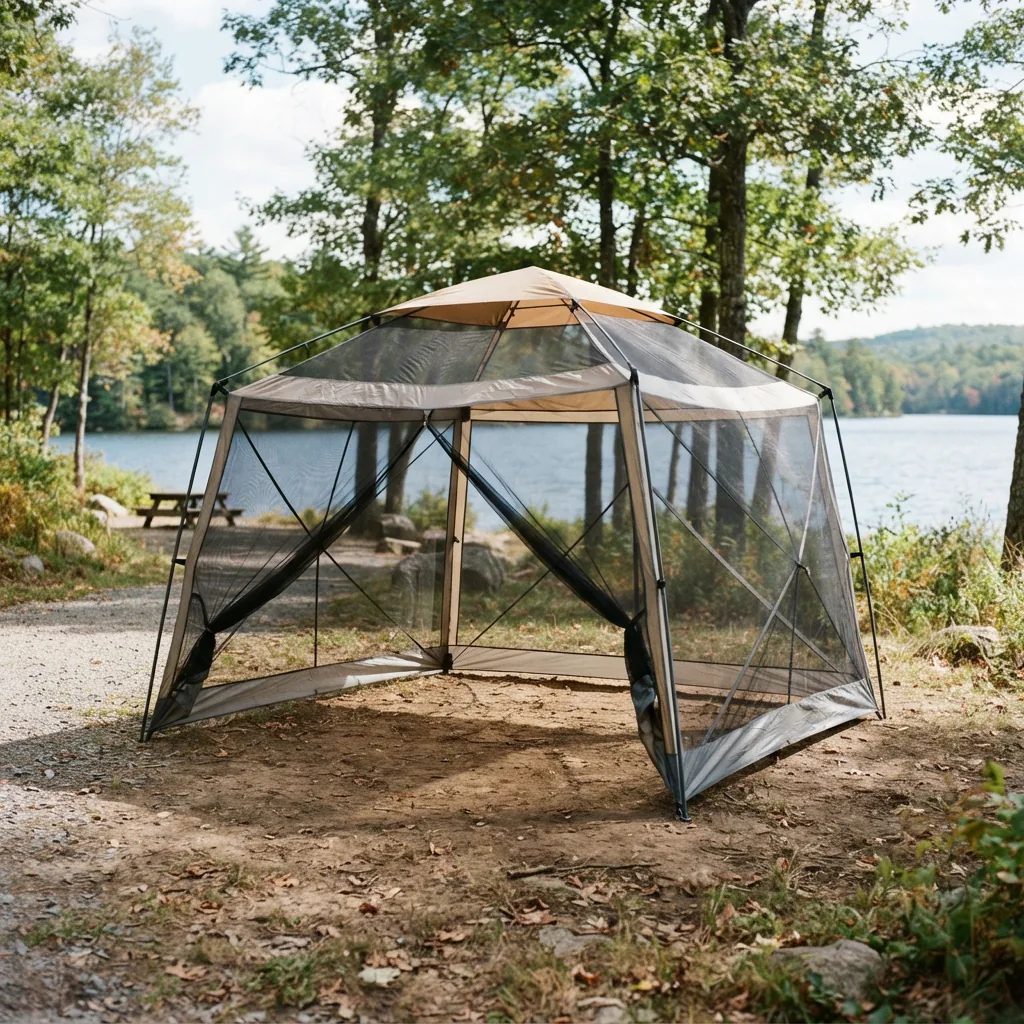
Ozark Trail 4 Person Screen House Shelter for Picnics and Campsite Lounging Away from Bugs

Not a tent, but the piece that makes a campsite livable. Mesh walls keep mosquitoes out while air keeps moving, and the open floor fits over a picnic table or bare ground. It packs down small enough for lake days, ballpark afternoons or a backyard meal outside with friends.

Ozark Trail 4 Person Cabin Tent with Front Awning and Gear Loft for Shade-Ready Weekends

The front awning adds a shaded, dry spot for camp chairs and muddy shoes, while a gear loft keeps lanterns and phones within reach. Straight walls and an outward-opening door make this a comfortable family car-camping base. Expect honest performance for the price, with weight and durability trade-offs versus top-end tents.
Who these tents suit

Trips and tasks a 4 person tent handles well

Four person tents cover family weekends, short overnight hikes and base-camp days near the car. Weighing what you need the tent to do, rather than how many features it lists, points you toward the right model faster.

A first family tent for weekend trips

Four-person sizing gives parents and kids room to sleep without upgrading to a larger, pricier tent. Straightforward setup and honest weather performance make it a low-risk first purchase.

Late arrivals and short camping nights

If you often reach camp after work on a Friday, an instant frame and simple stakes turn a dark parking spot into a set-up camp in minutes, which keeps the trip from starting in frustration.

Base camp for lake days and cookouts

A dome or screen house near the car gives a shaded rest spot, gear storage and a bug-free table between swims and meals. It suits casual weekends where the tent supports the day rather than ending it.

Setup time, standing room, weather protection and expected lifespan all shift which tent suits you. Match the profile to your trip length and campsite, and the price-to-performance trade-off becomes easy to judge.

Compare setup, space, weather and price

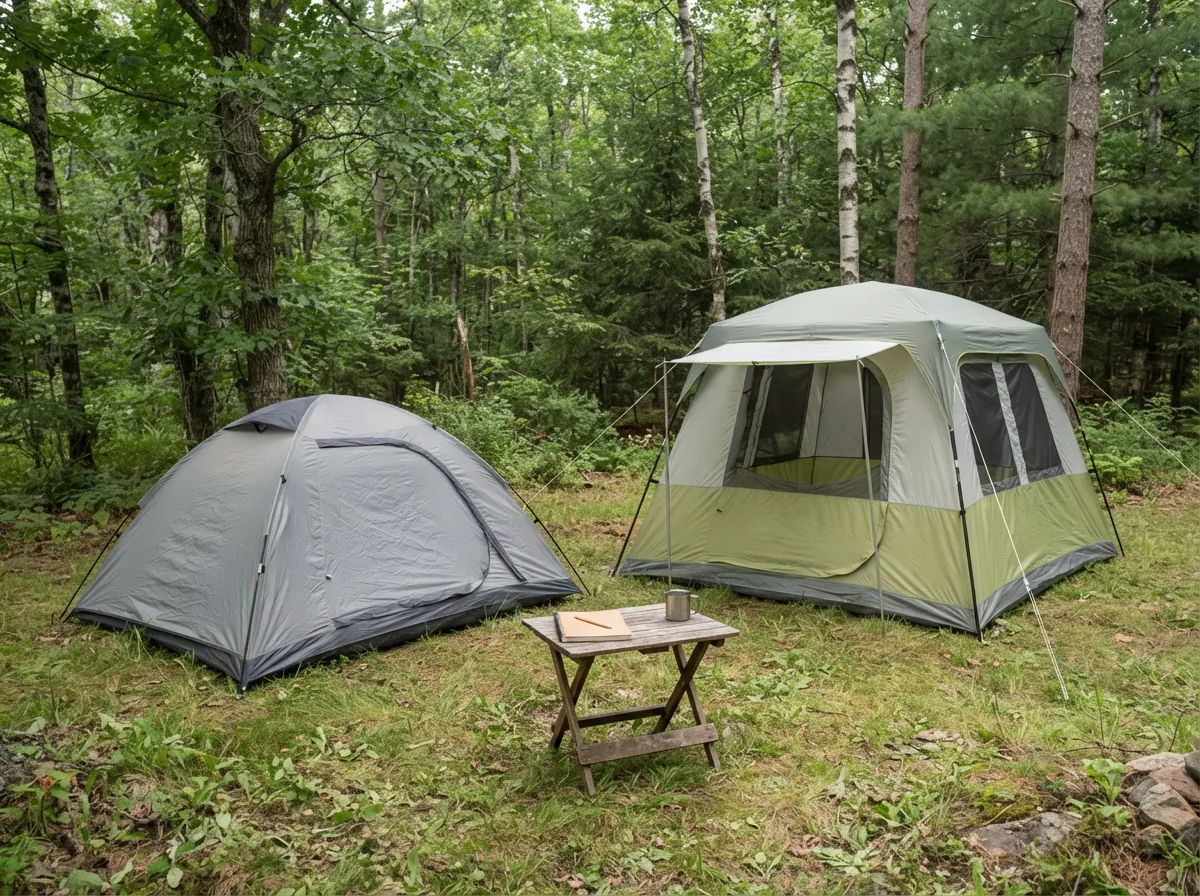
A dome tent and a taller cabin tent pitched side by side at a campsite for comparison
Setup time on the first evening

An instant or clip-and-camp frame gets you from car to covered in minutes, which matters when you arrive late with kids. Traditional pole threading is slower but costs less and packs smaller.

Standing room and floor space

Cabin walls stand taller, so changing clothes is easier, while domes stay lower and lighter. Floor dimensions around 8 to 9 feet square decide whether four sleepers and their packs actually fit.

Weather protection you can trust

A rainfly, sealed seams and full coverage decide how a tent handles a wet night. Dome shapes shed wind better than tall cabins, so pick the profile that matches your campsite.

Price weighed against how long it lasts

These tents cost far less than premium brands, and reviewers say they last fewer seasons. For occasional weekends that is usually fine; for heavy yearly use, plan to replace sooner or spend more.

Find your tent type

Four tent types and how to tell them apart

Within 4 person tents, the real split is between fast-pitch domes, roomy cabins, blackout models and shade shelters. Deciding which one matches your trip style is easier than comparing feature lists, and it narrows the choice quickly.
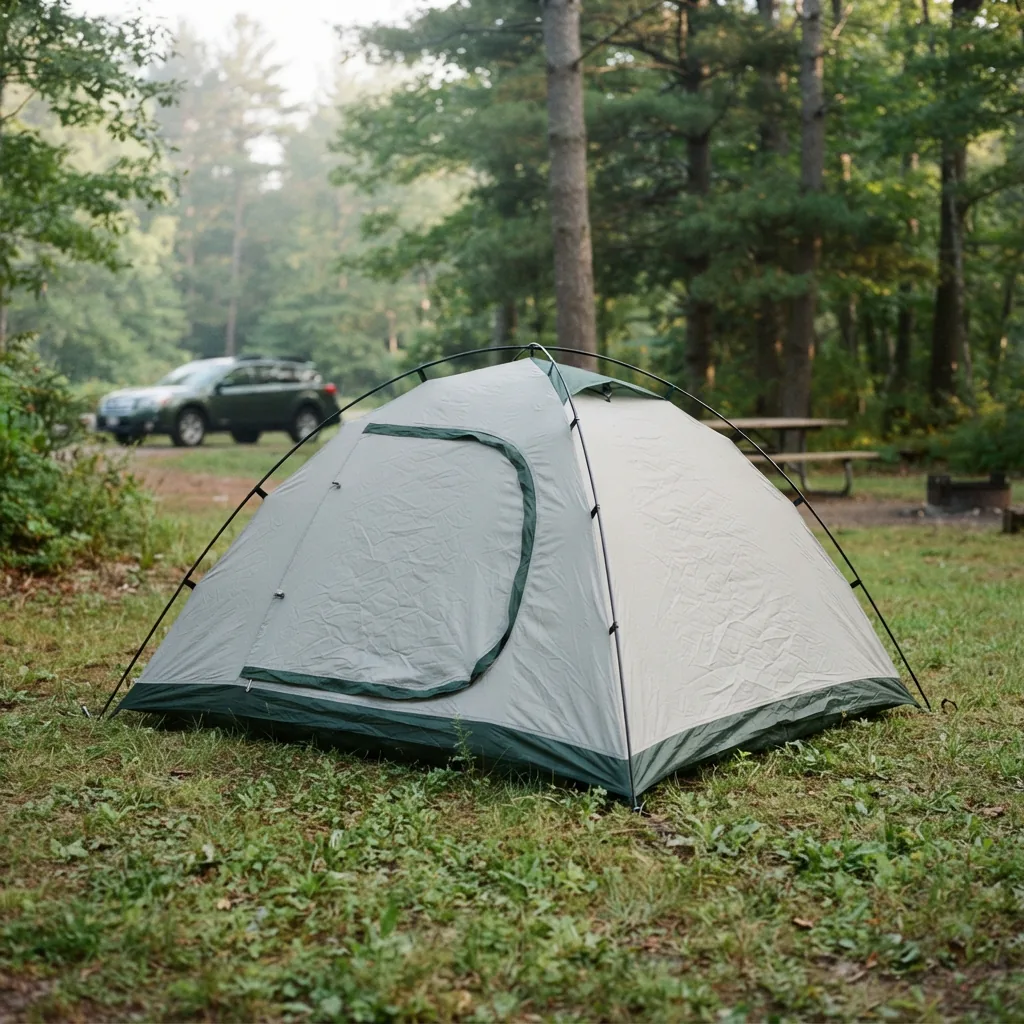
A plain instant dome tent with pre-attached folding poles set up on a grassy campsite

Instant dome tents for fast pitches

Pre-attached poles unfold and lock in place, so a late arrival still ends with a set-up camp. They cost a bit more than basic domes but save the most time on the first evening and the last morning.

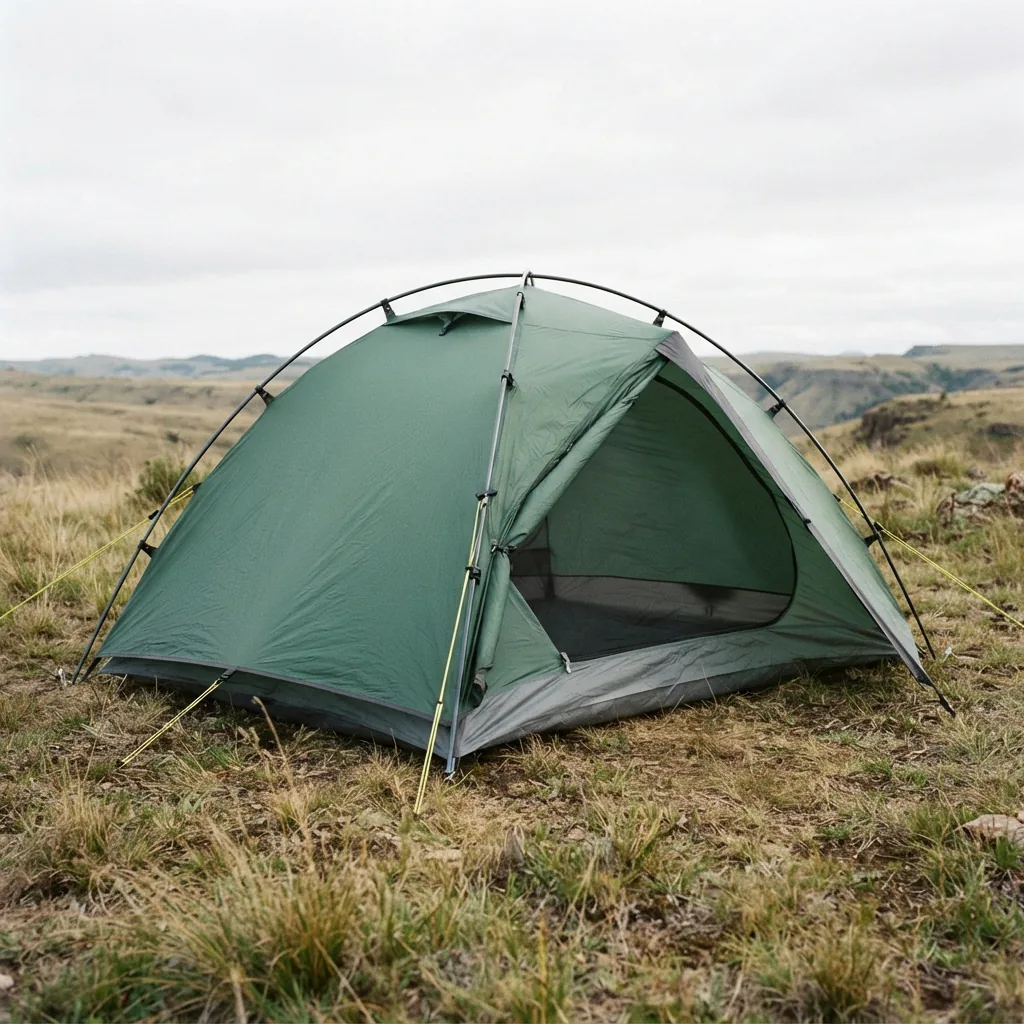
A low clip-and-camp dome tent with external poles and clips pitched on an open campsite

Classic clip-and-camp domes

Simple poles and clips make these the easiest tents to learn on, and they pack down smaller than cabin styles. The lower profile also handles wind better, which helps on exposed or open sites.

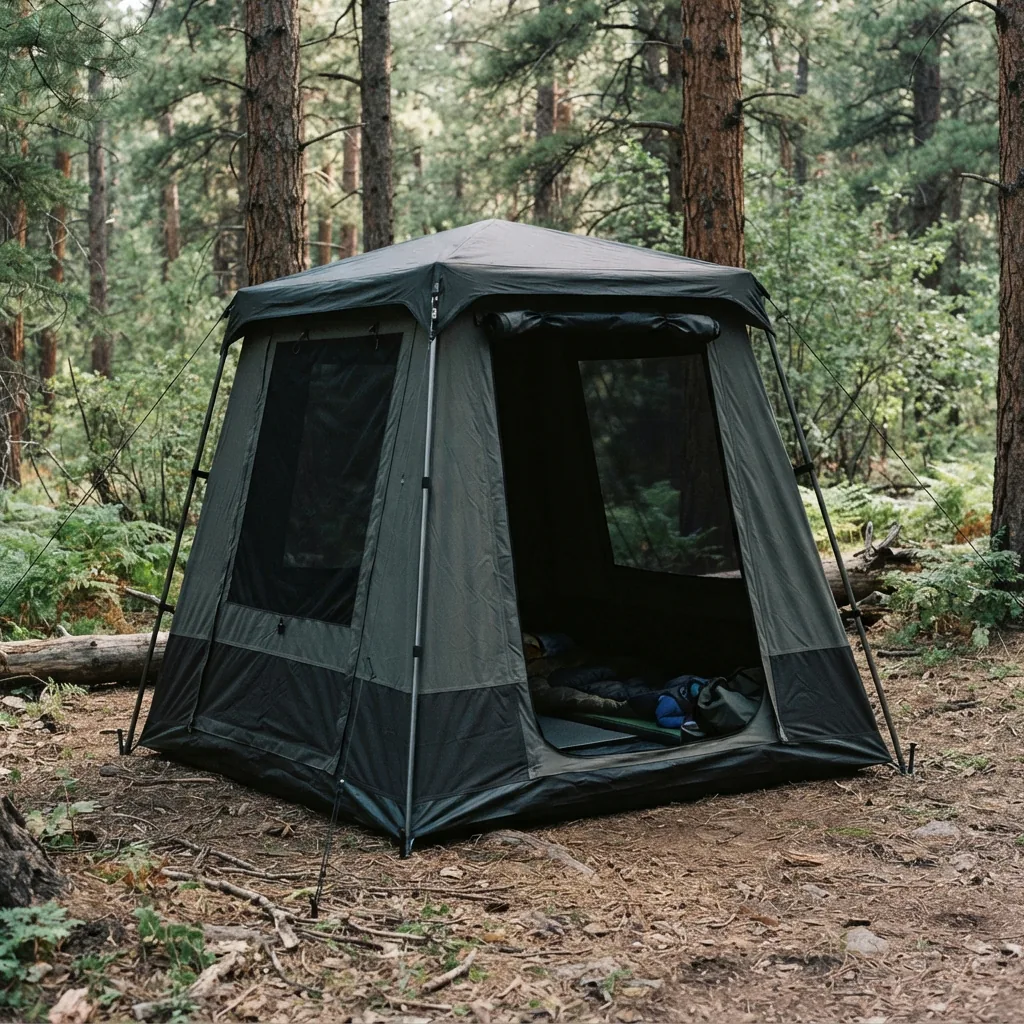
A tall dark rest cabin tent with straight walls and dark panels at a shaded campsite

Dark rest and cabin tents

Straight walls give more headroom, and blackout fabric blocks early light so everyone sleeps past sunrise. They trade some wind resistance and pack size for comfort at drive-up campgrounds.

A mesh-walled screen house shelter standing over bare ground at a lakeside picnic area

Screen houses and shelters

A screen house is not a tent, but it earns its space in the car, giving a shaded bug-free spot over a picnic table or bare ground. Look for mesh walls and a small packed size for day use.

What campers report

What campers say about budget 4 person tents

Shoppers and reviewers describe the same honest picture: budget 4 person tents handle rain and short trips well, cost less than premium brands, and expect to be replaced sooner. Those who accepted the trade-off up front came home satisfied rather than surprised.
We bought our first tent last spring and used it on three weekend trips. Setup took longer than the box implied, but once it was up it handled a night of steady rain with no leaks. I felt prepared instead of out of my depth, and my kids slept straight through it.
Decorative customer review avatar icon 1
Dana R.
First family tent, three trips in
I camp mostly at drive-up sites, so weight hardly matters to me. What I care about is getting the tent up before dark and having a dry place to sit. A front awning earned its space in our car on the last trip, especially with wet weather and two kids in tow.
Decorative customer review avatar icon 2
Marcus P.
Drive-up sites and muddy shoes
I have carried a budget dome a few miles and it is doable, but heavier than the pricier options. For the money it kept me dry and out of the wind on both trips. I would not trust it for a multi-week outing, but for the occasional overnight it has been worth it.
Decorative customer review avatar icon 3
T. Nguyen
Carrying a budget dome a few miles
Blackout fabric changed our mornings. Before, sunrise woke everyone by six; now we get an extra hour. It is a small thing until you have small children. Getting the frame up took under ten minutes on our first try, which mattered a lot after a long evening drive.
Decorative customer review avatar icon 4
Priya S.
Blackout mornings with small kids
Straight answers on tents

Common questions before you buy a 4 person tent

Four-person tents are usually rated by sleeping bag count, so four adults fit but gear storage gets tight. If you want room for packs and clothes, treat a 4 person tent as a comfortable three-person shelter. Two adults with kids will find it spacious for weekend use.
Instant frames unfold and lock in place in a couple of minutes once you have practiced. Clip-style domes take a little longer but are forgiving for first-timers. Either way, do one backyard setup before your trip so the poles and stakes are familiar at camp.
A rainfly and sealed seams handle a night of steady rain, and owners report these tents holding up through rain. Strong wind is a different question; dome shapes shed it better than tall cabin walls. Stake out the guy lines and expect trade-offs against heavier expedition tents.
Dome tents are lower and usually lighter, and their shape handles wind better, which suits smaller or exposed sites. Cabin tents have straighter walls and more standing room, so changing clothes and moving with kids feels easier. Choose based on comfort versus portability.
Dark rest fabric blocks early-morning sunlight, so campers sleep past sunrise and afternoon naps stay dark. It can hold a little more warmth inside on sunny days, which matters in cooler weather. For families with young kids, the extra hour of sleep is usually the deciding factor.
Yes, if you go in with realistic expectations. Independent reviewers call this kind of gear a reasonable buy for short trips, noting it is less easy to set up and carry than top-end tents and will not last as many years. For occasional weekends, that trade-off is usually worth it.
Keep reading

More Ozark Trail camping gear to explore

Hard-sided and soft-sided Ozark Trail coolers arranged on a wooden picnic table at a wooded campsite
Admin
Ozark Trail Cooler

Compare Ozark Trail coolers by size, shape and how you carry them, from hard-sided chests that hold ice for a weekend to soft totes and backpack coolers for a day out. Each option below shows capacity, format and the trip it fits best.


A group of Ozark Trail mountain bikes with front suspension parked on a dirt trailhead, a rider comparing frame sizes beside them
Admin
Ozark Trail Bike

Ozark Trail mountain bikes span hardtails and full suspension builds, sized from young riders to tall adults. Compare fit, suspension, wheels and gears to match your trails and your budget.

Assorted Ozark Trail folding and fixed blade knives arranged on a rustic wooden camp table
Admin
Ozark Trail Knife

This page lines up Ozark Trail knives so you can compare folding and fixed blades, locks, handles and carry options at a glance. Each pick notes what it handles best, from camp prep to a pocket blade you carry daily.

A row of Ozark Trail camping tents of several sizes pitched on a grassy campground with a family walking between them.
Admin
Ozark Trail Tents

Compare Ozark Trail tents by capacity, setup style, weather coverage and packed weight, from solo backpacking shelters to twelve-person family cabins built for drive-up weekend campsites.
