
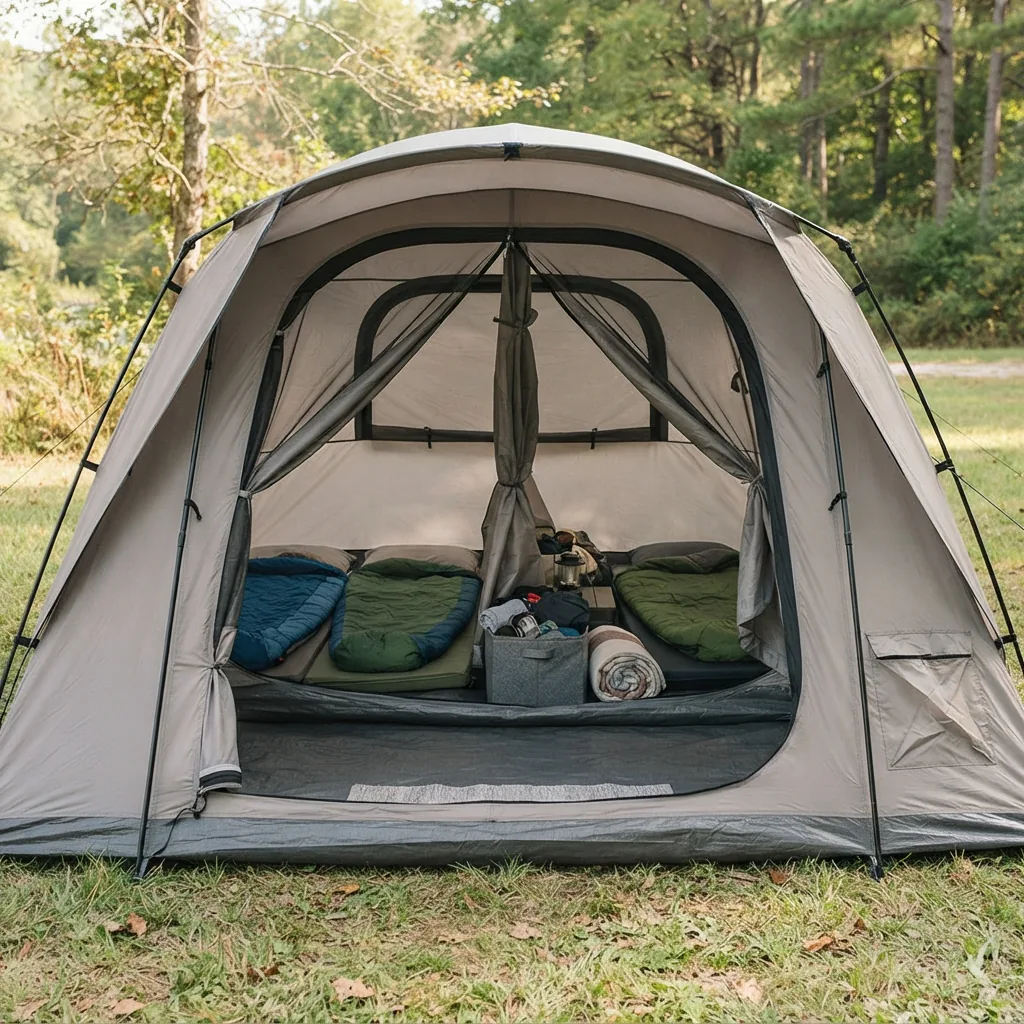





Ozark Trail 3 Room Tent

Compare Ozark Trail three-room tents by capacity, layout, entrance count and setup, from compact first setups to roomy 16-person cabins, and see which floor plan fits your group.

Four three-room tents that start the comparison

10 Person Tent 3 Rooms 20 X 10 — Wide Family Base with a Waterproof Build for Weekend Trips

The 20-by-10-foot floor spreads a family out, and three rooms keep parents, kids and gear in separate spaces instead of one crowded room. A waterproof design and durable frame are built for wet nights on a two- or three-day trip, and the layout works best at a campground where you can park and unload once.

Ozark Trail 12-Person 3-Room Instant Cabin Tent with Three Entrances for Family Trips

With three entrances, no one has to climb over a sleeping bag to get out at night, which helps when a full tent wakes at different hours. The instant cabin frame raises in minutes, and three rooms give a family privacy across a weekend trip. It suits larger groups who want space more than a light pack.

Ozark Trail 16-Person 3-Room Cabin Tent with Separate Sleeping Rooms for Big Groups

When two families share one site, the 16-person cabin gives each side a sleeping room and still leaves floor space for bags and bedding. Multiple entrances let people come and go without crossing the whole tent, and cabin walls make it easy to move around. Expect a wide footprint, so plan the pitch first.

Ozark Trail 11-Person Instant Cabin Tent with Private Room – 3-Room Family Camping – Room for a Large Group

For a large group that still wants one quiet corner, this instant cabin sets aside a private room while the other two rooms take the rest of the party. Setup is quick once the frame is unpacked, which helps after a long drive, and the layout suits weekend trips where people arrive and leave at different times.

Ozark Trail 10-Person Modified Dome Tent with Screen Porch for Three-Room Family Camping

The screen porch is the reason to pick this one in summer: it adds a bug-free place to sit while the three sleeping rooms stay closed off behind it. The modified dome shape handles wind better than a tall cabin and packs smaller for the trunk, which suits weekend trips where you want rooms without a huge footprint.
More ways to choose

Three more three-room tents worth comparing

Ozark Trail 10-Person Dome Tent with Screen Porch – 3-Room Family Camping Tent for Summer Weekends

A built-in screen porch gives this 10-person dome living space a plain tent skips, so wet boots and cooking gear stay out of the sleeping rooms. The dome handles a weekend of mixed weather, and three rooms separate people from storage. It suits families who want a place to sit outside instead of a bigger cabin.

Ozark Trail 8-Person 3-Room Cabin Tent with Dividers for Stand-Up Family Comfort on Weekends

A mid-size cabin beats a bigger tent on a tight pitch: this one splits into three sleeping areas with removable dividers, so parents get privacy and kids get their own space. Tall walls let most campers stand up while changing, and one or two people can handle setup. Good for weekends on a smaller site.

Ozark Trail 6-Person 3-Room Family Camping Tent for First Setups for Quick Weekend Setups

This is the entry point for a first three-room setup: two campers fit each room, and the divided floor plan keeps bags and bedding from crowding one space. It packs to a manageable trunk load, so a short weekend trip does not require a roof rack. Setup and packing matter more here than raw capacity.
Who these tents suit

Trips and groups a three-room tent serves

Three-room layouts suit families, mixed-age groups and first-time campers who want separate sleeping space without a huge tent. Think about how many people travel, how long the trip runs and how flat your site is.

Family weekends at a campground

Parents get a private room while kids share the next, so bedtime does not have to happen at the same moment. A campground pitch with room for a wide footprint makes the layout work.

First setups for new campers

Divided rooms keep bags and bedding from crowding one space, which makes the first trip easier to organise. Pick a size you can raise alone before adding capacity you may not need.

Groups splitting space and gear

Couples or friends sharing one tent can keep sleeping areas and storage apart, so an early riser does not wake the whole site. Check entrance counts so people can leave quietly.

Capacity, floor plan, setup style and site size each shift who a tent suits. Bigger numbers mean more room and more weight, while dividers and entrances change how well one tent separates sleep and gear.

How to match a three-room tent to your group

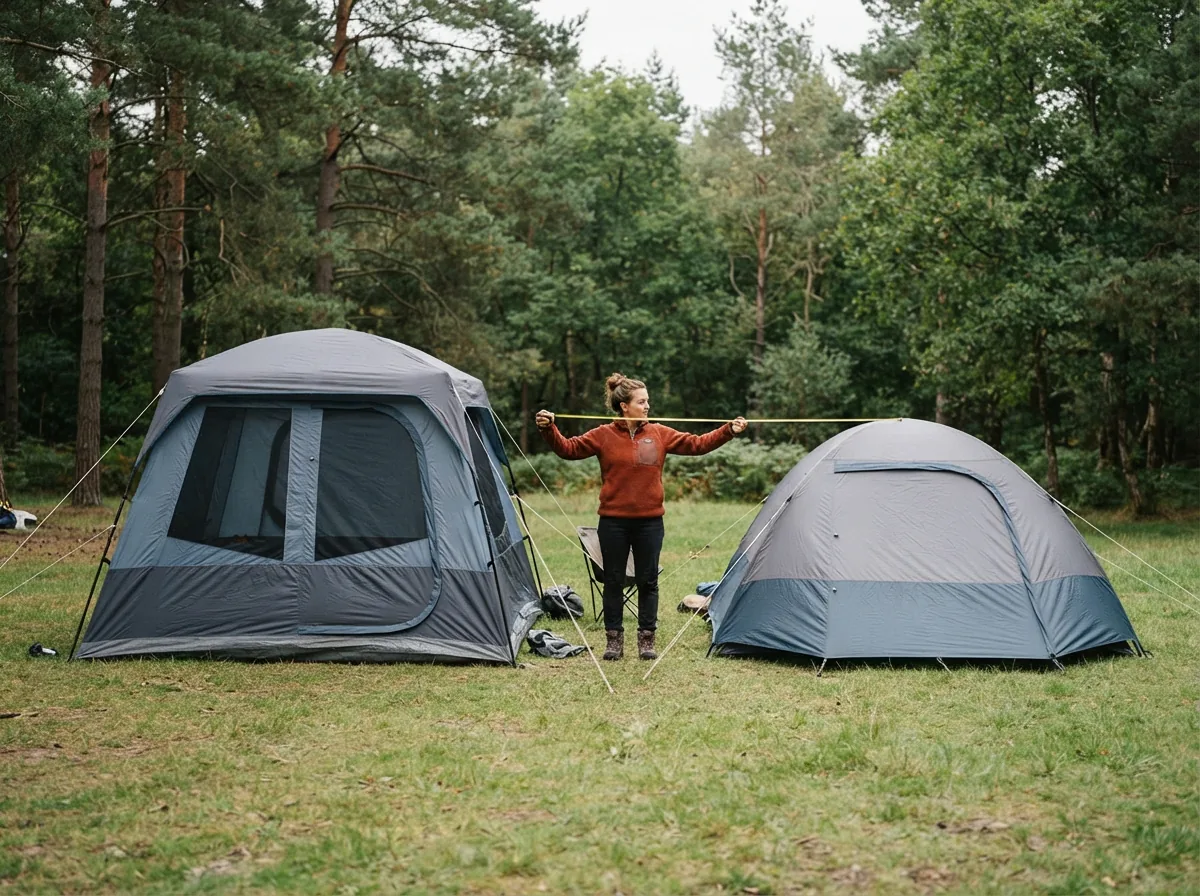
Two camping tents of different sizes pitched side by side on a campsite for comparison
Capacity against how you actually camp

A 16-person cabin suits a big reunion but needs a wide, flat site and more time to pitch, while a 6-person layout is quicker to raise and easier on a tight pitch.

Dividers and private rooms

Removable dividers split one floor into sleeping areas so adults get privacy and kids get their own space, but an open plan is faster to arrange and easier to move through at night.

Setup style and how many hands help

Instant cabin frames go up in minutes with one or two people, while a modified dome takes longer but often packs smaller for the trunk. Match the style to your patience on arrival.

Screen porches for warm weather

A screen porch adds bug-free living space for summer afternoons and extends where you can sit. Skip it on cold or rainy trips where extra fabric only adds setup work.

Kinds of three-room tents

Ways to split a three-room layout

Cabins stand tall with near-vertical walls, domes shed wind better, and screen porches add living space. Match the shape to your site, your weather and how much gear you carry inside.
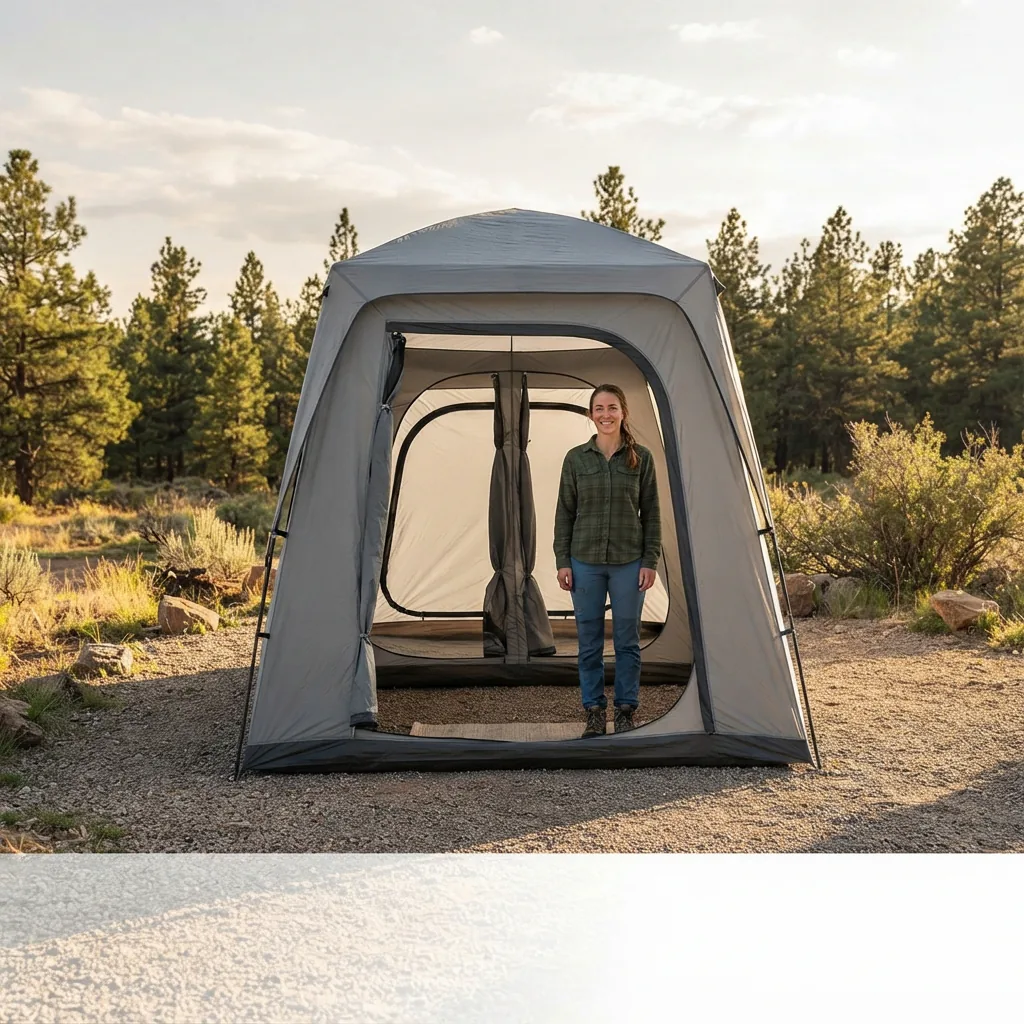
Tall cabin-style camping tent with vertical walls and a divided interior on a campground

Tall cabin-style layouts

Vertical walls let most campers stand up while changing or sorting gear, and the floor plan divides cleanly into three rooms. Expect a wider footprint to clear at the campground.

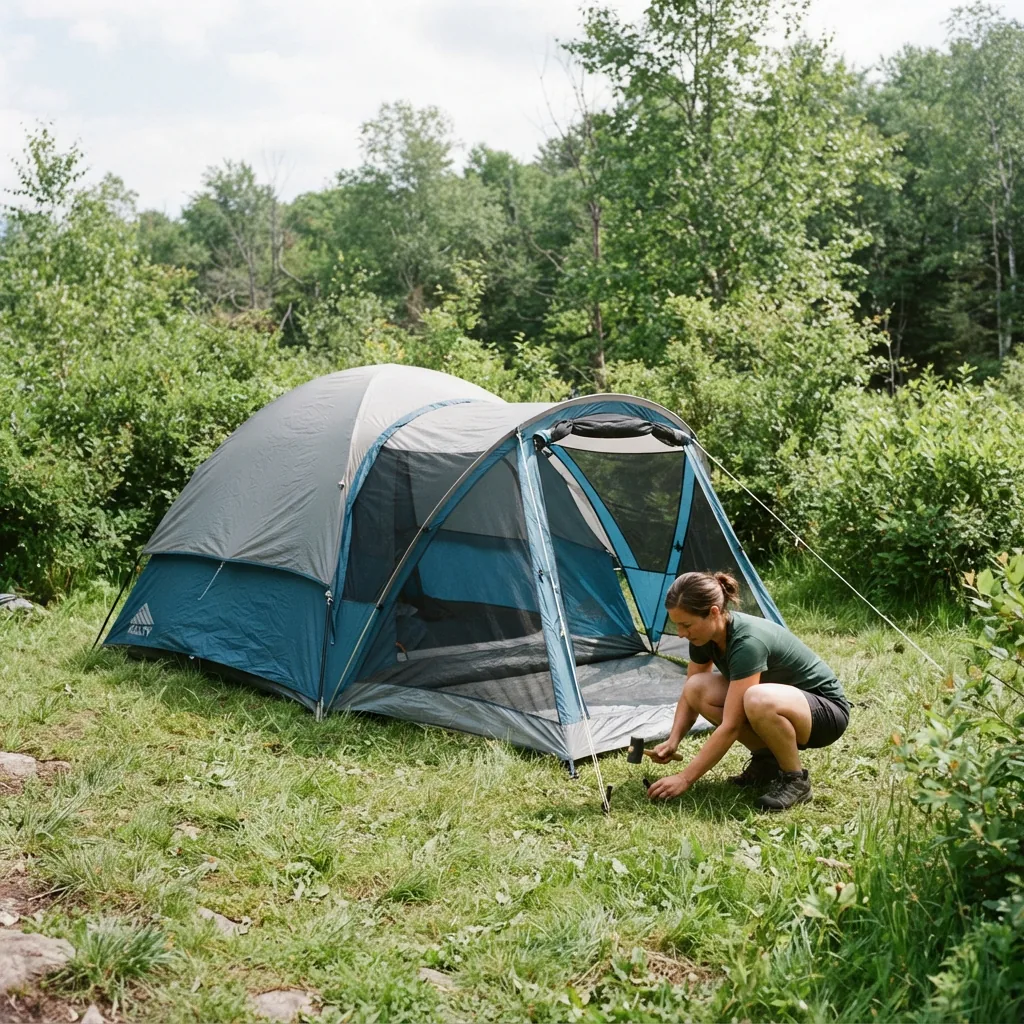
Dome camping tent with a screened porch set up on a grassy summer campsite

Dome shapes with a porch

A modified dome curves against wind and often packs smaller, while the screen porch keeps bugs off the living area in summer. A good fit for mixed-weather weekends.

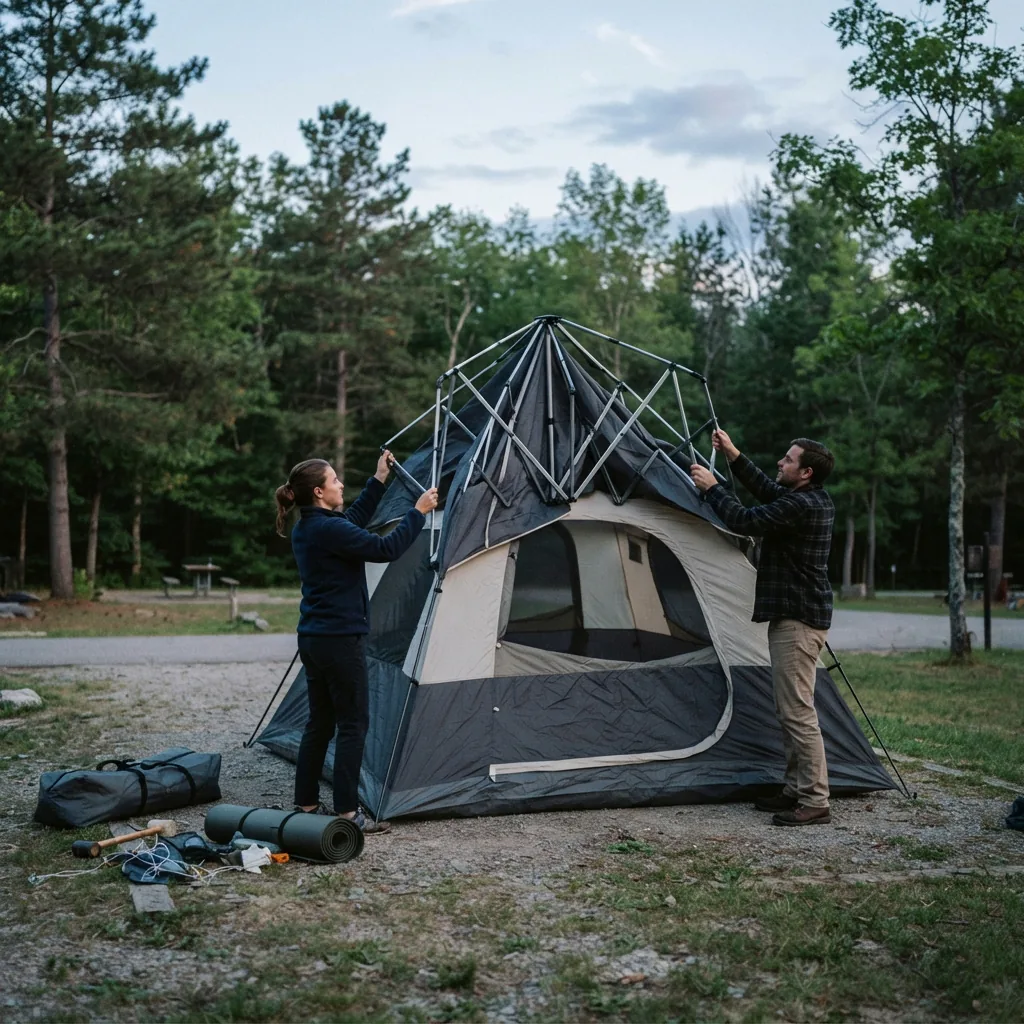
Two adults raising a folding-frame cabin tent on a campground pitch at dusk

Instant frames for fast setup

Pre-attached poles mean one or two people can raise the tent in minutes after a long drive. The trade-off is a bulkier carry bag than a comparable pole-by-pole tent.

Open three-room tent interior with fabric dividers partly unfastened

Dividers you can remove

Removable dividers let you open the whole floor for a group or close it off for privacy, so one tent adjusts across trips. Check how the panels fasten before you buy.

What campers report

First-person notes from three-room trips

Campers describe setup time, rain performance and how well rooms keep people apart over a weekend. Expect honest trade-offs against pricier tents rather than flawless performance every trip.
We unpacked at dusk and it took longer to pitch than I expected, but once the frame was up it held through a wet night with no leaks. I stopped comparing it to the pricier tent my brother owns and just appreciated that we slept dry.
Decorative customer review avatar icon 1
Dana K.
Setup took patience, then held through rain
Four of us shared one tent and the separate rooms meant the early risers could pack up without waking everyone. The panels are thin and you still hear movement, but having my own corner for gear made a two-night trip feel far less crowded.
Decorative customer review avatar icon 2
Rick M.
Dividers made a shared site livable
My daughter carried part of the load to the site and we still had the rooms split by the time her grandparents arrived. It is not the toughest tent we have owned, but for the price it has been easy to live with on short weekends.
Decorative customer review avatar icon 3
Mira L.
Light enough for a young camper to help carry
Waking up without sunlight blasting through the fabric changed how the kids slept, and the divided layout kept the noise on one side of the tent. I would take a few extra minutes of setup for that, especially on a bright campground morning.
Decorative customer review avatar icon 4
Jon P.
Thicker fabric made the mornings easier
Questions before you buy

Practical answers on three-room tents

Capacity numbers assume shoulder-to-shoulder sleeping. A 10- or 12-person model fits a family plus gear if you pack reasonably, while a 16-person cabin suits a larger group or two families. Plan for fewer bodies than the rating and more floor space for bags and bedding.
Instant frames pre-attach the poles, so one or two people can raise the tent in minutes after a long drive. The trade-off is a bulkier carry bag and less packing flexibility. If you often arrive at camp late, the quicker setup usually earns its space in the trunk.
Dividers in this category are fabric panels that block sight lines but not sound, and most are removable so you can open the whole floor. That is plenty for changing clothes and separating kids from adults, though light and noise still pass through the seams at night.
A 20-by-10-foot footprint needs a flat, wide pitch with no low branches, and campground sites vary in size. Measure the spot you normally use, confirm stakes can go in, and remember that a bigger tent takes longer to lay out before you pitch it.
A screen porch adds a bug-free zone for wet boots, cooking gear and sitting outside in summer, and it keeps the sleeping rooms closed. It costs some packed size and a little extra setup time, so it pays off most on warm, dry weekends.
Campers report tents that hold up in rain and stay light enough for a young person to carry, and reviews note easy use at modest prices. Expect fewer seasons of hard use than top-end models, and seam-check and reproof the fly before any long trip.
Keep planning your trip

Where to read on after this category

Hard-sided and soft-sided Ozark Trail coolers arranged on a wooden picnic table at a wooded campsite
Admin
Ozark Trail Cooler

Compare Ozark Trail coolers by size, shape and how you carry them, from hard-sided chests that hold ice for a weekend to soft totes and backpack coolers for a day out. Each option below shows capacity, format and the trip it fits best.


A group of Ozark Trail mountain bikes with front suspension parked on a dirt trailhead, a rider comparing frame sizes beside them
Admin
Ozark Trail Bike

Ozark Trail mountain bikes span hardtails and full suspension builds, sized from young riders to tall adults. Compare fit, suspension, wheels and gears to match your trails and your budget.

Assorted Ozark Trail folding and fixed blade knives arranged on a rustic wooden camp table
Admin
Ozark Trail Knife

This page lines up Ozark Trail knives so you can compare folding and fixed blades, locks, handles and carry options at a glance. Each pick notes what it handles best, from camp prep to a pocket blade you carry daily.

A row of Ozark Trail camping tents of several sizes pitched on a grassy campground with a family walking between them.
Admin
Ozark Trail Tents

Compare Ozark Trail tents by capacity, setup style, weather coverage and packed weight, from solo backpacking shelters to twelve-person family cabins built for drive-up weekend campsites.
