
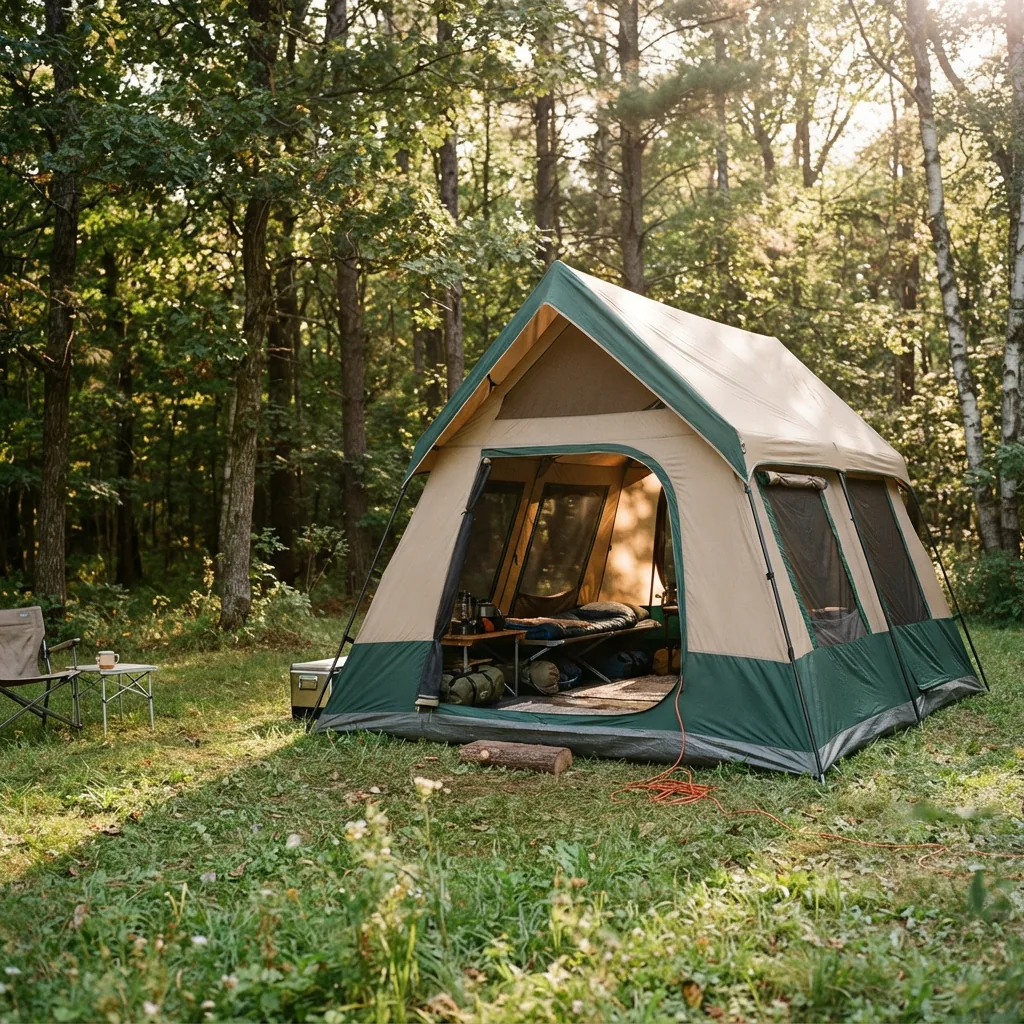





Ozark Trail 14 Person Cabin Tent

Compare Ozark Trail's 14 person cabin tents side by side, from single-room lodges to four-room base camps, and see how floor size, headroom, weight and setup shape each choice for your next trip.

Four Roomy Starts for Big Groups

Ozark Trail 14 Person Spring Lodge Cabin Tent with Multiple Entry Points for Group Camping

Multiple doors and access points keep a full group from climbing over each other when someone needs the restroom or the cooler at night. The wide cabin floor spreads sleeping bags out, so this lodge works well for family weekends where a simple, roomy setup matters more than a light pack.

Ozark Trail Spring Lodge Cabin Tent, 14 Person with 7 Foot Ceiling and Steel Frame

At 14 ft by 16 ft with a 7 ft center height, you can stand up while changing or sorting gear. The 44.62 lb weight and steel frame suit car camping better than backpacking, while roof guy-out points add stability when the wind picks up. Interior pockets corral phones and keys.

Ozark Trail 14-Person 4-Room Base Camp Tent with Four Separate Entrances for Families

Four separate entrances mean each sleeping area opens to the outdoors, so kids and adults can come and go without crossing the whole tent. That layout gives a family a little privacy on a shared site, and it speeds up mornings when everyone is packing up at once.

Ozark Trail 14-Person Family Tent with Lantern Loop and Built-In Weather Protection

Lantern hooks let you hang light overhead instead of balancing it on gear, and the weather protection handles a passing shower. Sized for up to 14 people, it is a sensible first big tent for families who camp close to the car and want a predictable setup.

Ozark Trail Tall Wall Lodge Cabin Tent for Large Groups with Standing-Height Room

Tall walls and a generous floor plan make this lodge feel more like a shared base camp than a crowded tent. Everyone gets room to stand, move and unpack, which matters when a group spends a full weekend inside during bad weather. It suits car campers who value space over a light carry weight.
More Ways to Choose

Three More Tents Worth Comparing

Ozark Trail Screened Porch Cabin Tent with a Covered, Bug-Free Sitting Area Out Front

The covered porch gives muddy boots, wet raincoats and coolers a dry place to sit outside the sleeping area, which keeps the interior cleaner and less cluttered. Families who expect rain, or anyone who wants a bug-free spot to read and relax, get real added room without a second tent.

Ozark Trail Family Base Camp Cabin Tent with Dividers for Private Sleeping Areas

Interior dividers let parents, kids and friends carve the floor into separate sleeping areas, adding a little privacy without extra tents. Simple enough for a first big group setup, it still holds up for returning campers who want familiar, dependable space season after season.

Ozark Trail Extended Stay Cabin Tent for Weekend Camping with Standing Room Inside

Built for a few nights rather than a single overnight, this tent gives you the headroom to stand, change and unpack without hunching. The extra floor space works well as a weekend home base, where comfort matters more than shaving pounds off the pack for a short drive-in trip.
Who It Serves

Trips and Groups This Category Fits

Large cabin tents suit families, groups of friends and first-time buyers who camp close to the car. Think about how many nights you stay, how much gear comes along and how much standing room you will use each morning.

Family Weekends at the Campground

Parents and kids sharing one site benefit from room to move, storage pockets and enough doors that nobody wakes the whole tent climbing out at night.

Group Trips with Friends and Gear

When several adults split a site, separate sleeping areas and standing height keep the weekend comfortable and make shared chores easier to divide.

First Big Tent for New Campers

A first large setup should be predictable. Look for clear instructions, a straightforward frame and enough space that the first pitch does not end in frustration.

Floor plan, ceiling height, packed weight and setup help all shift which tent fits your trip. Bigger rooms suit longer stays, while lighter builds are easier to move and pitch.

Match Cabin Tent Size, Rooms and Weight to Your Trip

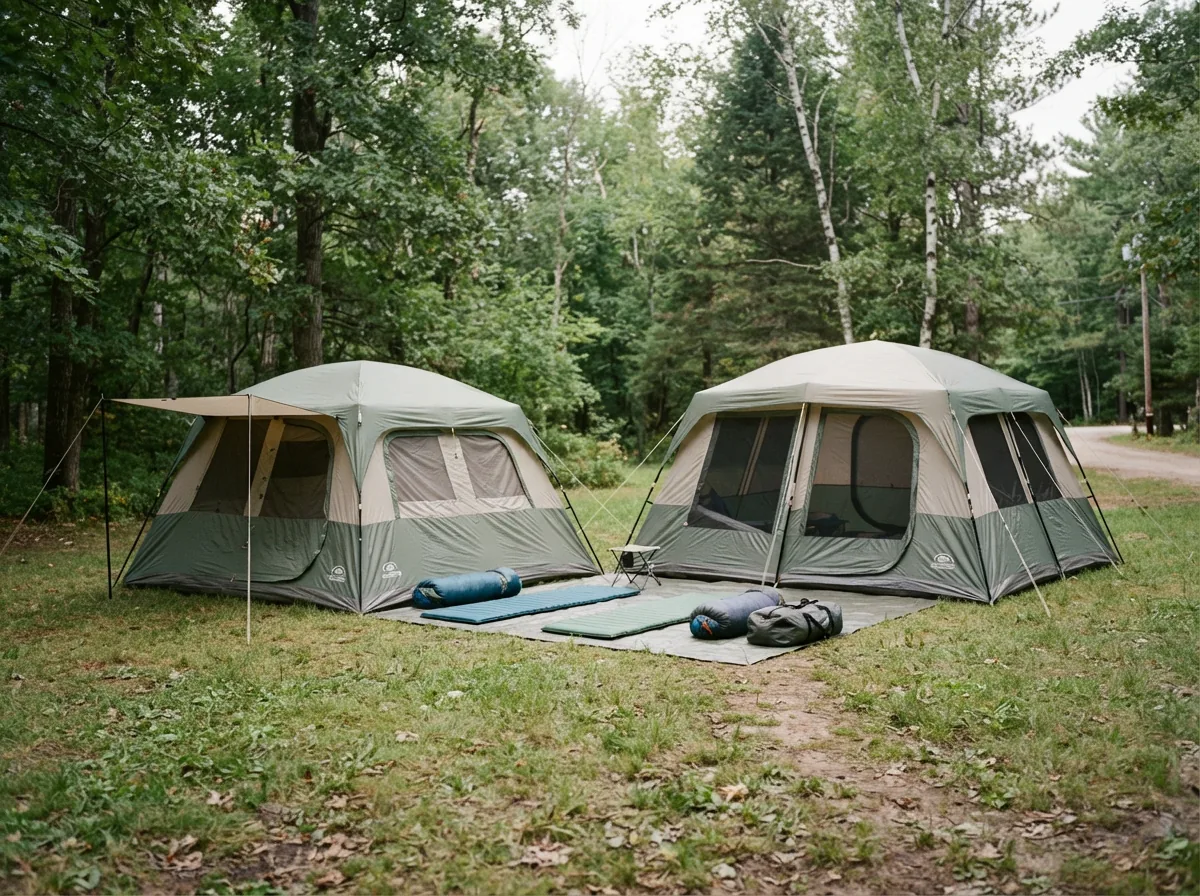
Two large cabin tents side by side on a campsite with sleeping pads and gear laid out for comparison
Floor Space vs Packed Weight

More floor area means more room for cots and gear, but it also adds bulk and heft. If you are driving to the site, extra space is easy to accept; if you walk in, lighter weight matters more.

Room Dividers and Entrances

Separate rooms and doors help a group move at different speeds. More entrances mean fewer people climbing over others at night, which is worth trading a slightly longer setup time.

Ceiling Height and Standing Room

A tall center height lets adults change clothes and sort gear standing up. Lower ceilings pack smaller and pitch faster, so the choice depends on how much time you spend inside.

Setup Help and Frame Style

Steel frames feel sturdy and hold up across many weekends, but they take longer to raise than simpler instant designs. Check how many people you have on hand before choosing the build.

Know the Subtypes

Four Cabin Tent Directions to Compare

Cabin tents come in a few practical types: open single rooms, divided base camps, screened porches and extended-stay builds. Start with floor plan and entrance count, since those decide privacy and how fast the tent goes up.
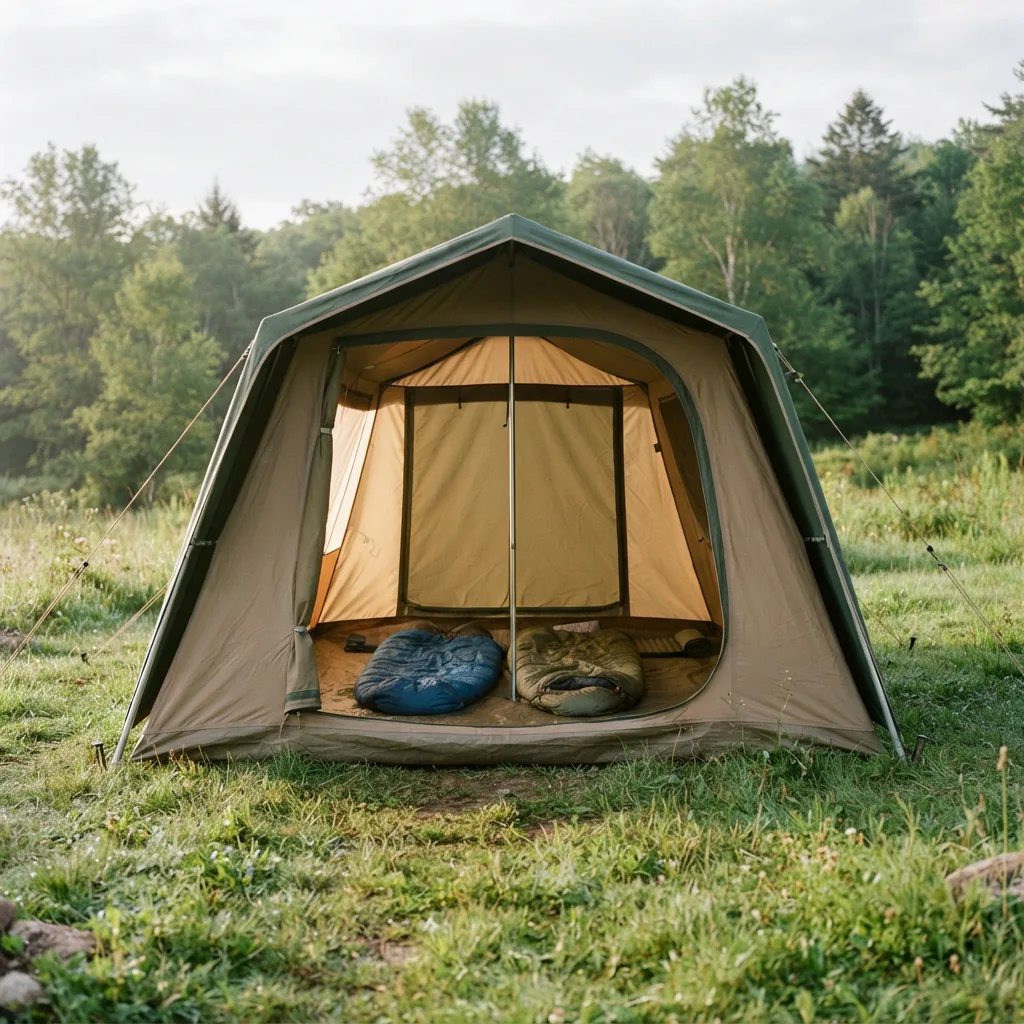
Open single-room cabin tent with one tall interior space at a campground

One Open Single-Room Lodge

One open floor with a tall ceiling. Best when your group sleeps together and wants the quickest, simplest layout to raise at the campsite.

Multi-room cabin tent with separate sleeping areas and several doors

Multi-Room Base Camps

Divided interiors and several doors give each pair or family a little privacy, and mornings move faster when people exit on their own side.

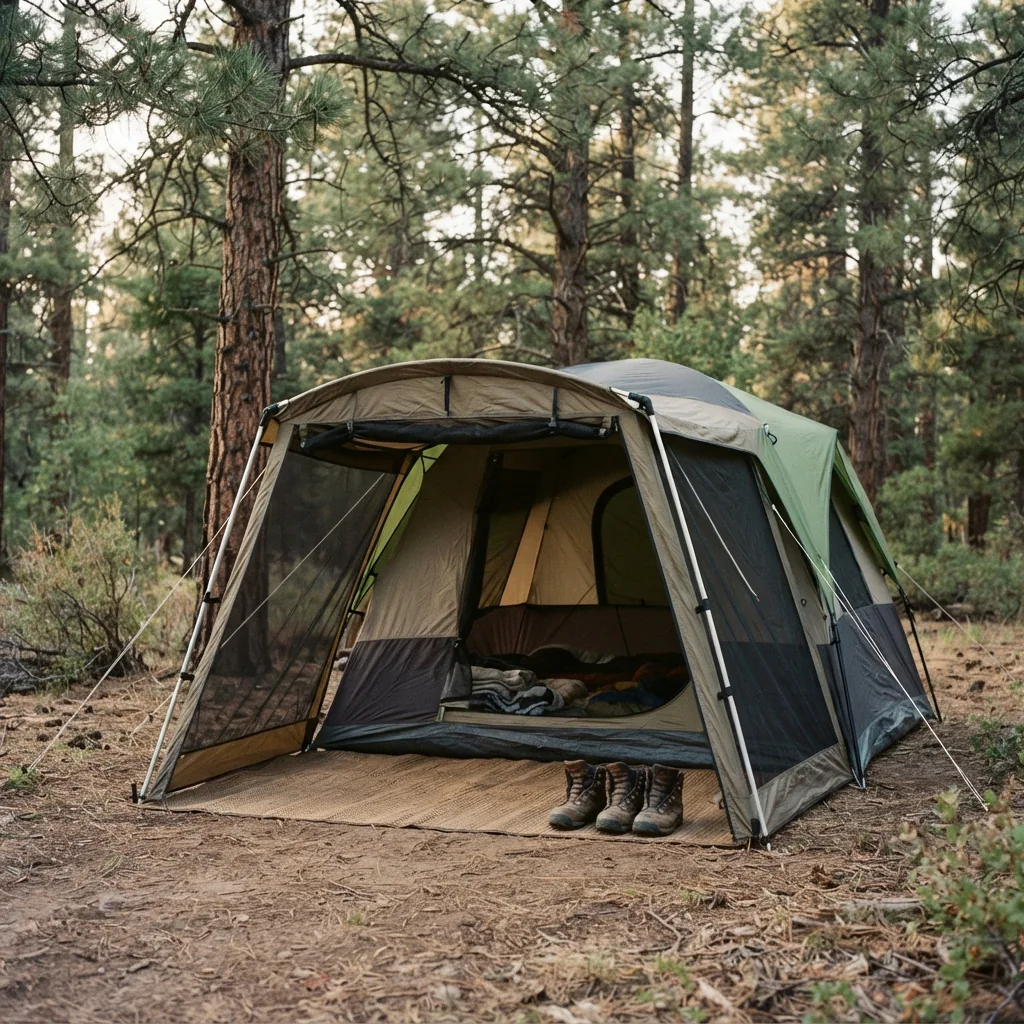
Cabin tent with a covered screened porch area in front of the sleeping space

Screened Porch Additions

A covered front area keeps boots, wet gear and bugs outside the sleeping space, adding a dry place to sit when the weather turns on you.

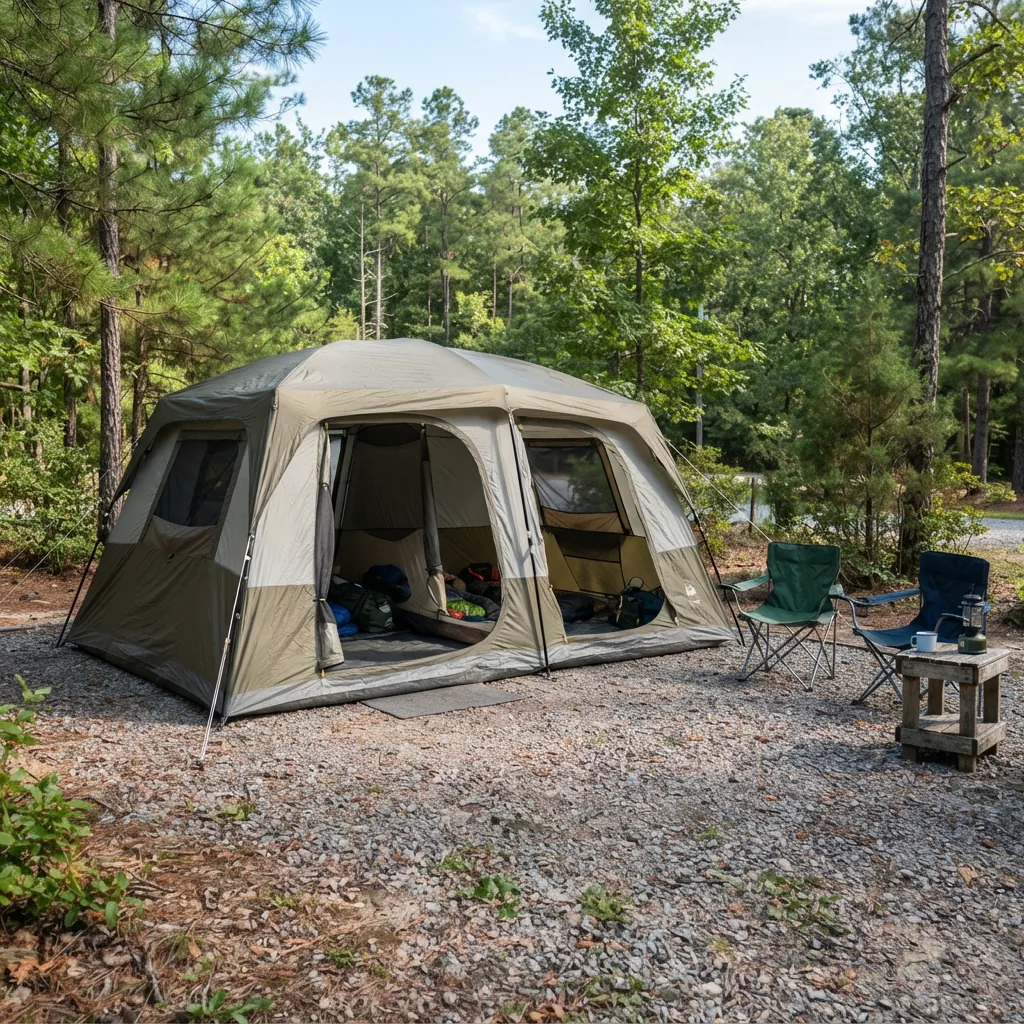
Tall extended-stay cabin tent with generous floor space at a wooded campground

Extended Stay Comfort

Extra headroom and floor space suit two or three night stays where you change, unpack and relax inside instead of treating the tent as a bed only.

What Campers Report

First-Hand Notes from Large Tents

Shoppers describe what it is really like to live in a roomy cabin tent for a few nights: the space that helps, the weight that surprises, and the small setup details that decide a good trip.
We wanted space for two kids and all the gear, and the difference was immediate. Standing up to change and having corners for bags meant nobody was tripping over anything. Setup took the two of us about twenty minutes the first time, and we stopped noticing the size of the tent by day two.
Decorative customer review avatar icon 1
Dana R.
Room for a family without the crowded feeling
I first lifted the bag and wondered what I had bought, but the car was ten steps from our spot so it never mattered. By the second night I was glad for the headroom when a rainy afternoon forced us inside with the kids and a deck of cards.
Decorative customer review avatar icon 2
Marcus T.
Traded weight for comfort at a drive-in site
Sharing a campground with friends worked better once we could split the sleeping areas. Mornings stopped feeling chaotic because each group had its own door and the kids stayed in their own corner until breakfast was ready at the table.
Decorative customer review avatar icon 3
Priya S.
Privacy dividers made a shared site easier
This was our first big family tent and I worried about the pitch. The frame was straightforward once we laid the poles out, and having a second person helped a lot. It has handled two weekends of steady rain without leaking inside, which settled my nerves.
Decorative customer review avatar icon 4
Jordan K.
A first large tent that stayed manageable
Questions Campers Ask

Straight Answers on Large Cabin Tents

The listed maximum counts bodies shoulder to shoulder. For real comfort, plan on fewer campers plus room for sleeping bags, air mattresses and gear, since families typically spread out rather than pack the floor edge to edge.
Some models in this group weigh over 40 pounds with a steel frame, which is fine when the car sits next to the site. That weight becomes a problem if you plan to walk any distance, so match the tent to how far you carry it.
Cabin walls catch more wind than low dome shapes, which is why guy-out points and a sturdy frame matter. Stake every point, and look for weather protection on the fly before you rely on it through a storm.
Two people make short work of a big frame, and one person can manage it with more time. If you camp alone or arrive after dark often, favor a simpler frame with fewer poles over a layout with many rooms.
Dividers add privacy and keep gear zones separate, which families notice most on stays of two nights or more. For a single overnight where everyone sleeps early, a single open room is often quicker to raise and pack.
Confirm the floor dimensions against the cots or pads you already own, check ceiling height if adults will stand, and weigh the packed size against your storage space. Read how many people the maker expects to pitch it.
Keep Planning

See What Else Fits Your Trip

Hard-sided and soft-sided Ozark Trail coolers arranged on a wooden picnic table at a wooded campsite
Admin
Ozark Trail Cooler

Compare Ozark Trail coolers by size, shape and how you carry them, from hard-sided chests that hold ice for a weekend to soft totes and backpack coolers for a day out. Each option below shows capacity, format and the trip it fits best.


A group of Ozark Trail mountain bikes with front suspension parked on a dirt trailhead, a rider comparing frame sizes beside them
Admin
Ozark Trail Bike

Ozark Trail mountain bikes span hardtails and full suspension builds, sized from young riders to tall adults. Compare fit, suspension, wheels and gears to match your trails and your budget.

Assorted Ozark Trail folding and fixed blade knives arranged on a rustic wooden camp table
Admin
Ozark Trail Knife

This page lines up Ozark Trail knives so you can compare folding and fixed blades, locks, handles and carry options at a glance. Each pick notes what it handles best, from camp prep to a pocket blade you carry daily.

A row of Ozark Trail camping tents of several sizes pitched on a grassy campground with a family walking between them.
Admin
Ozark Trail Tents

Compare Ozark Trail tents by capacity, setup style, weather coverage and packed weight, from solo backpacking shelters to twelve-person family cabins built for drive-up weekend campsites.
