



Ozark Trail Wall Tent

Compare Ozark Trail wall tents for base camps, family sites and longer trips. See tall-wall styles with awnings, screen rooms and blackout fabric, plus covers, cots and storage that round out the camp.

Four Wall Tents for Longer Base Camps

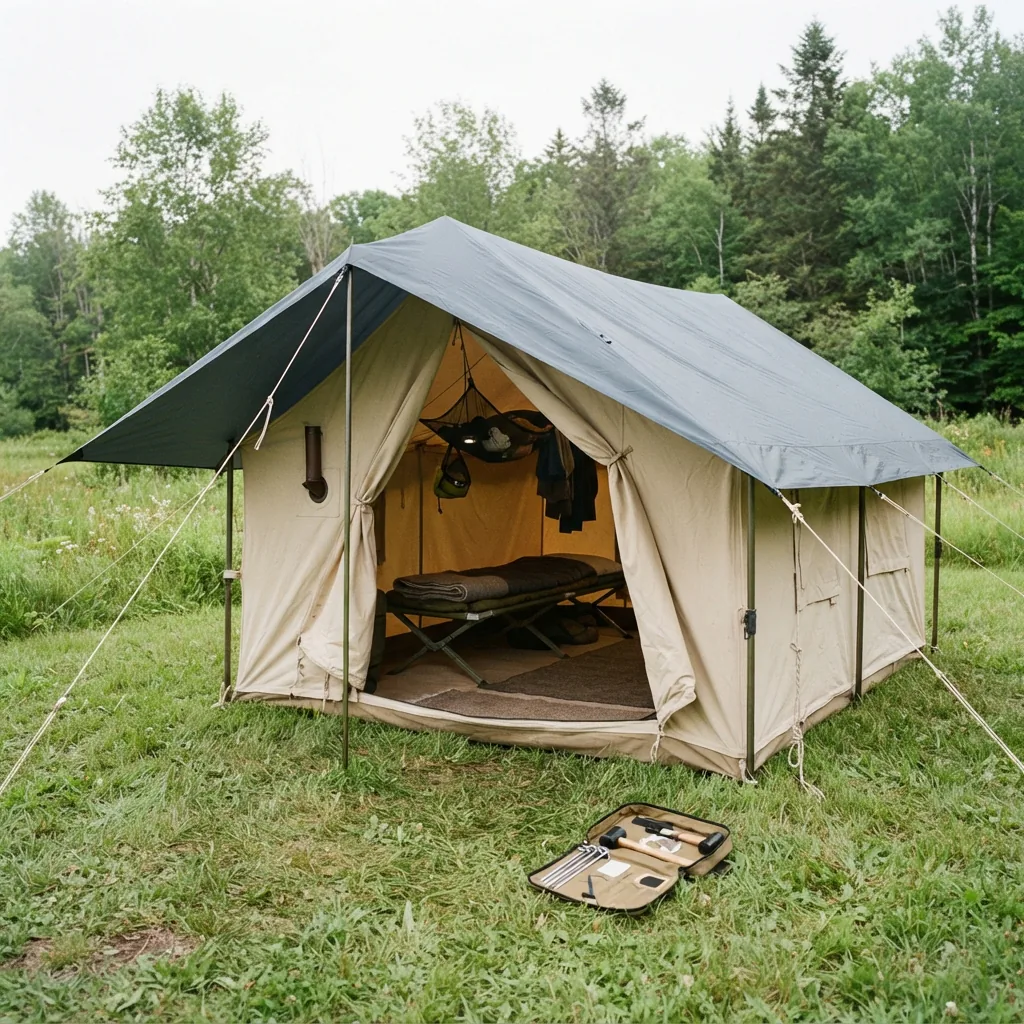
Ozark Trail Canvas-Style Wall Tent - Stand-Up Base Camp Shelter for Family Stays

Near-vertical side walls let you stand up and move around instead of crouching, and they keep cots and coolers usable right to the edge of the floor. Built for hunters and family camps that treat the tent as a home base for several nights rather than a quick overnight stop.

Ozark Trail Wall Tent with Awning Porch - Covered Entry for Day-Long Outdoor Camps

A shaded awning off the front door gives you a dry spot to sit, cook under cover or stage boots and packs before going inside. Keeping rain and sun off the entry also helps the sleeping area stay cleaner, which suits camps that spend much of the day outside the tent.

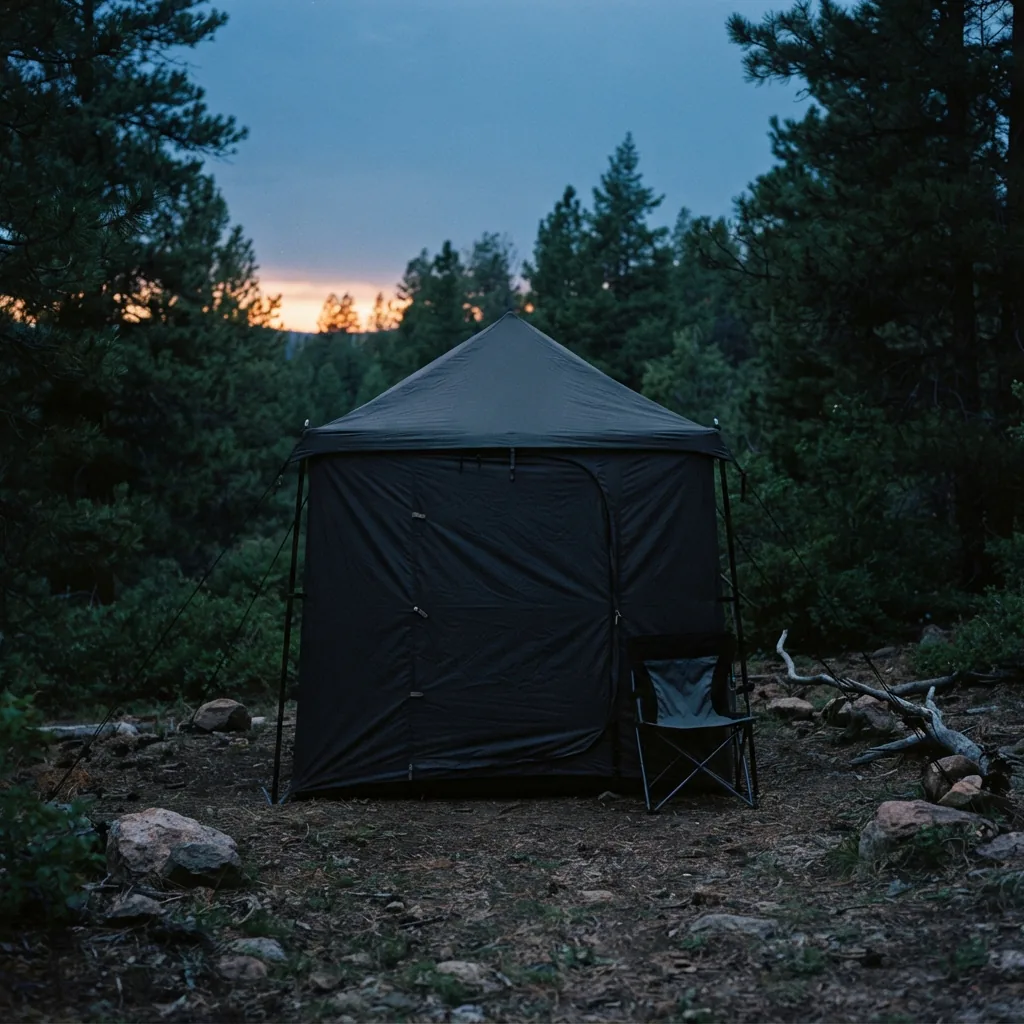
Ozark Trail Dark Rest Wall Tent - Blackout Walls That Let Family Campers Sleep In

Blackout-style fabric cuts early-morning sunlight so campers can sleep in a little later on vacation. The tall wall shape still leaves the interior open and easy to organize, even with darker fabric. A good match for family camps, late nights by the fire and sunrises skipped.

Ozark Trail Wall Tent with Screen Room - Bug-Free Sitting Space for Summer Camps

A screened front room gives you a bug-free sitting area separate from the sleeping space. Keep the mesh section for daytime lounging and gear storage, then close the inner door to leave the sleeping quarters dark and tidy. Handy for summer camps near water or woods.

Ozark Trail Wall Tent Rain Fly and Ground Tarp Set - Rain and Damp-Ground Cover

Two covers, two jobs, one wall tent. The fly stretches over the roof and pulls rain away from seams and wall joints, while the ground tarp sits beneath the floor to block groundwater and damp soil from soaking through. Worth adding when your campsite catches rain or the grass stays wet into the morning.
More Worth Comparing

Gear That Completes a Wall Tent Camp

Ozark Trail Wall Tent Rain Fly and Ground Tarp Set - Rain and Damp-Ground Cover

Two covers, two jobs. The fly sits over the roof and pulls rain away from seams and walls, while the ground tarp blocks groundwater and damp soil from soaking up through the floor. Worth adding when your campsite catches rain or the grass stays wet into the morning hours.

Ozark Trail Wall Tent Cot and Sleep Kit - Raised Sleeping Setup for Multi-Night Stays

Sleeping off the floor takes advantage of the straight walls and open floor plan, and it leaves room underneath for bags and boots. The cot, pad and bag together make a sensible upgrade for anyone moving past a ground pad toward a setup they can stay in for several nights.

Ozark Trail Wall Tent Camp Organizer and Gear Loft - Off-the-Floor Storage for Shared Tents

Clips inside the tent to lift lanterns, phones, books and small tools off the floor and up where you can find them. The open design keeps sightlines clear and lets you grab what you need without digging through bags in the dark. A small addition that makes a shared tent easier to live in.
Situations and Campers

Who Wall Tents Serve Best

Wall tents fit campers who need room more than they need a light pack: families on multi-night stays, hunters and anglers running a base camp, and anyone upgrading from a first tent. Weigh trip length, group size and site conditions.

Family Base Camp Weekends

Families camping several nights want stand-up height, room to move and space for cots and coolers along the walls. The result is a base camp that stays organized instead of cramped by day three.

Hunter and Fishing Base Camps

Hunters and anglers using a site as a staging point value straight walls, dry entry space and gear that stays reachable. A wall tent holds up as a home base between early starts and long days out.

Multi-Night Trips With Real Gear

Multi-night trips reward setups with raised sleeping, hanging storage and weather covers. Add a cot, a gear loft and a rain fly and the same tent works for a week instead of a weekend.

Wall height, floor layout, added rooms and weather covers all change what a tent handles. Weigh each against trip length, group size and how wet your campsite tends to get.

Compare Wall Tent Styles Before You Buy

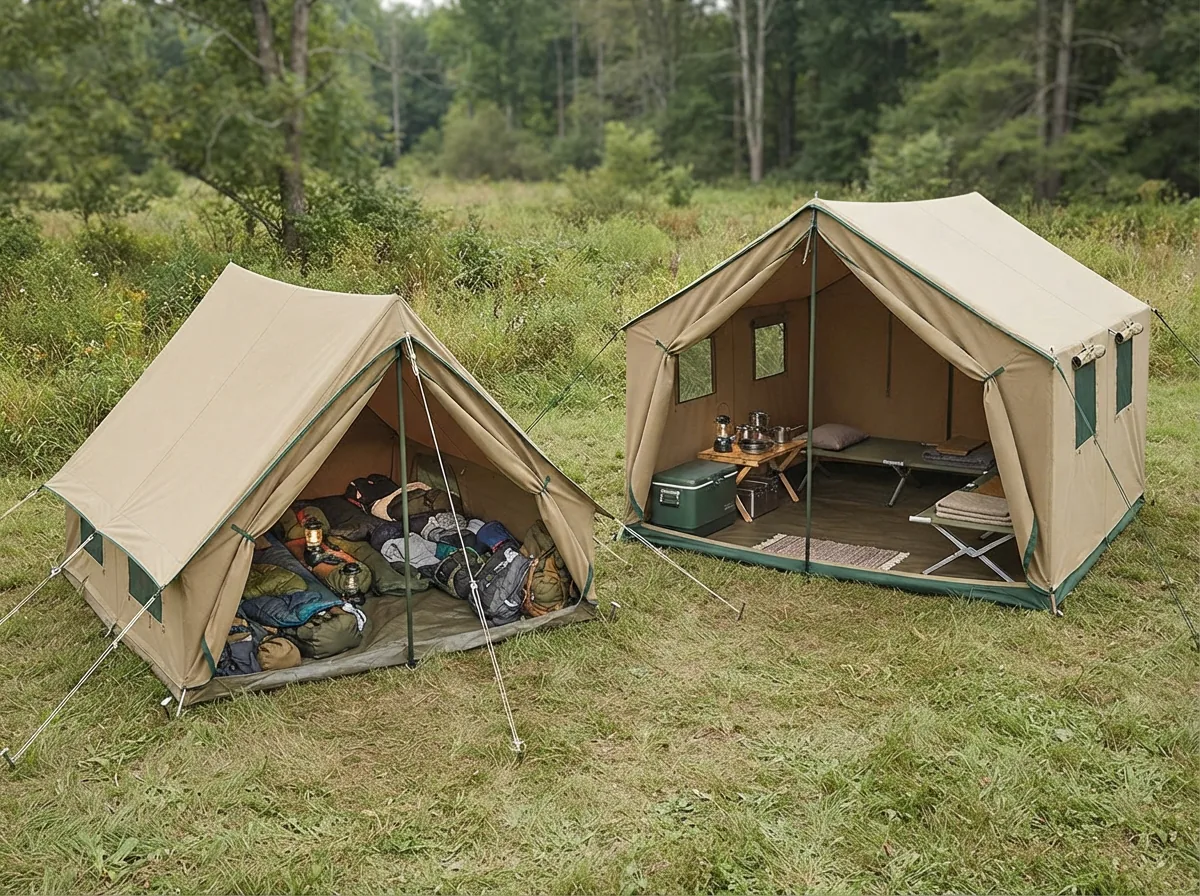
Two wall tents compared side by side at a campsite, one with sloped sides and one with tall vertical walls and gear along the edges.
Wall Height and Standing Room

Near-vertical walls let adults stand and change without crouching. Taller sides also mean cots and coolers fit along the edges instead of sliding toward a sloped panel.

Porch, Screen Room or Plain Front

An awning adds shade and a dry entry, while a screen room adds a bug-free sitting area. A plain front keeps weight and setup simpler when you mostly cook elsewhere.

Dark Rest Fabric and Morning Light

Blackout-style panels slow the sunrise inside, handy for late nights and vacation sleep-ins. The trade-off is a dimmer interior during the day than lighter fabric gives.

Weather Covers and Camp Longevity

A rain fly and ground tarp protect where seams and floors take the most punishment. Extra stakes and patch gear keep the same tent useful across a full season of weekends.

Styles and Add-Ons

Four Ways to Approach a Wall Tent Camp

Wall tents split by the front layout, the fabric and what you add to the base shelter. Matching those choices to trip length, season and campsite conditions is the fastest way to narrow the group.
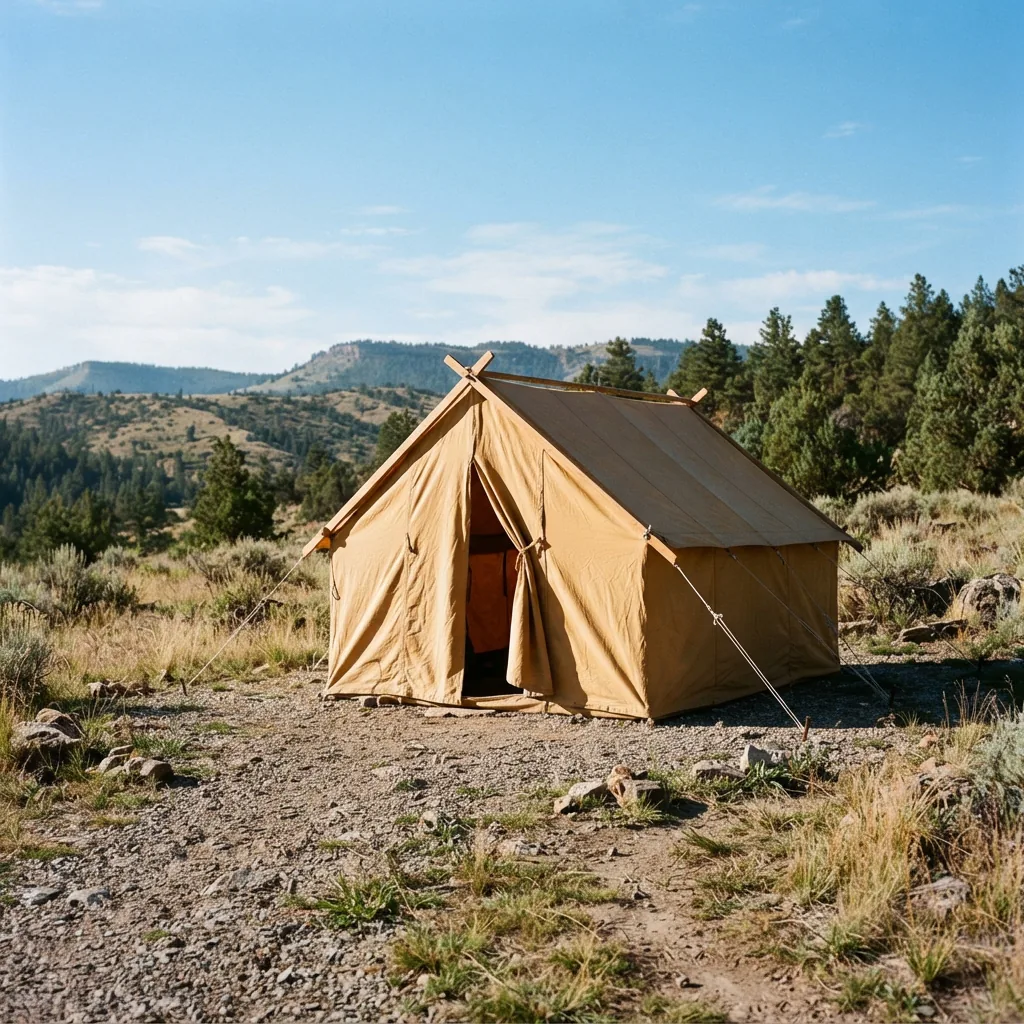
A classic tall-wall Ozark Trail-style canvas tent with straight sides pitched alone on an open campsite.

Classic Tall-Wall Base Camp Tent

The classic tall-wall tent is the plainest version: near-vertical sides, a wide door and open floor. Choose it when you want stand-up room and usable edges without paying for extra rooms.

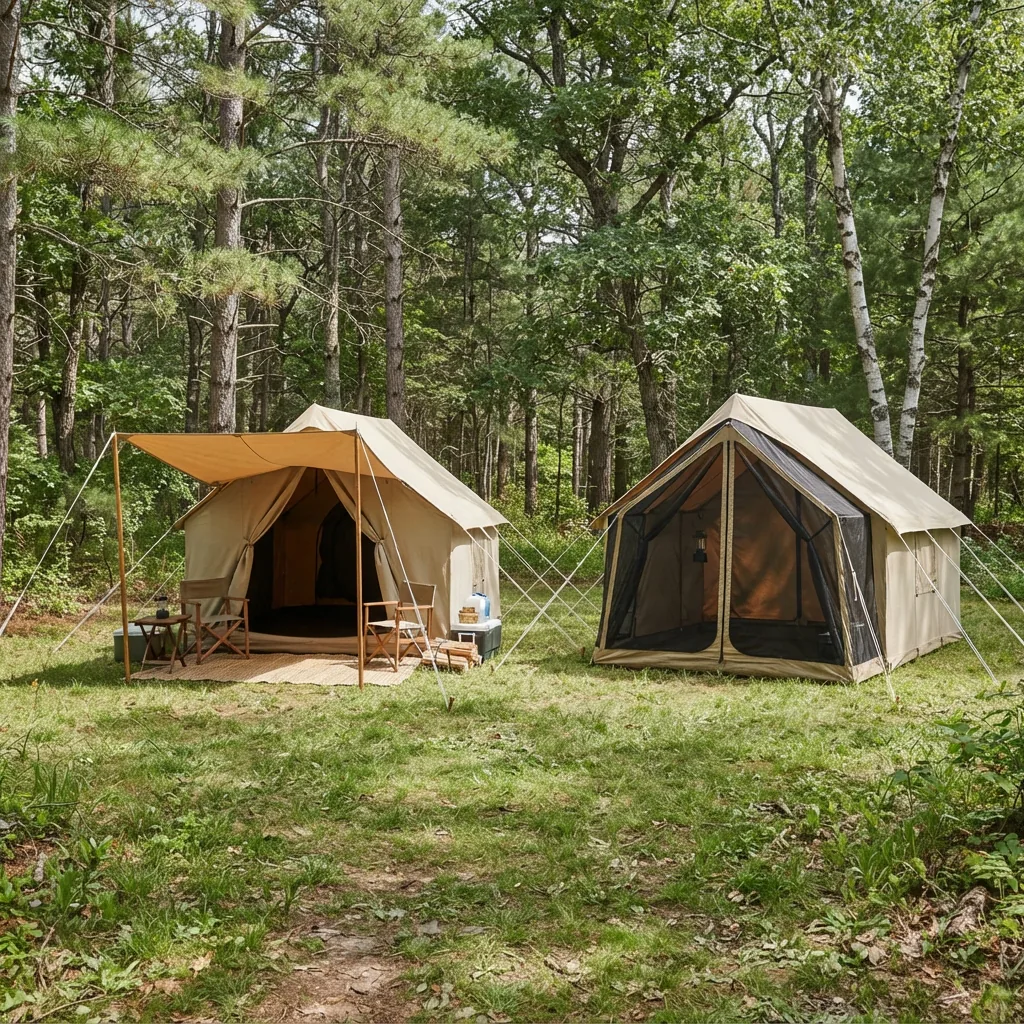
Two wall tent layouts side by side, one with a front awning and one with a screened front room, at a wooded campsite.

Awning and Screen Room Layouts

Front layouts decide how you live outside the sleeping area. An awning gives shade and a dry entry, while a screen room adds a bug-free place to sit during warm months near water or woods.

A dark rest wall tent with blackout fabric pitched at dusk, its interior mostly shaded and dim.

Dark Rest Sleep-Focused Setup

A dark rest build trades daylight inside for better sleep. Blackout panels hold back early sun, which suits late nights and vacation schedules but makes the interior dimmer during the day.

Wall tent add-ons arranged at a campsite: a rain fly over a roof, a cot inside, a gear loft and a stake kit on the ground.

Cover, Cot and Storage Add-Ons

Add-ons extend a wall tent rather than replace it. Covers handle rain and damp ground, cots lift you off the floor, and repair gear keeps stakes and seams working across a full season.

Camper Experiences

What Wall Tent Campers Report

Campers report the same pattern with value wall tents: more room than expected, a longer setup than a small dome, and honest wear over seasons. The feeling that comes back is relief at getting real shelter for a fair price.
We camped three nights and I never once hit my head getting changed, which is new for me in a tent. Cots and a cooler fit along the walls without blocking the middle. By the third morning the tent still felt like a place, not a pile of gear.
Decorative customer review avatar icon 1
Marla K.
Family camper on a three-night base camp
I wanted somewhere to stage packs and boots before dark, and the tall walls made that easy. Setup took two of us about forty minutes the first time, faster after. It is heavier to haul than my old dome, but the room is worth it for multi-night sits.
Decorative customer review avatar icon 2
Dustin R.
Weekend hunter using a base camp site
Late nights by the fire used to end at dawn when the tent roof lit up. With darker fabric I actually slept until eight on a few mornings. The interior is dimmer in the daytime, so we keep a lantern handy, but I would take that trade every trip.
Decorative customer review avatar icon 3
Priya S.
Camper who likes to sleep past sunrise
Our campsite caught two nights of steady rain. The fly kept water off the seams and the tarp under the floor stopped the damp from coming up, so our sleeping bags stayed dry. It adds a few minutes of setup, and you get a much calmer night.
Decorative customer review avatar icon 4
Ted M.
Summer camper who camps in steady rain
Common Questions

Questions Shoppers Ask About Wall Tents

Wall tents use straight or near-vertical side panels instead of curved poles, so the walls stand tall almost to the roofline. That gives real standing height and square corners where cots, coolers and camp furniture fit instead of leaning inward.
Most wall tents in this group are built tall enough for an adult to stand near the center and along much of the wall line. Straight sides also turn the floor edges into usable space, which matters when several sleepers share one tent.
Yes, if you can accept a longer setup. Wall tents reward beginners with room and a clear layout, and reviewers note they are less quick to pitch and carry than top-end tents. Start on a level site with a helper.
Adding both is usually worth it. The fly keeps rain off seams and wall joints, and a ground tarp stops damp soil from wicking through the floor. On dry, firm ground you can leave one or both behind to save setup time.
Plan on more time than a small dome tent, and two people make it much easier. Guy lines, stakes and straight walls all need tensioning, so a calm evening pitch saves fuss later. The payoff is a much larger living space once it is up.
With care, several seasons of regular weekend use is a reasonable expectation. Independent reviews describe value tents as fine for short trips but note they may not last as many years as premium models. Keep patch material and spare stakes on hand.
Keep Comparing

Continue Into Related Camping Gear

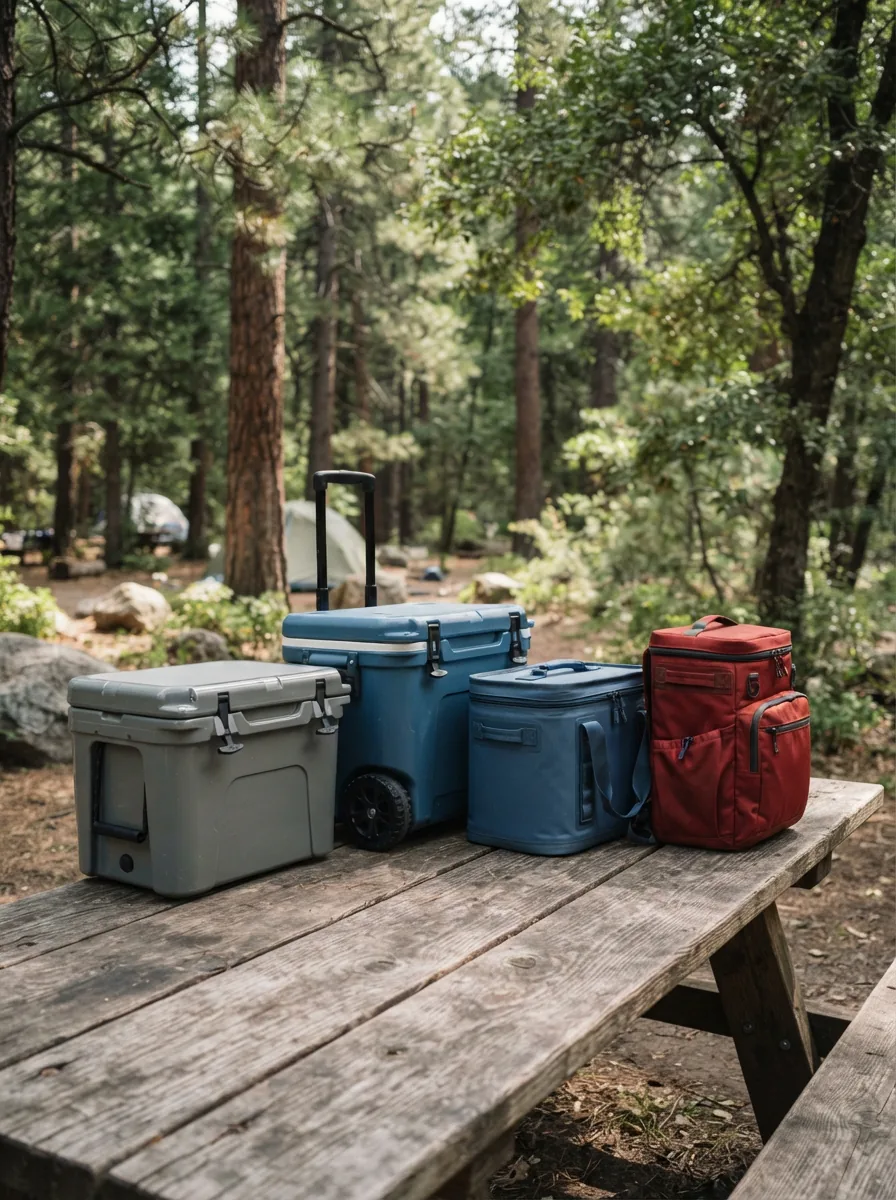
Hard-sided and soft-sided Ozark Trail coolers arranged on a wooden picnic table at a wooded campsite
Admin
Ozark Trail Cooler

Compare Ozark Trail coolers by size, shape and how you carry them, from hard-sided chests that hold ice for a weekend to soft totes and backpack coolers for a day out. Each option below shows capacity, format and the trip it fits best.

A group of Ozark Trail mountain bikes with front suspension parked on a dirt trailhead, a rider comparing frame sizes beside them
Admin
Ozark Trail Bike

Ozark Trail mountain bikes span hardtails and full suspension builds, sized from young riders to tall adults. Compare fit, suspension, wheels and gears to match your trails and your budget.

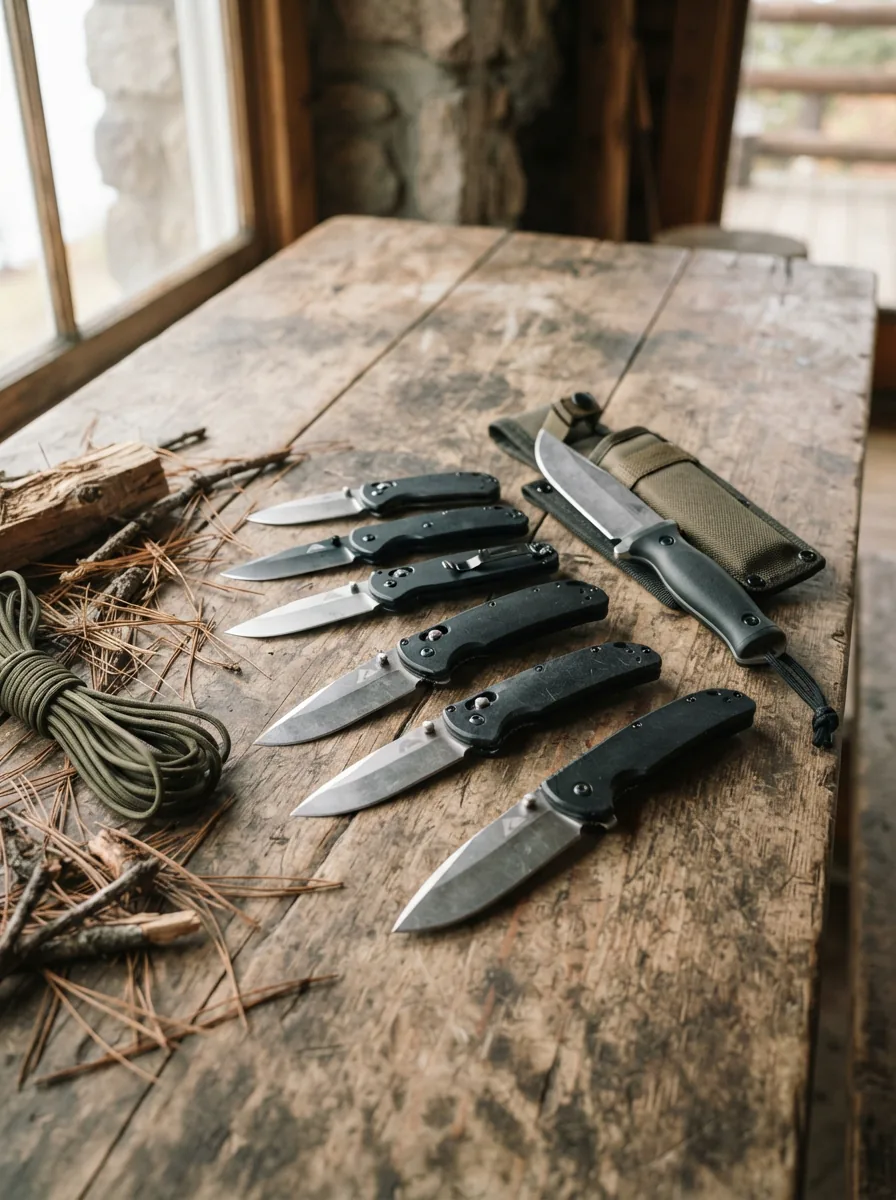
Assorted Ozark Trail folding and fixed blade knives arranged on a rustic wooden camp table
Admin
Ozark Trail Knife

This page lines up Ozark Trail knives so you can compare folding and fixed blades, locks, handles and carry options at a glance. Each pick notes what it handles best, from camp prep to a pocket blade you carry daily.

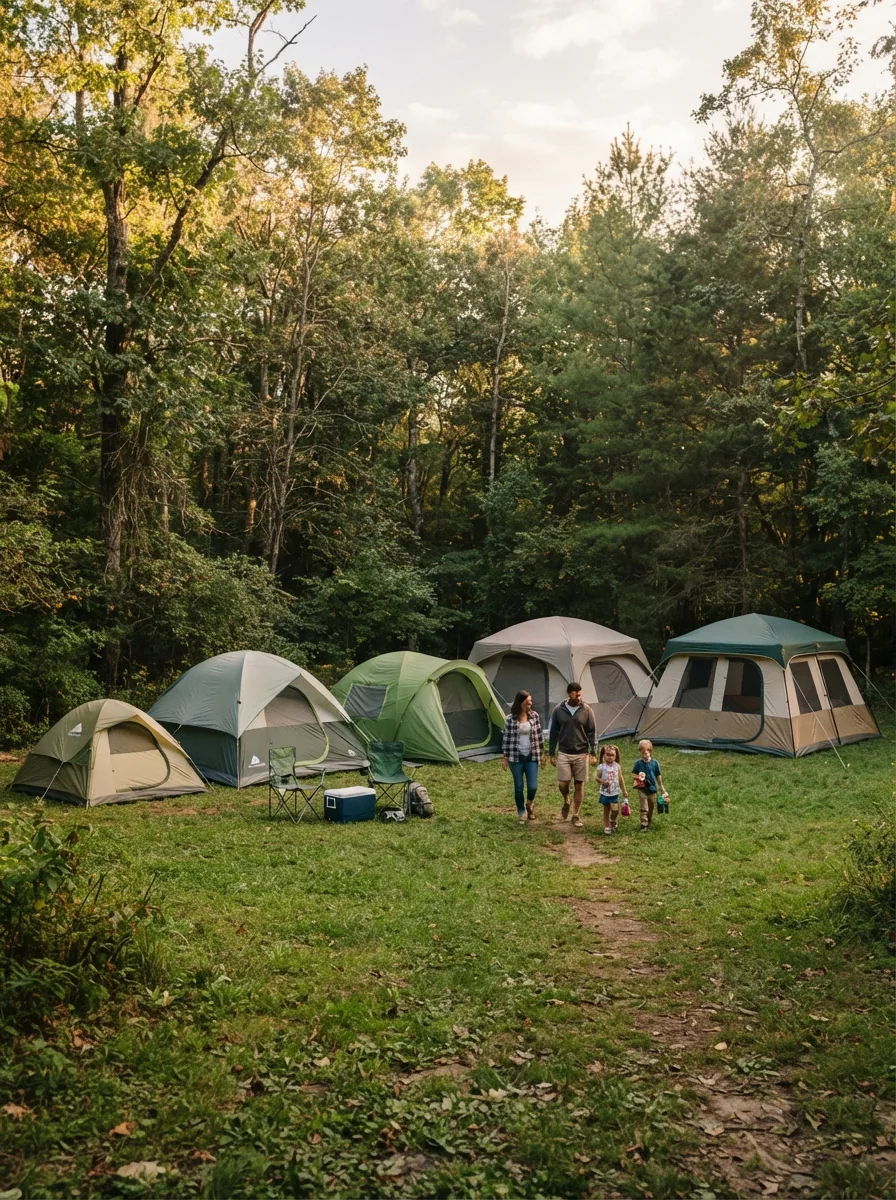
A row of Ozark Trail camping tents of several sizes pitched on a grassy campground with a family walking between them.
Admin
Ozark Trail Tents

Compare Ozark Trail tents by capacity, setup style, weather coverage and packed weight, from solo backpacking shelters to twelve-person family cabins built for drive-up weekend campsites.