
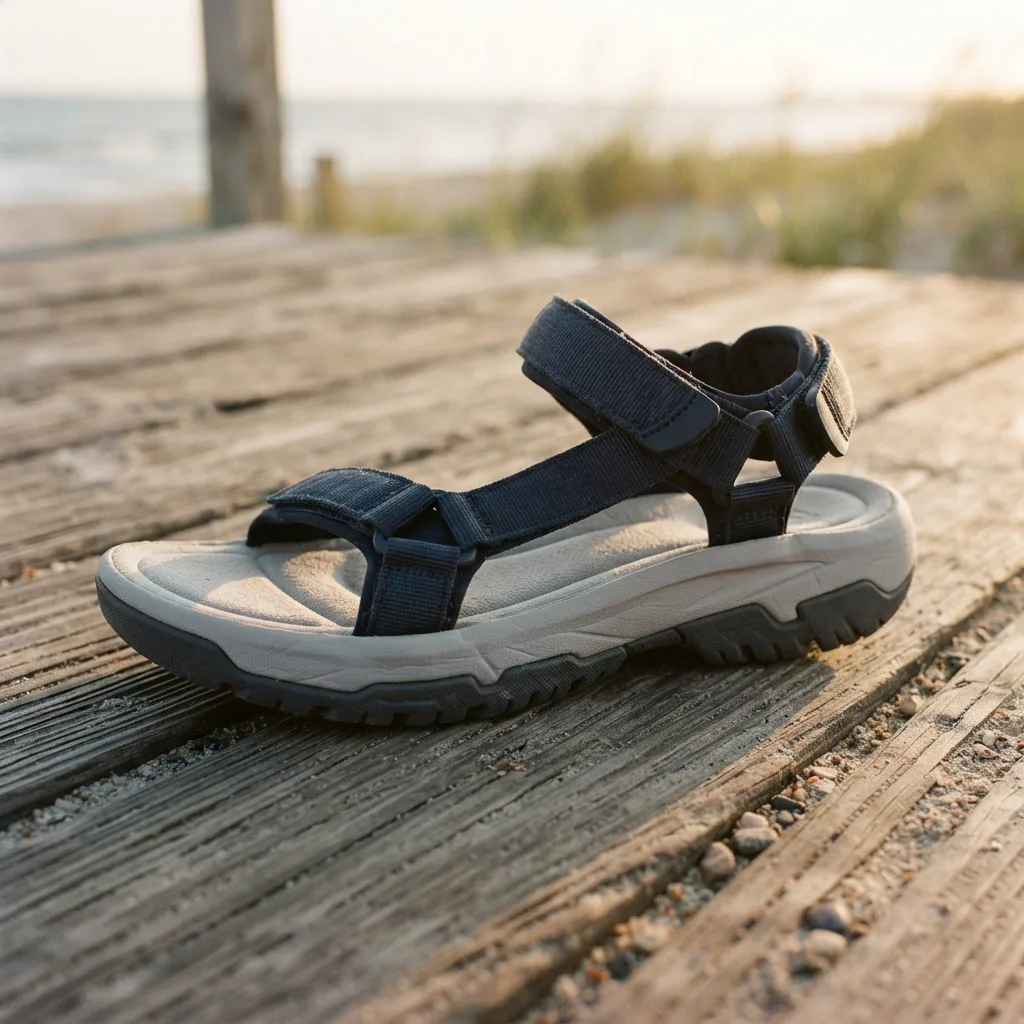





Ozark Trail Sandals

Compare Ozark Trail sandals built for trails, rivers and weekend camp chores, with closed-toe and open styles, adjustable straps and cushioned footbeds side by side so you can match the pair to your trip length and terrain.

Four Starting Points for Your First Pair

Ozark Trail Men's Closed Toe Outdoor Sandals — Protected Toes for Rocky Weekend Trails

The closed toe keeps rocks and trail debris off your feet while the outdoor-ready build handles short hikes and camp walks. Choose this pair when you want sandal airflow with shoe-like coverage for weekend trips. It suits shoppers weighing a budget sandal against a fuller hiking shoe.

Ozark Trail Men's Rugged Clog Sandal — Quick Slip-On Ease for Camp Chores and Showers

Step-in convenience is the point here: the clog shape slips on without straps, which makes it a handy choice for quick trips to the shower block or a short walk around camp. It favors easy living over technical trail performance, so keep it for casual outings.

Ozark Trail Men's Black Trek Hiking Strappy Trail Sandals, Hook & Loop Fit, Size 12

Hook-and-loop straps let you set the fit once and adjust it again after a long walk, while the open strappy build drains water quickly after a stream crossing. Black in a men’s size 12, it hides trail dust and suits hikers who want a secure hold without a full closed shell.

Ozark Trail Men's Brown Sport Sandals with Adjustable Straps and Memory Foam, Size 9

Adjustable straps and a memory foam footbed aim at comfort for hours on your feet, from market walks to light trail use. Listed in men’s size 9 brown, the color hides dirt better than lighter pairs. Weigh cushioning against drainage, since foam holds water longer than open mesh.

Ozark Trail River Sport Terrain Sandals — Strappy Comfort Flats for Water and Trail, Size 13

Strappy construction and a flat, comfortable footbed make this pair a steady pick for river days and warm-weather walks, and the brown finish hides everyday dirt. Listed in men’s size 13, it gives larger-footed shoppers a ready option when budget pairs often run short in sizing.
Worth a Second Look

Three More Angles to Compare Before You Buy

Ozark Trail Men's Closed Toe Brown Sandals with Adjustable Straps and Skid Resistance, Size 8

Skid-resistant tread is the headline here, which helps on damp boardwalks and packed dirt. Adjustable straps fine-tune the closed-toe fit in men’s size 8, and the brown upper stays presentable after a dusty walk. Choose it when grip matters more than light weight, and the low price keeps the commitment easy.

Ozark Trail Men's Rockwell River Sandals — Comfortable Footwear for Outdoor Adventures

Built for river time, this pair favors a soft, comfortable feel underfoot over technical straps. That makes it a relaxed choice for lake edges, patio days and short walks on warm ground. If your weekends split between water and camp, one easy pair can cover both without fuss.

Ozark Trail Bungee Tie Closed Toe Hiking Sandals for Trail, Water and Fishing, Size 11

Bungee lacing replaces loose straps, so the fit stays put when you scramble over wet rock or wade a shallow bank. The closed toe adds cover for fishing trips and trail sections with loose stone. Expect a snug hold rather than quick on-and-off, and set the lace once before you head out.
Where They Fit

Three Situations These Sandals Handle Well

These sandals work best where you move between tasks rather than cover serious mileage. Think about camp chores, easy trails and water time, then match the sole and strap style to the one you do most often.

Camp Chores and Weekend Trips

Sandals handle the walk from tent to table, dish washing and late-night trips outside. Look for a grippy sole and easy cleaning so the pair keeps up with the daily camp routine.

Day Hikes on Mixed Terrain

On a short trail with rocks and roots, a closed toe and adjustable straps keep the foot steady. Judge the route first, since smooth paths forgive far more than steep, loose descents.

Rivers, Lakes and Boat Decks

Water days call for open straps, quick drainage and a sole that grips wet surfaces. Expect faster drying here, and accept that the same pair feels less protective on a rocky hike.

Four factors decide which sandal suits you: toe coverage, adjustability, drainage and sole grip. Change any one of them and the pair fits a different trip, from a dry camp loop to a wet river morning.

How to Compare Sandals for Fit, Terrain and Trip Length

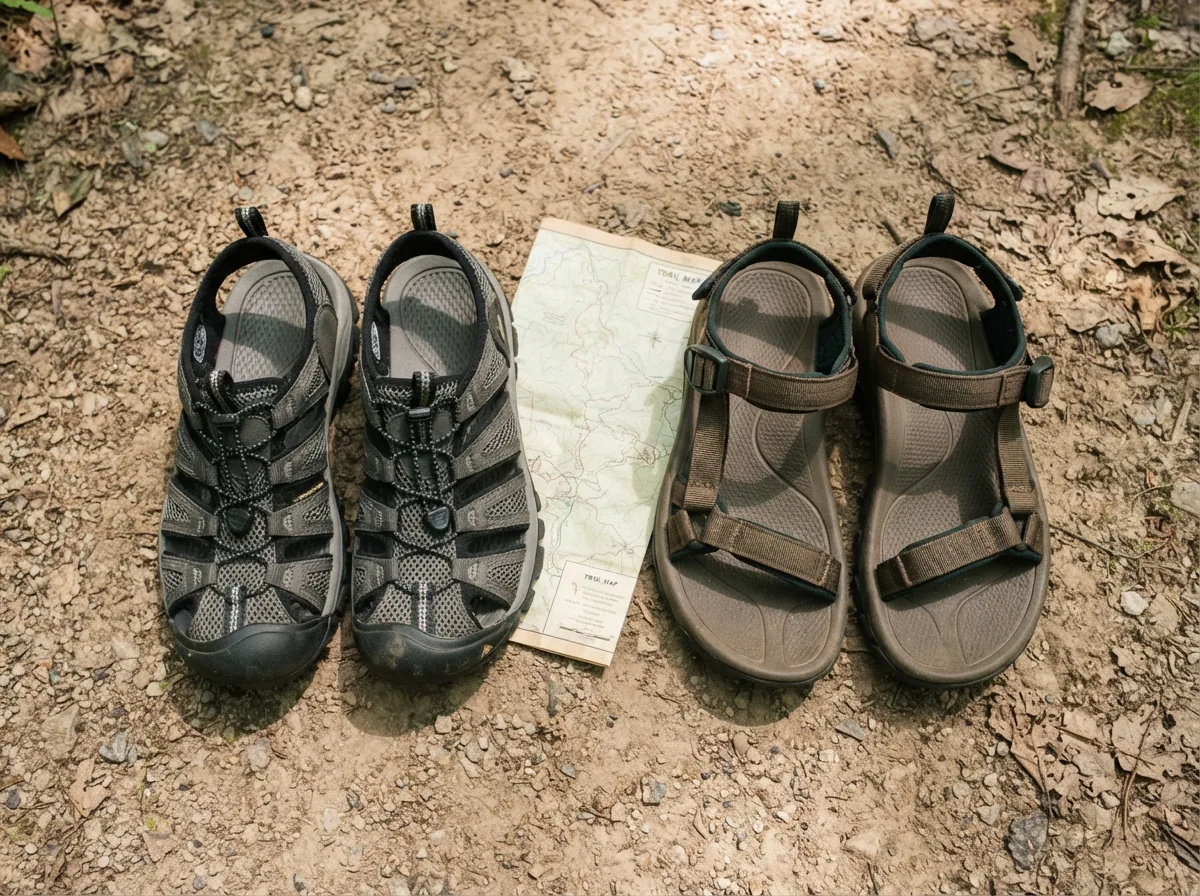
A closed-toe sandal and an open strap sandal placed side by side on flat ground beside a folded trail map
Toe Coverage for Rocky Ground

A closed toe prevents bruised nails and keeps gravel out on loose descents. If your route is mostly packed dirt, an open pair trades that protection for lighter, airier wear on warm days.

Adjustable Fit Across the Foot

Hook-and-loop and bungee closures let you tighten for a steep section and loosen once you reach camp. A secure strap set reduces rubbing on longer walks, so check how much each pair can be tuned.

Drainage and Drying Time

Open straps and drainage holes let water escape, which matters after a stream crossing. Faster drying means less chafing, but that same openness leaves your toes more exposed to rock and roots.

Sole Grip and Trip Length

Deep lugs hold on packed dirt and damp stone, while a firmer outsole lasts longer over a season. For short weekends either works, but for frequent use grip quality starts to matter more.

Know the Styles

Four Sandal Types and What Sets Them Apart

Sandals in this category split by what you meet underfoot: open pairs for water, closed toes for rock, slip-ons for camp and cushioned builds for long days. Start with your most common weekend and narrow from there.
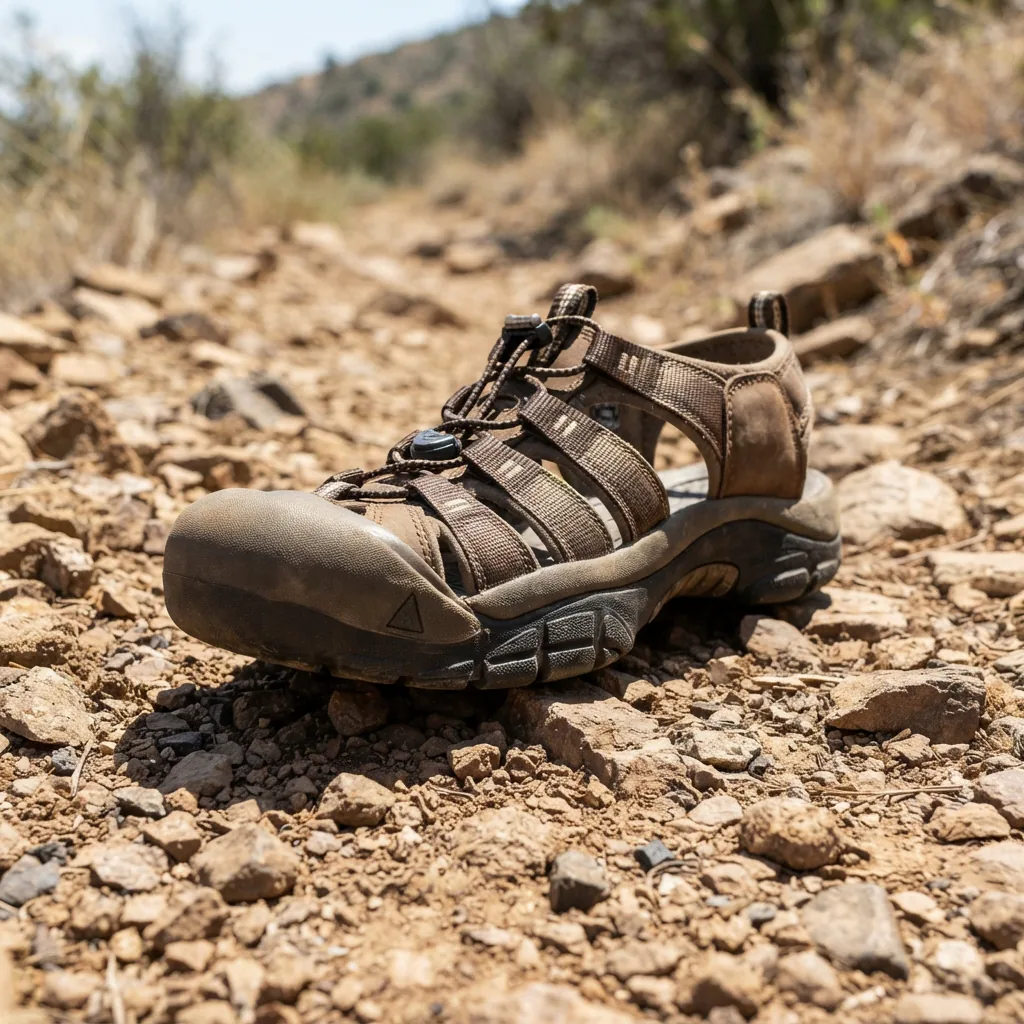
A closed-toe outdoor sandal standing on loose gravel and rocky ground

Closed-Toe Trail Protection

Closed-toe styles shield your toes from rocks and roots, which helps on uneven paths. Choose them when your walk involves scrambling or loose gravel rather than steady flat sand.

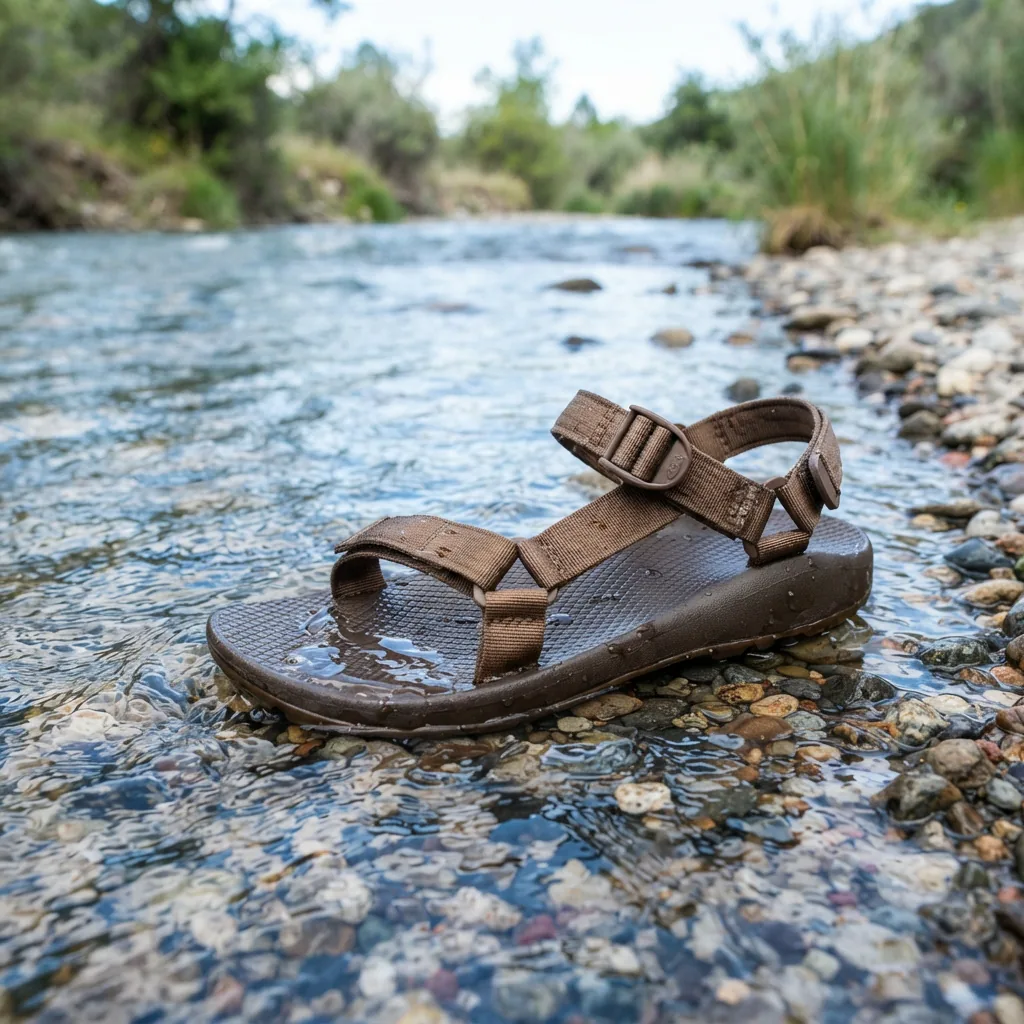
An open strappy sport sandal sitting at the shallow edge of clear moving water

Open River and Water Pairs

Strappy open designs drain quickly and dry fast after a splash, so they suit boat decks and shallow crossings. Pick this direction when water time matters more than toe armor.

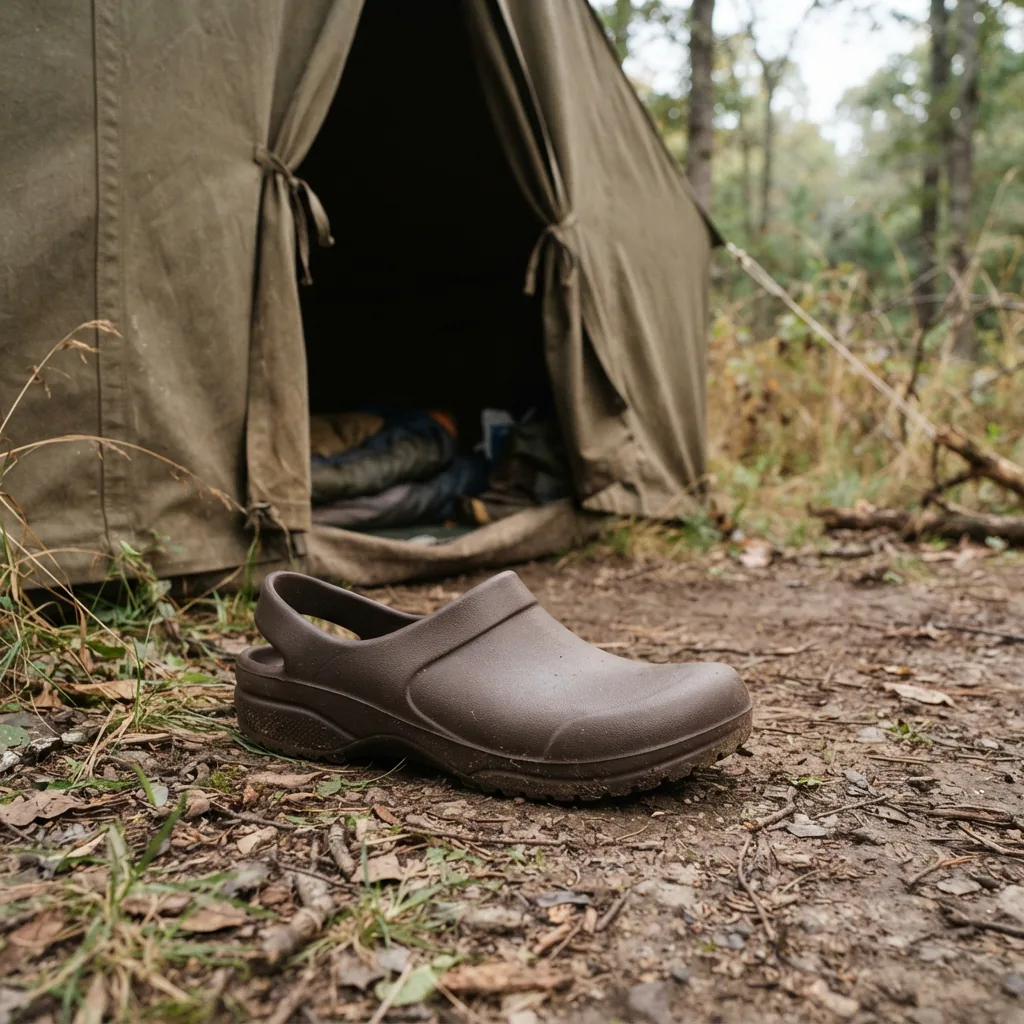
A rugged slip-on clog sandal on packed ground beside a campsite tent

Slip-On Camp Clog Styles

A rugged clog slips on without straps, which is handy for short walks to the shower block. It trades secure trail hold for speed and ease around the campsite.

A cushioned sport sandal with a thick foam footbed resting on a wooden boardwalk

Cushioned Memory Foam Builds

Memory foam footbeds add comfort underfoot for long days standing or walking on hard ground. They suit pavement and camp loops more than quick-drying water use.

Shopper Experiences

How These Sandals Feel in Real Weekend Use

Shoppers describe buying for price first, then adjusting expectations around trip length and durability. The notes below reflect common weekend use rather than any single model, so weigh each one against your own plans.
I wanted something cheap enough that I would not worry if it got muddy. The adjustable fit was easy to sort out before we left, and I wore them around camp all weekend without rubbing anywhere. They are not a hiking boot, but at this price I felt I got fair value for the trip.
Decorative customer review avatar icon 1
Dana R.
Bought for a first family camping weekend
I reach for one pair every time we camp because it handles the walk to the water and the dishes afterward. Drying took a while after the creek, but the strap held its position and my feet stayed comfortable through a full day of moving around.
Decorative customer review avatar icon 2
Marcus T.
Same pair covers creek walks and camp chores
I tested these next to a much more expensive pair and noticed the difference mainly on longer walks, where the cushioning felt firmer. For short weekend outings the gap barely mattered, and I was happy keeping the extra money for food and firewood.
Decorative customer review avatar icon 3
Priya S.
Compared a budget pair against a pricier one
After a summer of regular weekend use the straps still hold and the sole has worn evenly, though the footbed has flattened a little. Knowing that upfront, I plan to refresh them next year rather than expect them to last several seasons like premium gear.
Decorative customer review avatar icon 4
Jeff W.
Wears the same style through a season of weekends
Questions Shoppers Ask

Practical Answers Before You Pick a Pair

Closed-toe pairs keep rocks and debris off your feet and suit rocky trails, scrambles and longer walks. Open styles breathe better and drain faster, which suits hot days and water use. Match the choice to where you actually walk most weekends rather than to one ideal pair.
Order the size you normally wear in men’s shoes and read the listing details carefully, since these pairs are listed in men’s sizing such as 9, 11 and 12. If you sit between sizes or plan to wear thick socks, going up usually gives a more comfortable adjustable fit.
Independent reviews of Ozark Trail gear describe it as a reasonable buy for short trips while noting it is less easy to carry than top-end alternatives and may not last as many years. For occasional weekend use, the lower price often makes that trade-off worthwhile.
Open, strappy styles with drainage in the footbed dry fastest after a stream crossing, and mesh or bungee builds let water escape quickly. Closed-toe pairs take longer to dry but protect better, which is why many people keep both for different parts of the same trip.
Look for hook-and-loop or bungee closures you can re-tighten, since a secure fit prevents rubbing on longer walks. The trade-off is simple: straps are easy to adjust but should be checked after wet use, when materials can stretch slightly and loosen on their own.
Check that the outsole carries deep lugs and a firmer rubber compound before you rely on sandals near water. Skid-resistant soles help on packed dirt and wet stone, but no budget sandal replaces proper wading shoes when you are standing on slick river rock.
Keep Exploring

Related Outdoor Gear Guides to Browse Next

Hard-sided and soft-sided Ozark Trail coolers arranged on a wooden picnic table at a wooded campsite
Admin
Ozark Trail Cooler

Compare Ozark Trail coolers by size, shape and how you carry them, from hard-sided chests that hold ice for a weekend to soft totes and backpack coolers for a day out. Each option below shows capacity, format and the trip it fits best.


A group of Ozark Trail mountain bikes with front suspension parked on a dirt trailhead, a rider comparing frame sizes beside them
Admin
Ozark Trail Bike

Ozark Trail mountain bikes span hardtails and full suspension builds, sized from young riders to tall adults. Compare fit, suspension, wheels and gears to match your trails and your budget.

Assorted Ozark Trail folding and fixed blade knives arranged on a rustic wooden camp table
Admin
Ozark Trail Knife

This page lines up Ozark Trail knives so you can compare folding and fixed blades, locks, handles and carry options at a glance. Each pick notes what it handles best, from camp prep to a pocket blade you carry daily.

A row of Ozark Trail camping tents of several sizes pitched on a grassy campground with a family walking between them.
Admin
Ozark Trail Tents

Compare Ozark Trail tents by capacity, setup style, weather coverage and packed weight, from solo backpacking shelters to twelve-person family cabins built for drive-up weekend campsites.
