





Hang Anywhere, No Trees Needed

A freestanding steel frame that holds a standard double hammock wherever you set up, with no trees to find. It breaks down into a carry bag and assembles with pins in minutes.
How it is built

Steel frame, quick pin-and-slot setup

Powder-coated steel tubing forms the curved arms and the four-legged base, joined by pins instead of loose hardware. Rubber feet finish each leg for decks and patios.
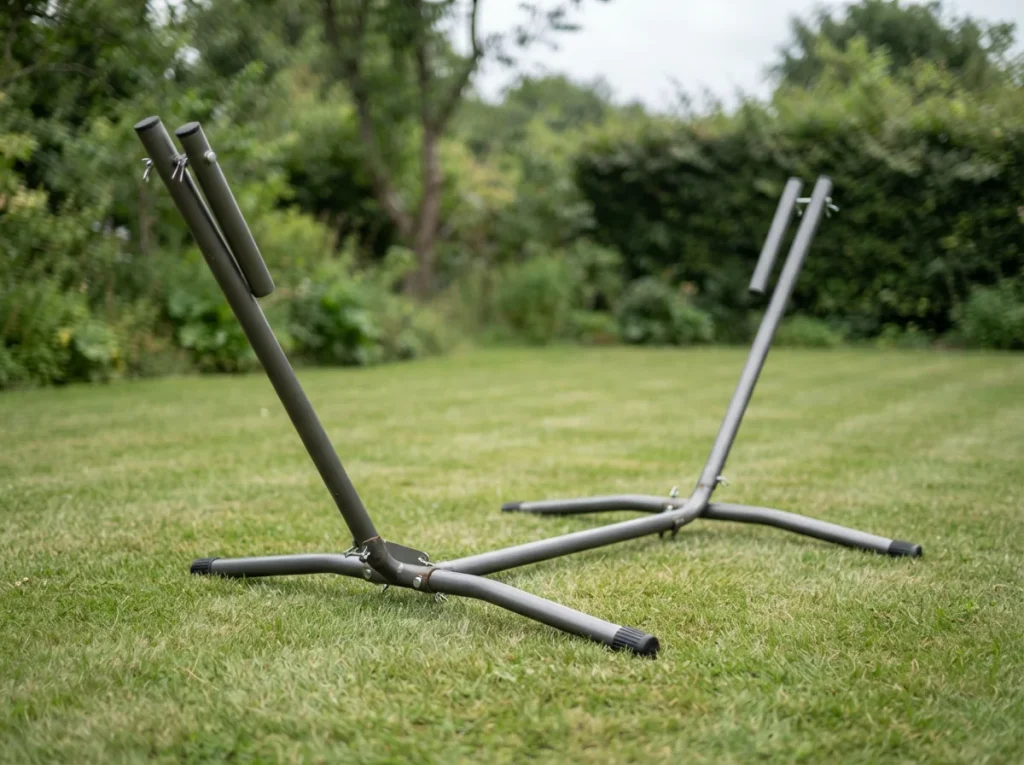
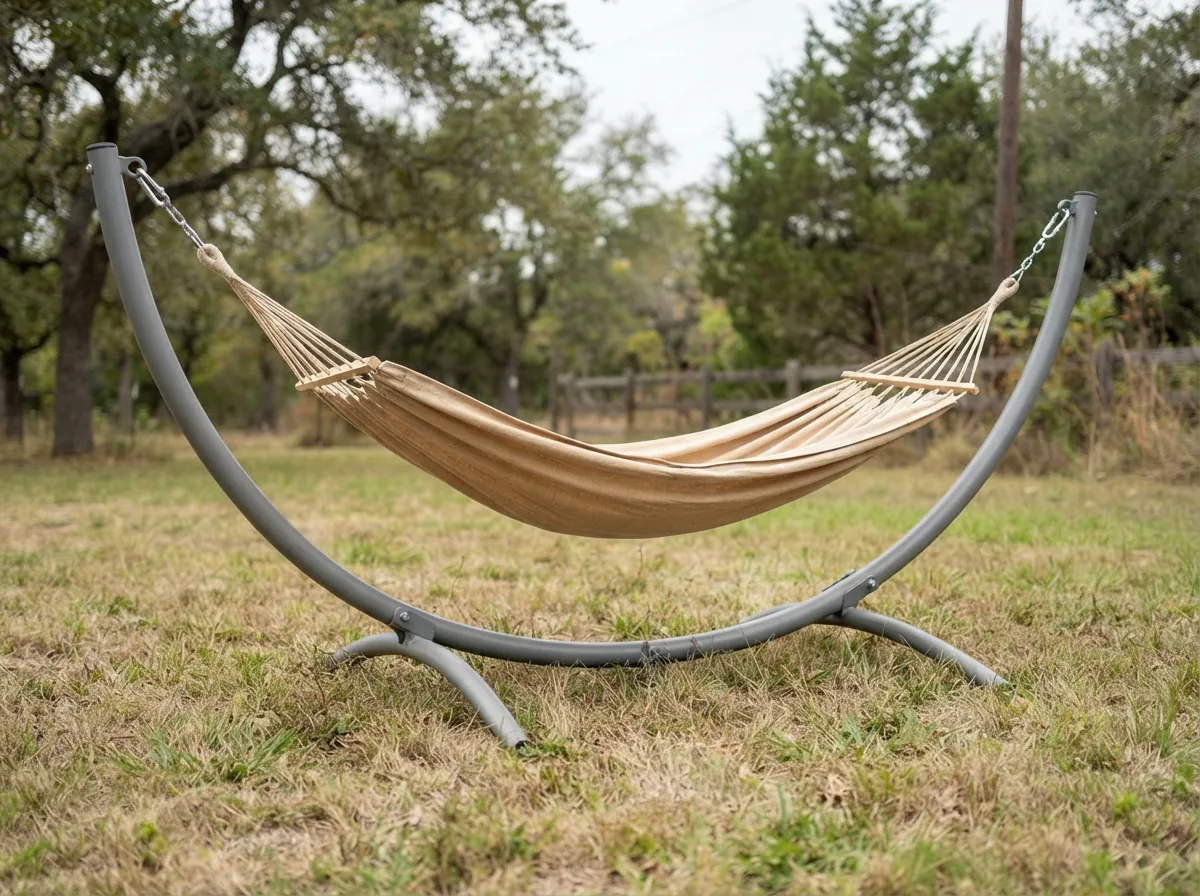
Ozark Trail steel hammock stand showing curved arms, pin-and-slot joints and rubber feet on grass

Where this stand pays off every weekend

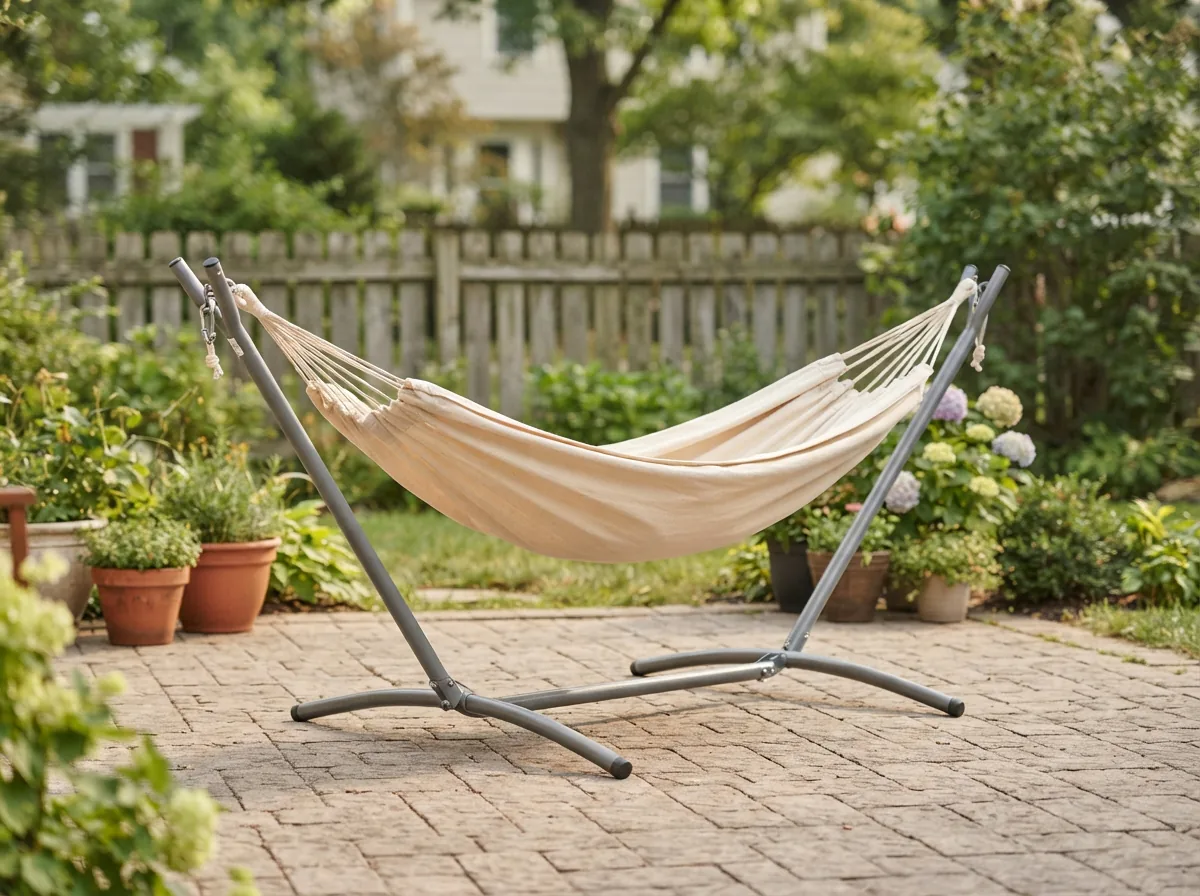
Ozark Trail steel hammock stand holding a double hammock on a backyard patio with no trees nearby
Rest where the trees are too far apart

Set it up on a deck, a patio or an open patch of grass and the hammock still hangs properly. The curved arms hold it clear, so a treeless site no longer decides your rest.

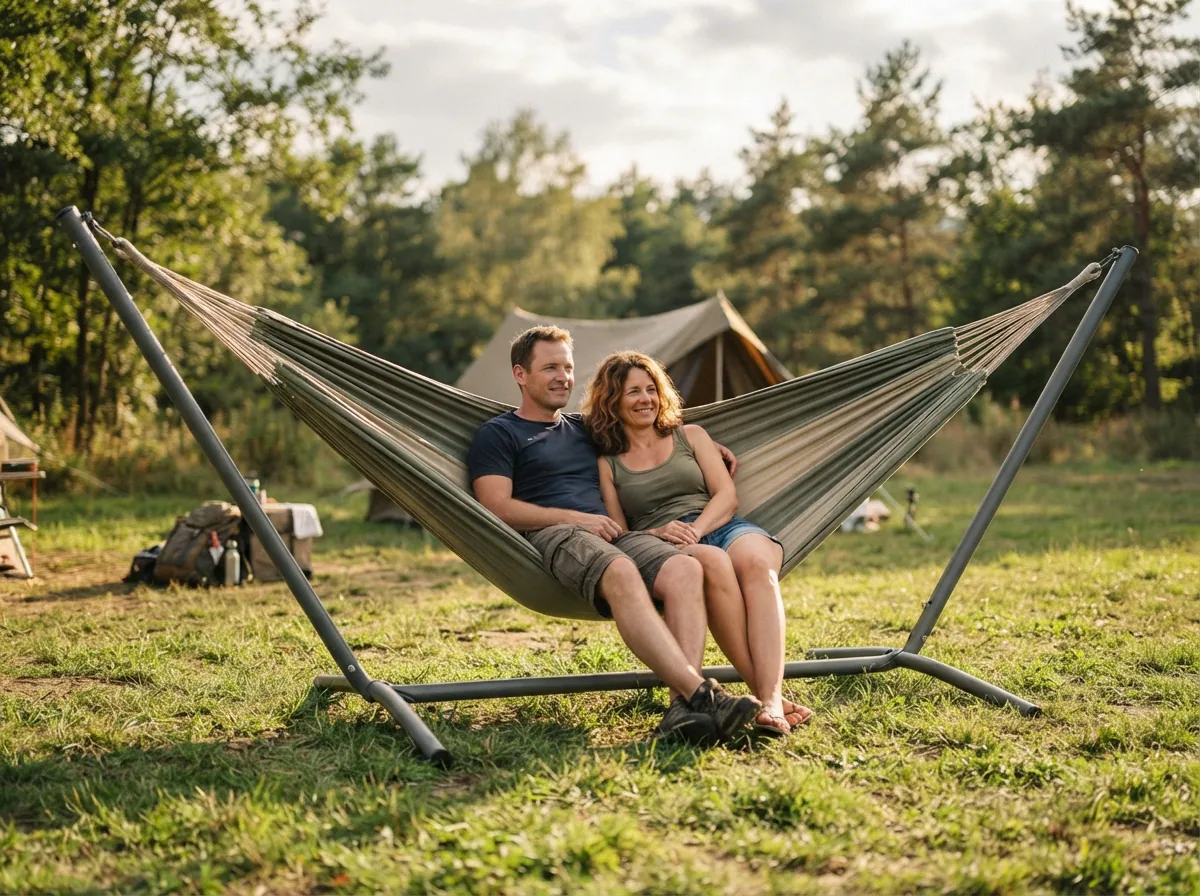
Two adults sitting together in a double hammock on the Ozark Trail steel stand at a grassy campsite
Support that comfortably suits two adults

The steel frame carries up to 450 lb. combined, enough for most double hammocks holding two people. That rating is what lets you share the hammock instead of taking turns.

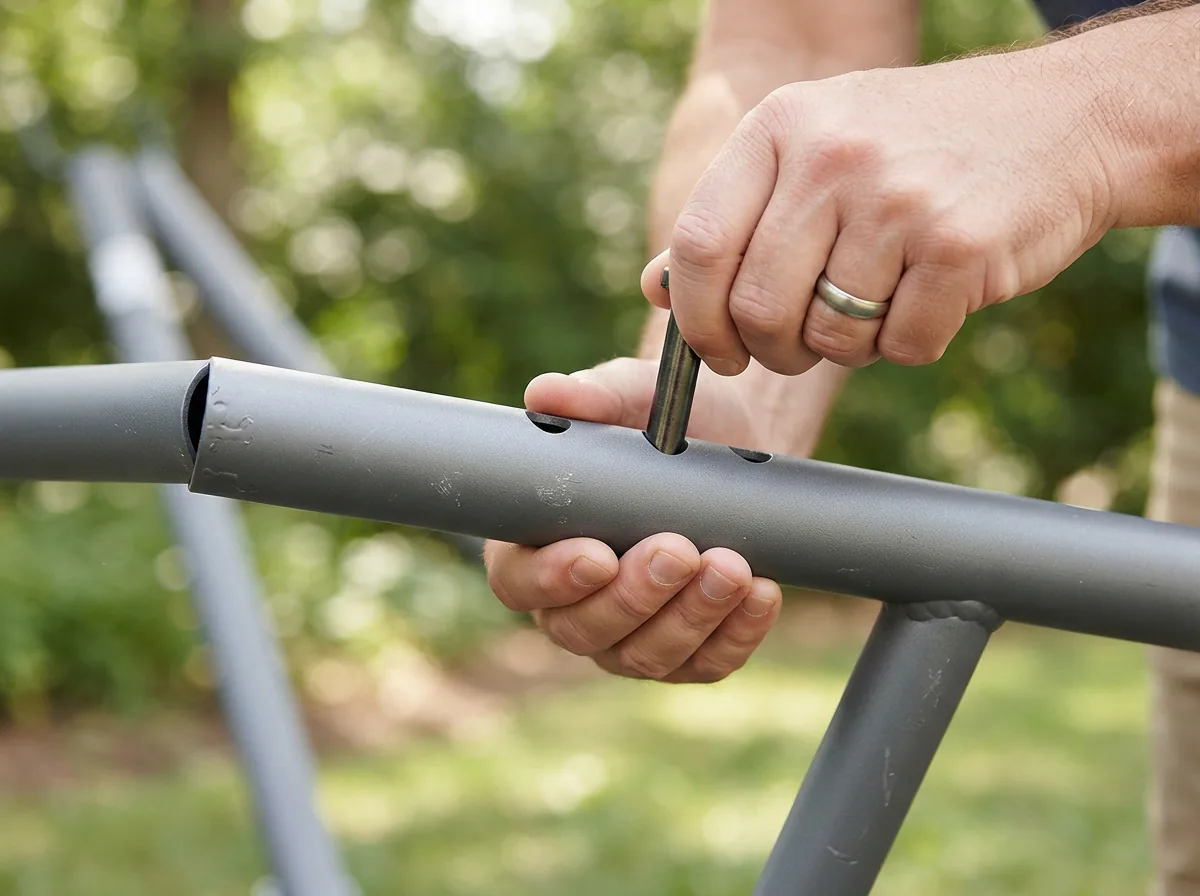
Adult hands sliding a steel pin into the slot joint of the Ozark Trail hammock stand frame
Standing in minutes, with no tools

Pin-and-slot connections mean no wrenches and no loose hardware to lose. Most people have the frame up in a few minutes, which is what you want after a long drive.

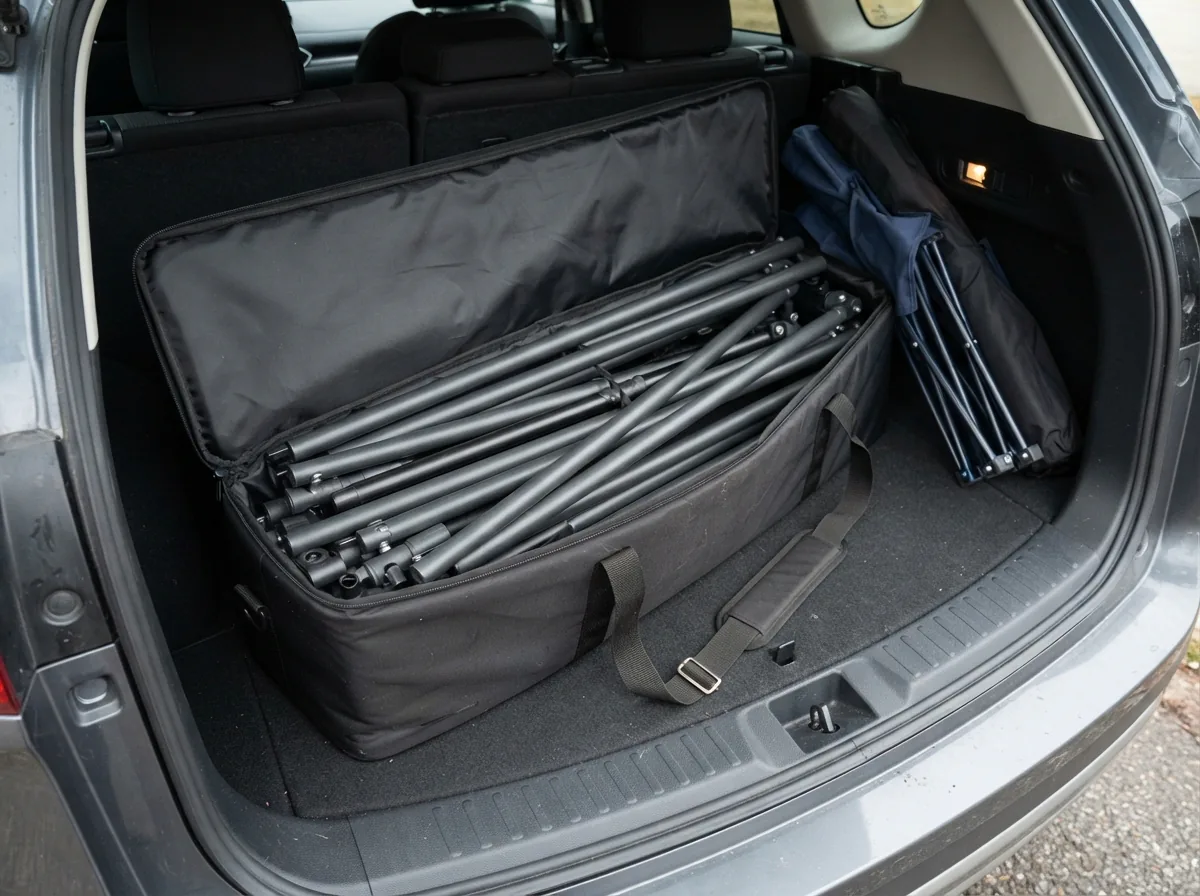
Disassembled Ozark Trail hammock stand packed into its zippered carry bag in a car trunk
Breaks down to fit a packed trunk

The frame separates into pieces that live in the included carry bag, roughly 39 in. long and 9 in. around. It slides into a trunk or truck bed beside the rest of your gear.

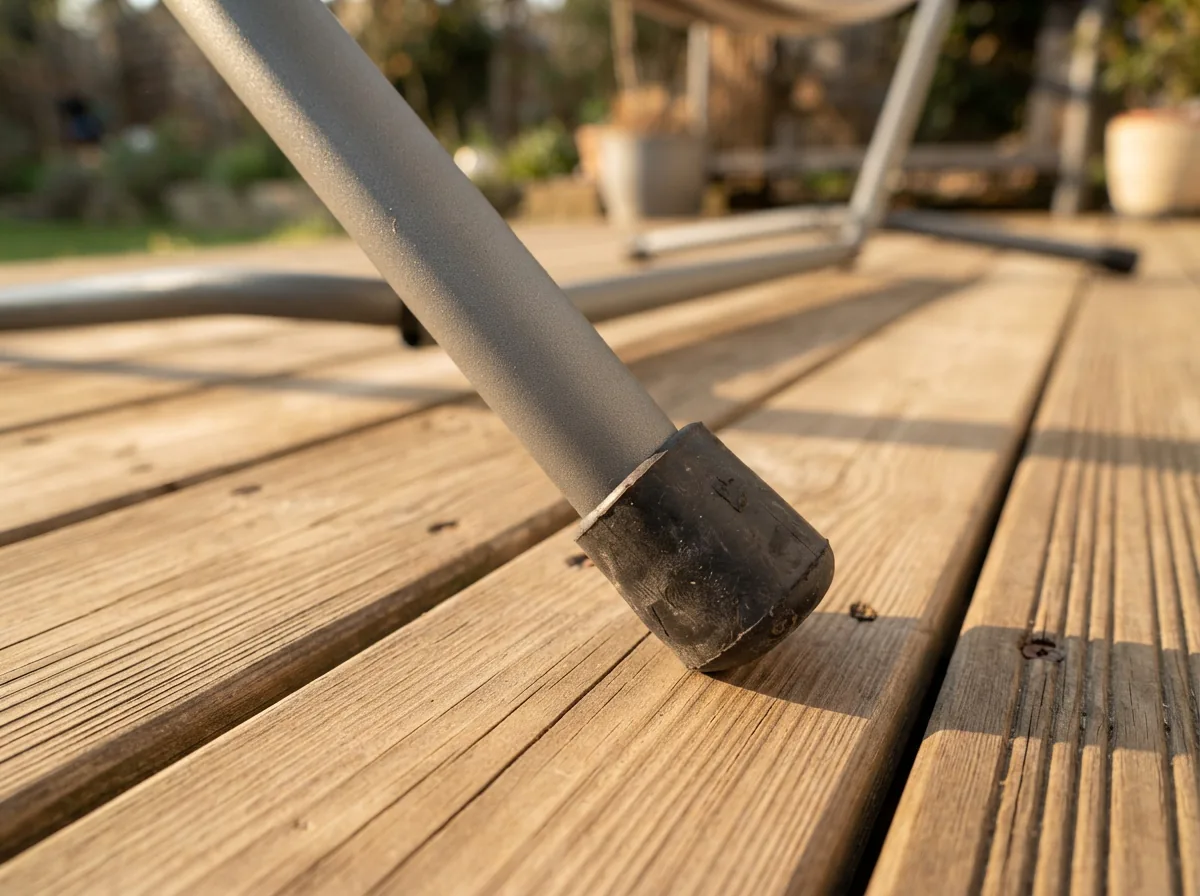
Black rubber feet of the Ozark Trail hammock stand resting on a clean wooden deck
Kind to decks, patios and tent floors

Rubber feet sit between the steel tubing and whatever is underneath, helping keep painted decks, composite boards and tent floors free of scuffs through a weekend of use.

Empty double hammock held above dry grass by the curved arms of the Ozark Trail stand
Curved arms keep the fabric off dirt

The raised curved arms lift the hammock bed clear of the ground, so the fabric never drags in grass, dust or damp soil. You get in and out without kneeling to free an edge.

Where it fits best

Outings this stand is made for

The stand suits shoppers who want a hammock spot without changing their camp layout, plus anyone who would use it close to home. It fits casual, short trips and regular weekend use.

Campsites where the trees do not work

Plenty of sites are open grass or gravel, or the trees sit too far apart and too protected to hang from. This stand gives you a proper hammock spot without rearranging anything.

Backyard evenings close to home

You do not need a trip to use it. Set it up on the patio or lawn after work, read or nap for an hour, then break it down if you want the space back for the weekend.

First hammock setups made simple

If this is your first hammock, a stand removes the hardest part, which is finding two solid anchor points. You buy one item and get a working setup you can try almost anywhere.

Setup and care

From the carry bag to a relaxed afternoon

Most of the work is laying the pieces out in the right direction before you start. Once the pins seat fully, a quick press on each arm tells you the frame is ready to hold weight.

Find flat, open ground

Pick a level spot with about nine feet of clear length and nothing sharp or sloped under the feet.

Lay out all the pieces

Open the carry bag and arrange the tubes and arms so every connection faces the right way before you start.

Slide in the pins

Push each pin fully through its slot until it seats. A half-in pin is the usual reason a frame feels wobbly.

Test for any wobble

Press down on each arm before hanging. If one corner rocks, reseat the pin or move the stand to flatter ground.

Adjust the hammock sag

Clip the hammock to both arms, then shift it until the middle sits high and stays clear of the ground.

Store it dry after use

Wipe the tubes with a damp cloth, let them dry, then zip everything back into the bag before storage.

What owners report back

Weekends out with this stand

These accounts describe ordinary weekends of use: getting the frame up quickly, sharing it with a partner, hauling it to the car and packing it away. Expectations that match casual use seem to be what matter most.
I put this up by myself beside the car before dinner, maybe five minutes once I laid the pieces out. The pins slid in easily and nothing needed a wrench. I am not handy, so that part mattered.
Decorative customer review avatar icon 1
Dana R.
Solo setup finished in a few minutes
My partner and I both sit in our double hammock on this frame and it has not shifted or creaked once. We are nowhere near the limit, but knowing it is rated 450 lb. combined let us stop worrying mid-trip.
Decorative customer review avatar icon 2
Marcus T.
Solid enough for two adults at once
The bag is compact enough to slide behind the back seat next to the cooler, which was my main worry before ordering. Packing up takes longer than assembly, honestly, because of the straps, but it always fits back in.
Decorative customer review avatar icon 3
Priya S.
Fits in the trunk without rearranging gear
For the money this is a good stand. It is heavier than the specialist frames I looked at, and carrying it across a field is a two-hand job. At camp it sits solid, so I would buy a second for home.
Decorative customer review avatar icon 4
Ben H.
Honest value with a couple of trade-offs
Before you order

Questions shoppers ask before ordering

It is made for standard double hammocks up to about 10 ft. long. Check your hammock’s total length and loop style first, because a longer or differently attached hammock may not sit right.
The frame is rated for 450 lb. combined, which covers most adults sharing a double hammock. Stay under that total, and avoid jumping in, since that adds force beyond the rating.
Connections are a simple pin-and-slot design, so no tools are required. Expect a few minutes to seat the arms and legs. Lay the pieces out on flat ground first so it goes together evenly.
It is powder-coated steel with rubber feet, but it is not permanent outdoor furniture. Wipe it clean with a damp cloth and store it dry, because standing water and damp storage shorten the finish.
For casual weekend use, most shoppers find the price hard to beat. You give up some of the lightness of specialist gear, and you gain a stable spot to hang almost anywhere you set up.
Yes, on any flat area that is roughly level. The rubber feet protect decks and tent floors, and on grass or dirt they help the frame stay put while you settle in and out of the hammock.
More for the campsite

Gear that completes a weekend setup

Hard-sided and soft-sided Ozark Trail coolers arranged on a wooden picnic table at a wooded campsite
Admin
Ozark Trail Cooler

Compare Ozark Trail coolers by size, shape and how you carry them, from hard-sided chests that hold ice for a weekend to soft totes and backpack coolers for a day out. Each option below shows capacity, format and the trip it fits best.


A group of Ozark Trail mountain bikes with front suspension parked on a dirt trailhead, a rider comparing frame sizes beside them
Admin
Ozark Trail Bike

Ozark Trail mountain bikes span hardtails and full suspension builds, sized from young riders to tall adults. Compare fit, suspension, wheels and gears to match your trails and your budget.

Assorted Ozark Trail folding and fixed blade knives arranged on a rustic wooden camp table
Admin
Ozark Trail Knife

This page lines up Ozark Trail knives so you can compare folding and fixed blades, locks, handles and carry options at a glance. Each pick notes what it handles best, from camp prep to a pocket blade you carry daily.

A row of Ozark Trail camping tents of several sizes pitched on a grassy campground with a family walking between them.
Admin
Ozark Trail Tents

Compare Ozark Trail tents by capacity, setup style, weather coverage and packed weight, from solo backpacking shelters to twelve-person family cabins built for drive-up weekend campsites.
