





Ozark Trail Fishing Kayak

Compare Ozark Trail fishing kayaks and the gear that makes them work: boats, seats, paddles, anchors, rod holders, life jackets, crates and carts. Everything here is built for short trips on calm water at a fair price.

Start With the Boat and the Basics You Need

Ozark Trail Sit-On-Top Fishing Kayak, a Stable Open-Deck Boat for First-Time Anglers

Sit on top of a stable, open deck with room to turn and reach your gear as you cast. Built for first-time kayak anglers fishing calm lakes and slow rivers for a few hours or a weekend, it favors easy, no-fuss handling over long-distance touring.

Ozark Trail Adjustable Kayak Fishing Seat with Tall Back for All-Day On-Water Comfort

A tall back and cushioned base take the strain off a basic seat, and the backrest angle adjusts so you can sit upright to fish or lean back while you paddle out. It straps onto your kayak, which makes it a simple, affordable upgrade for a full day of casting.

Ozark Trail Kayak Fishing Paddle, a Lightweight Two-Piece Shaft for Easy Transport

The two-piece shaft breaks down to fit a truck bed or garage, so carrying it is never a project. The blades move enough water to push a loaded boat at a relaxed pace, and the grip stays comfortable through repetitive strokes. It suits anglers who want a dependable paddle at a fair price.

Ozark Trail Kayak Anchor Kit to Hold Your Spot While You Work a Shoreline Hands-Free

Rig the line, hardware and anchor to your boat, then hold a productive spot hands-free instead of re-paddling every time the wind pushes you off it. Compact enough to stow easily, the kit earns its place for bank-side fishing where staying put decides whether you keep the bite.

Ozark Trail Flush-Mount Rod Holders for Stowing Rods Out of the Way on the Water

Installed flush into the deck, the pair keeps rods stowed out of the way while you paddle or rig lures, with tips angled up and ready. That means you can switch between trolling and casting without laying rods across your legs. For the price of a simple deck upgrade, a basic kayak gains real fishing function.
Beyond the First Setup

Pieces That Make a Day Fishing Easier

Ozark Trail Kayak Fishing Life Jacket with a High Back Built for Kayak Seats While You Paddle

The high back clears your kayak seat instead of pushing you forward, so paddling stays comfortable without bulky coverage. Cut with the reach anglers need for casting and reeling, it also keeps small essentials close at hand. You stay safe and legal on the water without giving up range of motion.

Ozark Trail Kayak Storage Crate for Tackle Trays and Gear Within Arm's Reach Behind the Seat

Sized to sit behind your seat, the ventilated crate holds tackle trays, a small cooler and gear you want within arm’s reach. Handles make the walk from truck to boat easy, and the open design lets wet items drain and dry instead of pooling. A bare deck turns into a workable fishing setup.

Ozark Trail Kayak Cart that Rolls Your Boat from the Parking Lot to the Solo Launch

The cart cradles the hull so you roll a loaded kayak from the parking lot to the launch instead of carrying it. That saves back and energy for fishing on longer walks to the water, and it folds down once you have launched. Solo anglers get the biggest win here, since there is no one to share the carry.
Who This Gear Serves

Trips and Anglers This Category Fits Best

This gear suits first-time kayak anglers, weekend anglers with a few hours to give, and solo fishers who want position control without a heavy investment. Expect short, close-to-shore trips to be the sweet spot.

First-Time Kayak Anglers Setting Up

An open boat plus a paddle covers the first season on the water. Add seating or rod holders later, once you know which part of the day bothers you most.

Weekend Anglers on Calm Water

Calm lakes and slow rivers reward simple gear: a stable deck, a dry crate and an anchor that holds when the wind comes up. Nothing here demands a specialist budget.

Solo Fishers Handling Their Own Boat

Carrying, launching and rigging alone adds up. A folding cart, a two-piece paddle and hands-free anchoring cut the effort so energy stays banked for fishing.

Start with trip length, water type and how you fish from the boat. Short calm-lake outings reward open decks and simple rigs, while longer days put a premium on back support, rod storage and holding position in wind.

How to Compare Kayak Fishing Gear Before You Buy

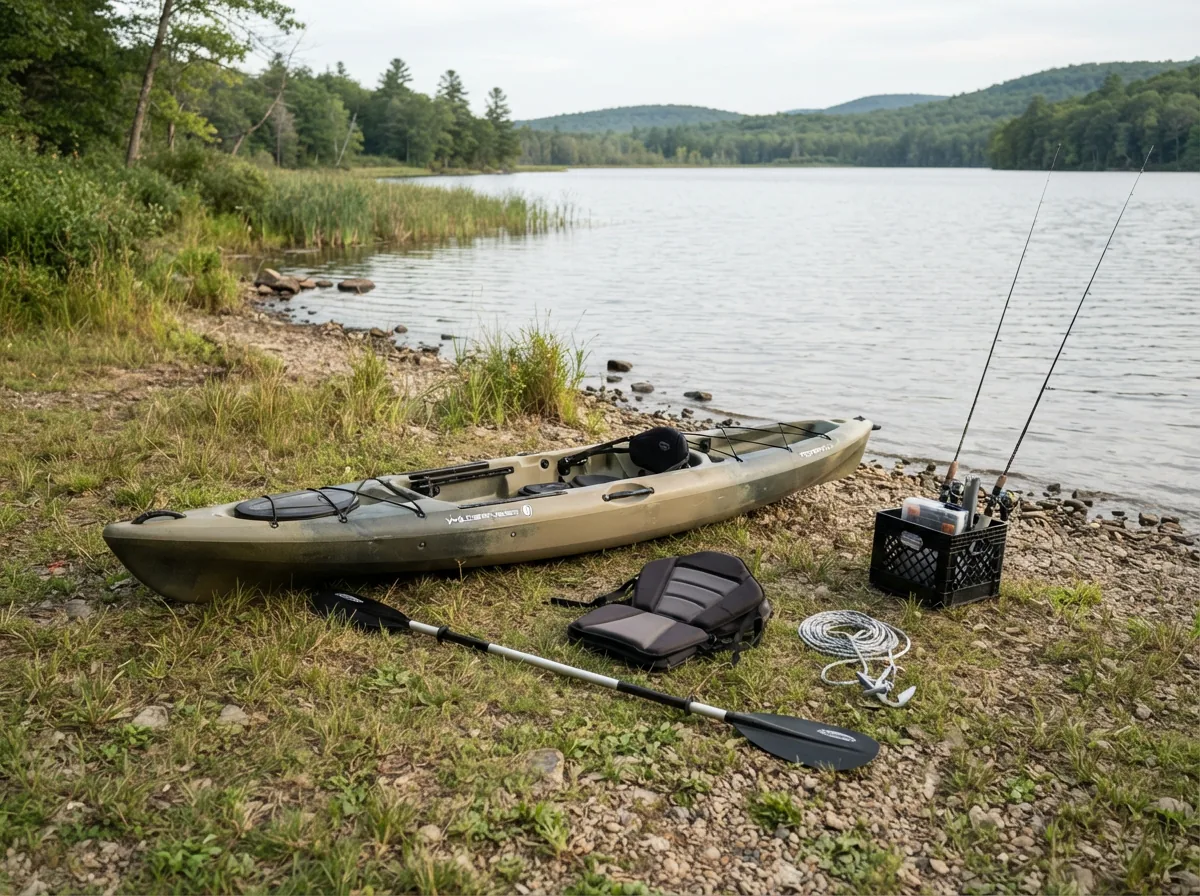
An empty sit-on-top fishing kayak on a grassy shoreline with a paddle, folded seat, coiled anchor line and crate arranged beside it.
Trip Length and Water Type

A couple of hours on a calm lake asks for less than a full day on slow river water. Match hull stability and comfort to the time you actually expect to stay out.

Comfort and Back Support Gear

Back support decides whether day two feels like day one. A padded adjustable seat or a high-back jacket keeps you fishing longer than a stock setup usually allows.

Holding Position and Rod Storage

Anchoring and rod holders change how you fish a shoreline. Holding hands-free and keeping tips up lets you work a spot without re-paddling or laying rods across your legs.

Transport and Carry Effort

Getting a boat to the water uses energy you wanted for casting. A two-piece paddle and a folding cart shorten the walk, which matters most when you launch solo.

Where the Range Splits

Four Directions to Sort the Gear You Need

Most of this category falls into four directions: the boat, seating and comfort, position control and storage, and getting to and from the water. Decide which of those is failing you before adding anything else.
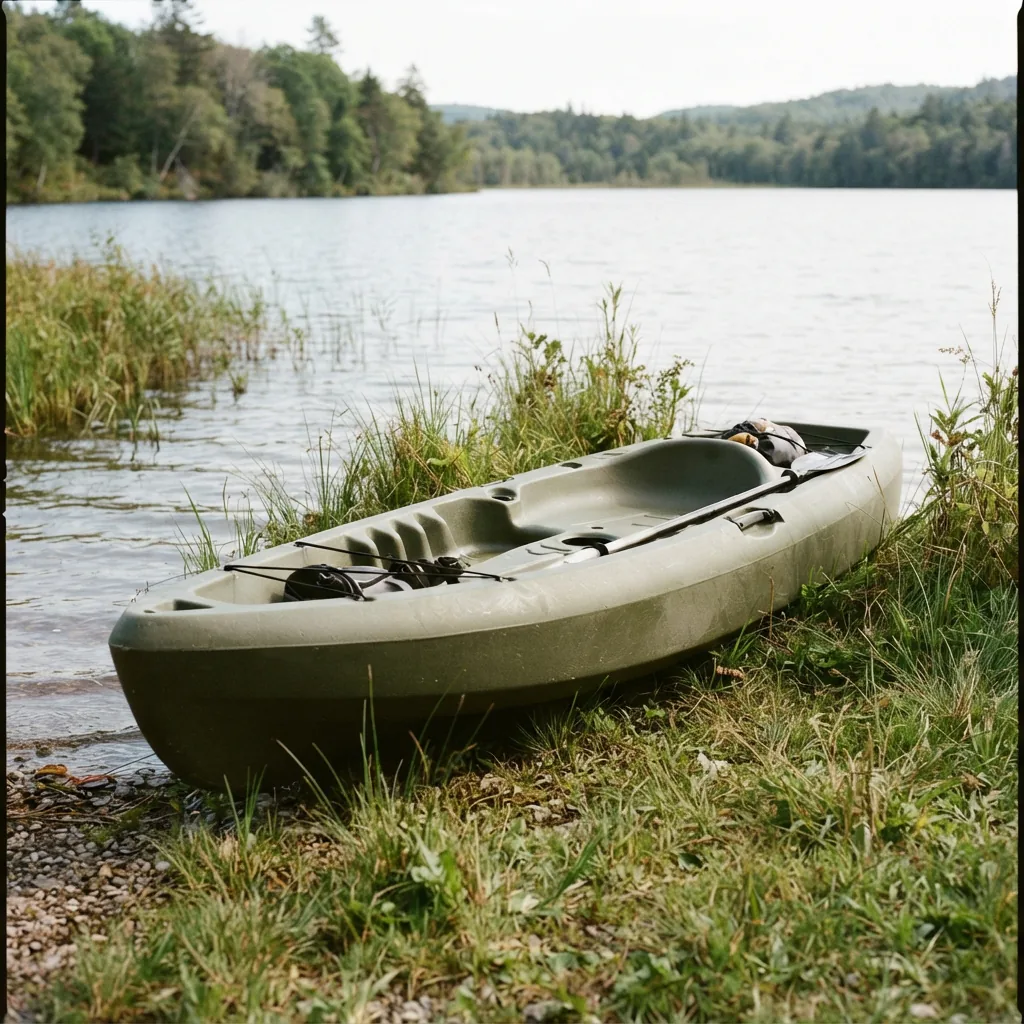
A wide sit-on-top kayak hull beached on a grassy lakeshore with its open deck and molded footwells visible.

Boats for Open-Water Fishing

A stable sit-on-top hull is the starting point for anyone fishing from the water. Wide, open layouts trade touring speed for room to cast, turn and reach gear.

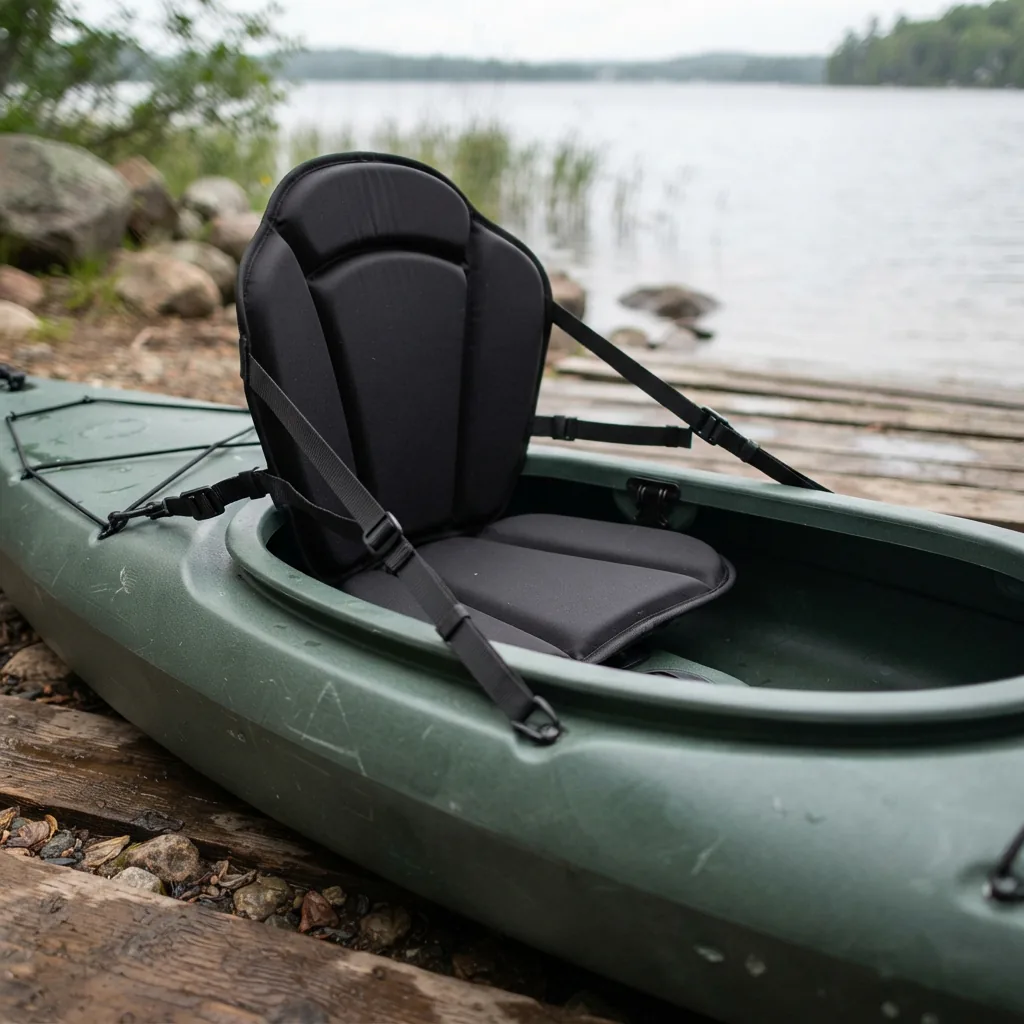
A padded adjustable kayak seat with a tall back and straps laid on the deck of an empty kayak on a shoreline ramp.

Seating and Back Support

Most basic boats ship with minimal support. Padded bases and adjustable backrests extend comfortable time on the water without changing how the kayak handles.

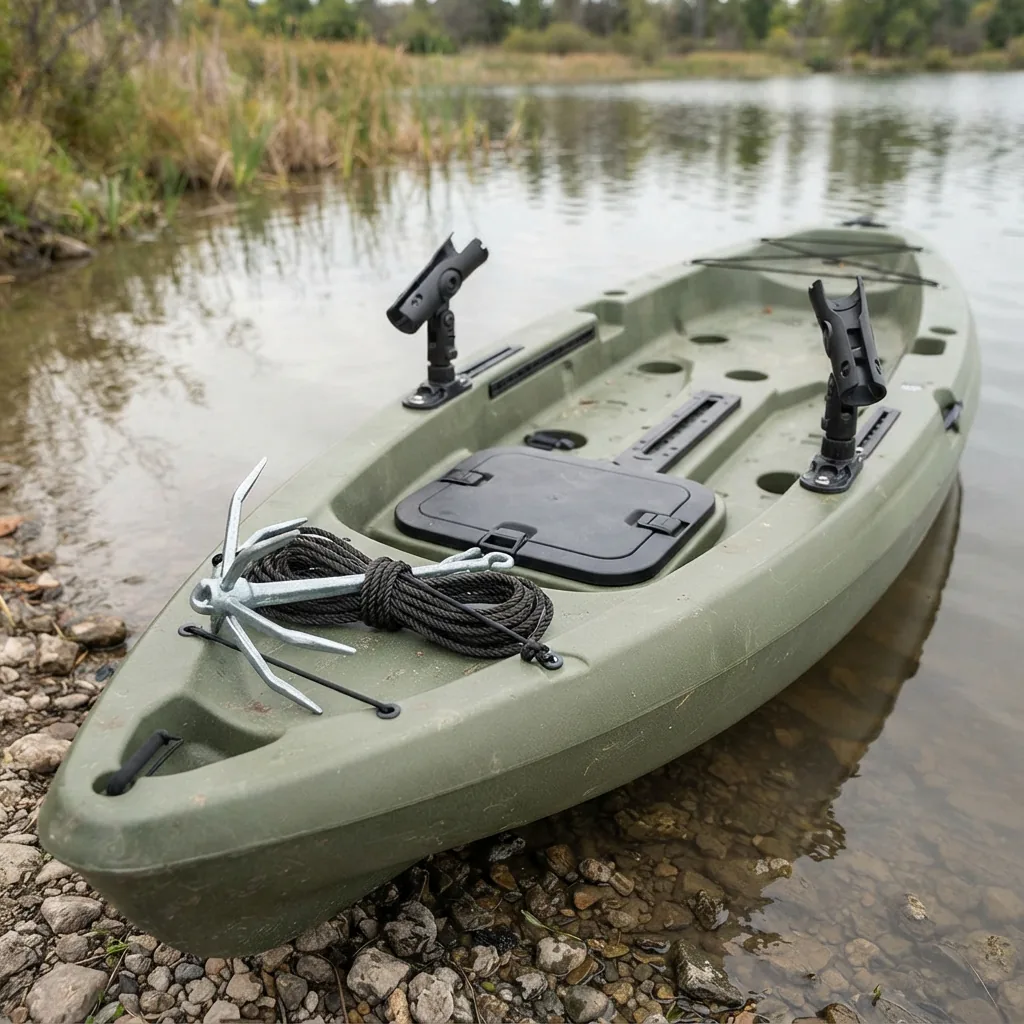
An anchor with coiled line and deck-mounted rod holders fitted to an empty kayak at the water's edge.

Position Control and Rod Storage

Anchors, rod holders and crates answer the same question: how do you stay on a spot with your hands free. Look for hardware that rigs simply and drains when wet.

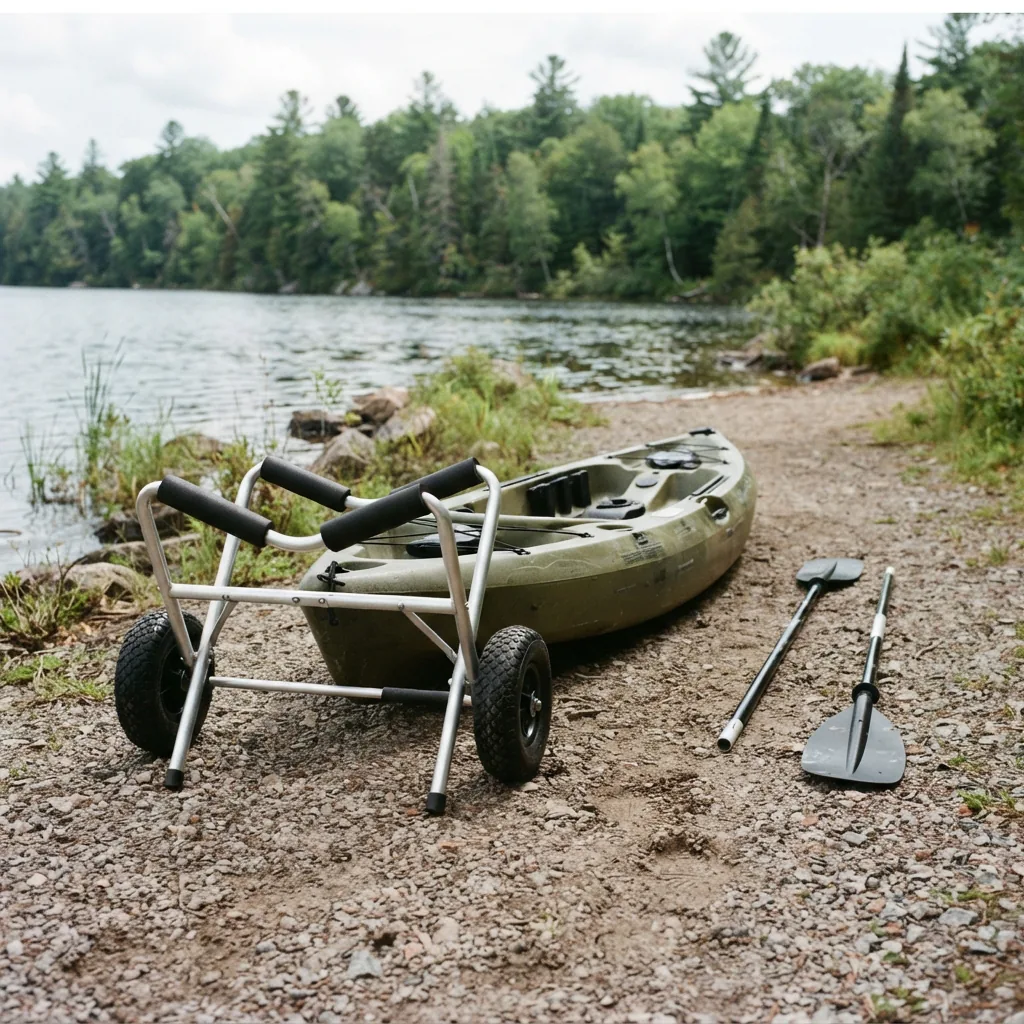
A folding kayak cart with a foam-padded frame beside a beached fishing kayak and a broken-down two-piece paddle on gravel.

Transport to the Launch

Carts, folding paddles and carry handles decide how hard the walk to the water is. If you fish alone or park far from the launch, this group pays for itself first.

Anglers Report Back

What Fishing Trips Feel Like With This Gear

Owners tend to describe short, close-to-shore trips that went smoothly, days that ran longer than expected once comfort was sorted, and gear that does the job without fuss. The trade-off against pricier brands comes up often.
I spent years bank fishing and finally got out on the water this spring. Launching was easier than I expected, and being able to sit still over a spot instead of re-casting from one bank made the whole day feel more productive. Short trips are plenty for me.
Decorative customer review avatar icon 1
Marcus R.
First season fishing from a kayak
Most of my trips are two or three hours on a calm lake, and honest budget gear has handled that fine so far. I would not trust it for long touring or rough water, but for a Saturday morning it does everything I need and I come home tired in a good way.
Decorative customer review avatar icon 2
Denise W.
Weekend trips on a calm local lake
The walk from the lot down to my launch is long, and hauling a boat by myself used to take most of my energy before I even cast. Now I roll it down instead and start fishing fresher, which is the part of the whole setup that surprised me most.
Decorative customer review avatar icon 3
Tyler P.
Angler who fishes alone and walks far
I started with the boat alone and added comfort and storage pieces as the year went on. Each addition fixed a specific annoyance rather than changing everything at once, so I never felt like the first setup was money wasted while I learned what I wanted.
Decorative customer review avatar icon 4
Sam O.
Upgraded a basic boat over one season
Questions Worth Asking

Practical Answers Before You Choose

For calm lakes and slow rivers, yes. The open deck is forgiving if you tip or want to wade, and the wide layout gives you room to turn and cast. Expect easier handling than a touring boat rather than speed or long range.
Most people notice their back before their arms. A padded base and a backrest you can angle upright make a full day realistic, and that upgrade usually costs far less than moving to a different boat.
On a windy shoreline you will drift off a productive spot quickly, and re-paddling breaks your rhythm every few casts. An anchor with line and hardware rigs simply and lets you fish hands-free while holding position.
They add real function, but they require cutting into the deck, so check your boat’s layout and depth before drilling. If you troll or change lures often, keeping rods up and clear is usually worth the work.
A two-piece budget paddle will move a loaded kayak at a relaxed pace and hold up to regular weekend use. You may give up some lightness and blade efficiency over long distances, which matters less on short trips.
Yes. High-back designs clear the seat back so you are not pushed forward while paddling, and the cut keeps your reach open for casting and reeling. Check that any jacket you buy fits your body and your local rules.
Keep Reading

More Fishing and Kayak Notes Worth a Look

Hard-sided and soft-sided Ozark Trail coolers arranged on a wooden picnic table at a wooded campsite
Admin
Ozark Trail Cooler

Compare Ozark Trail coolers by size, shape and how you carry them, from hard-sided chests that hold ice for a weekend to soft totes and backpack coolers for a day out. Each option below shows capacity, format and the trip it fits best.


A group of Ozark Trail mountain bikes with front suspension parked on a dirt trailhead, a rider comparing frame sizes beside them
Admin
Ozark Trail Bike

Ozark Trail mountain bikes span hardtails and full suspension builds, sized from young riders to tall adults. Compare fit, suspension, wheels and gears to match your trails and your budget.

Assorted Ozark Trail folding and fixed blade knives arranged on a rustic wooden camp table
Admin
Ozark Trail Knife

This page lines up Ozark Trail knives so you can compare folding and fixed blades, locks, handles and carry options at a glance. Each pick notes what it handles best, from camp prep to a pocket blade you carry daily.

A row of Ozark Trail camping tents of several sizes pitched on a grassy campground with a family walking between them.
Admin
Ozark Trail Tents

Compare Ozark Trail tents by capacity, setup style, weather coverage and packed weight, from solo backpacking shelters to twelve-person family cabins built for drive-up weekend campsites.
